HAD IT NEVER HAPPENED -Africa's Stolen Potential, The True Meaning of Development, and the Weight of What Remains
What kind of Africa was being built before the ships came? And what does it actually mean for Africa to develop? They sit underneath the reparations debate. You cannot make the case for repair without understanding what was lost, and what building truly means.
EDITOR'S NOTE: This piece is the second in a continuing series. It follows our earlier investigation, The Black Star Ledger: Centuries of Debt, Why Ghana's UN Reparations Push Could Redefine Africa's Economic Future,. In that piece, we explored what the UN resolution of March 25, 2026 means legally, financially, and diplomatically and why Ghana stood at the centre of that historic vote. This piece asks a hard question underneath all of it: What did Africa actually lose? And what does it mean to develop from that loss?
12.5 million forcibly removed, the 72 per cent income gap that Nathan Nunn's research links directly to the slave trade, the brutal interest rate disparity between African borrowers and Western ones. But the questions that came back, again and again, were simply not just about reparations.
They were more fundamental. People wanted to know: What exactly was interrupted? What kind of Africa was being built before the ships came? And what does it actually mean in concrete, present-day terms for Africa to develop?
These are the questions this piece is written to answer. They sit underneath the reparations debate. You cannot make the case for repair without first understanding what was broken, how it was built, and what building truly means.
DEFINING DEVELOPMENT: MORE THAN GROWTH, MORE THAN GDP
The word 'development' is one of the most overused words in modern political and economic discourse. In the language of international institutions, it has been reduced to a set of metrics, GDP per capita, infant mortality rates, poverty brackets, literacy figures, foreign direct investment inflows. Countries are ranked, evaluated, categorized and invested in, on the basis of these numbers. The higher your score, the more 'developed' you are ranked.
But this framing is both incomplete and, in the African context, deeply misleading. Development, properly understood, is not a destination on a league table. It is a process driven by western standards, self-referential, and responsive to the specific needs, resources, and logic of the already developed economies.
Development is what happens when a society accumulates the institutions, knowledge, infrastructure, and social trust necessary to solve its own problems, on its own terms, at a pace and in a direction that reflects its own priorities. It is not a Western invention that other societies aspire toward. Every human civilization that has ever existed has been engaged in developing the organised attempt to make life more sustainable, more meaningful, and more equitable for the people within it.
The economist Amartya Sen offered the most useful reframing: development is the freedom, the expansion of real human capabilities: to eat, to learn, to participate in decisions that affect your life, to live without fear. By this definition, development is not what a country looks like on paper. It is what its people are actually able to do. Why does this definition matter here? Because when the transatlantic slave trade and colonialism interrupted Africa, they did not merely slow down a budding economy. They dismantled the conditions of the institutions, the trust networks, the accumulated social capital, the demographic base under which development as a self-directed process is possible. What was stolen from Africa was not just labour and land. It was the capacity to decide its own future.
GHANA AND THE GOLD COAST: GROUND ZERO FOR A CONTINENT'S DISRUPTION
To understand what Africa was building before the slave trade interrupted and why Ghana has become the moral and diplomatic fulcrum of the reparations movement you must understand what the territory now called Ghana once was, and what it was becoming. Long before European cartographers labelled the stretch of West African coastline stretching from the Volta River to the Ankobra the 'Gold Coast,' it was home to some of the most sophisticated political formations on the continent. The Ashanti Confederacy, the Fante states, and the Dagomba kingdom were not loose tribal groupings but were organised polities with governance structures, legal traditions, currency systems, long-distance trade networks, and standing armies.
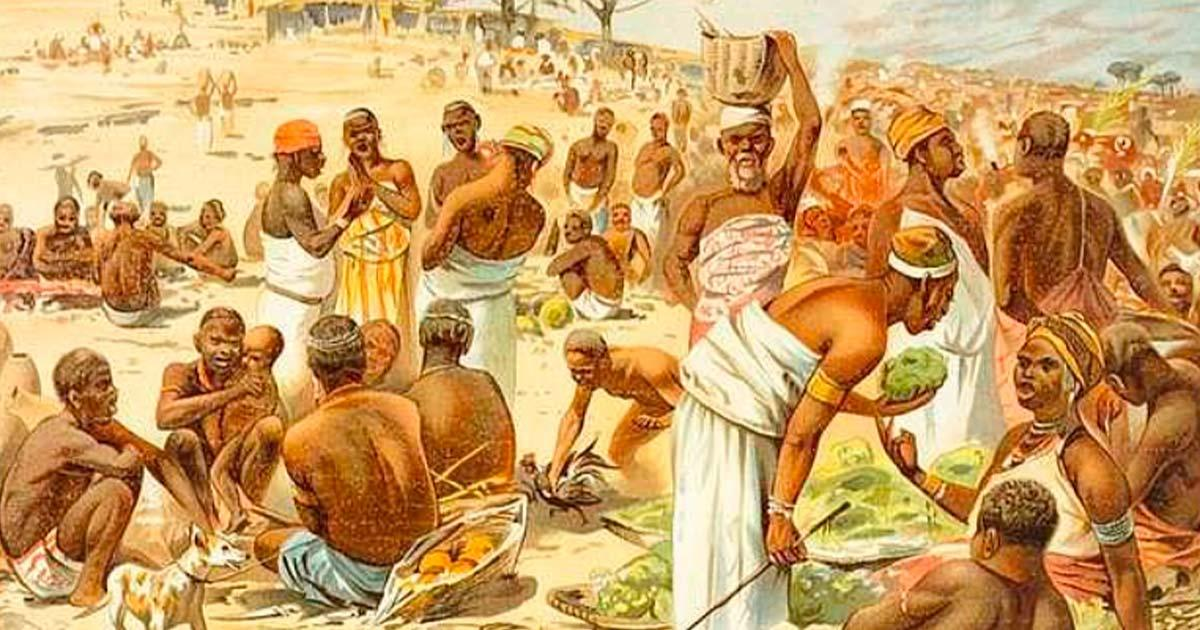
The Ashanti, in particular, had developed one of the most elaborate constitutional frameworks in pre-colonial Africa. The Golden Stool, the sika dwa kofi was the embodiment of Ashanti nationhood, representing the soul of the Ashanti people collectively. The Ashantihene governed through a council of chiefs whose power was real and whose accountability to custom was structural. This was not primitive governance. It was a sophisticated system of distributed authority more akin to a confederal republic than to the absolute monarchies of contemporary Europe.
The Gold Coast's trade networks connected it to the Sahel, to North Africa, and through Arab intermediaries to the markets of the Mediterranean and the East. Gold, kola nuts, ivory, and cloth moved along routes that stretched thousands of miles. When European traders first arrived on the Gold Coast in the 15th century, they encountered merchants who were their commercial equals who negotiated from positions of strength, who understood price, credit, and the management of trade relationships.
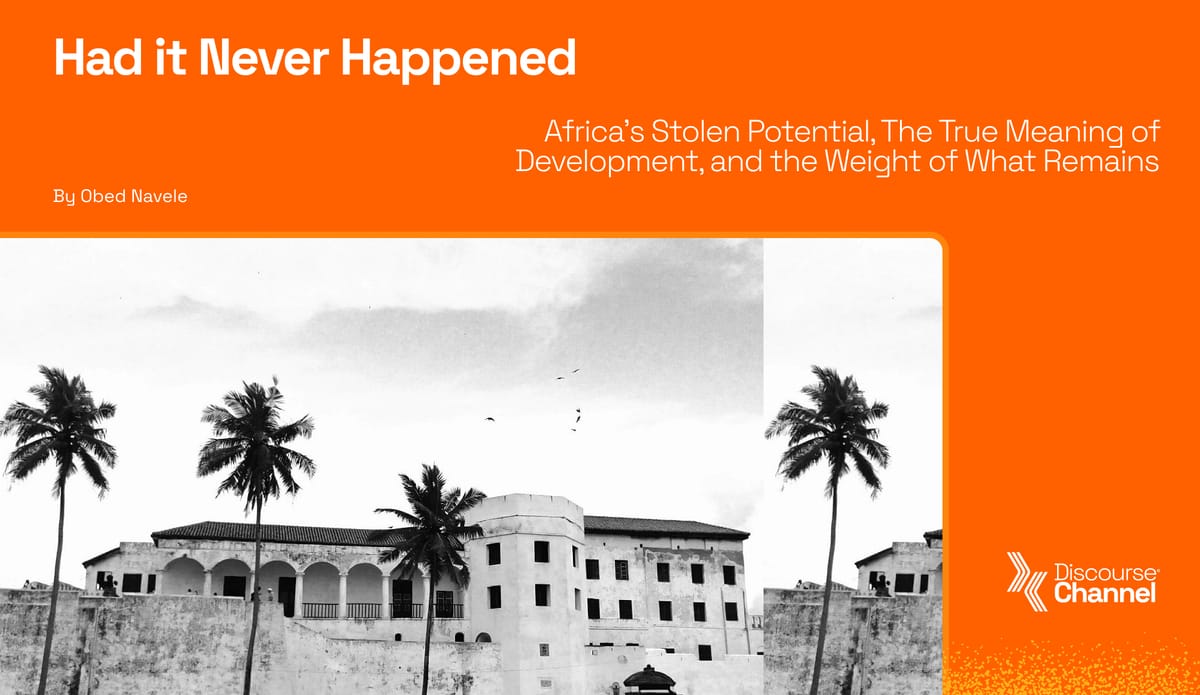
What the European arrival initiated slowly at first, then with accelerating devastation was the conversion of this trade in goods into a trade in people. The Gold Coast became one of the most significant departure points for the transatlantic slave trade. Cape Coast Castle and Elmina Castle, both standing today as UNESCO World Heritage Sites on the Ghanaian coastline, processed tens of thousands of enslaved Africans through their dungeons before the Door of No Return. The Gold Coast did not simply lose people. It lost the very demographic base: the young, the strong, the economically active upon which its own development trajectory depended. This is the ground from which modern Ghana emerged. And it is why the moral identity of the Ghanaian state is inseparable from the history of the slave trade not as passive victim, but as a society that survived a sustained assault on its capacity to direct its own future.
NKRUMAH AND THE INTERRUPTED PROMISE
No other political figure understood this with more precision or articulated it with clarity than Osagyefo Dr. Kwame Nkrumah, Ghana's first President and one of the defining political minds of the 20th century. When Nkrumah led Ghana to independence on March 6, 1957, becoming the first sub-Saharan African nation to shed colonial rule, he did not frame that moment as a national event. He understood it as a continental one. 'The independence of Ghana is meaningless,' he said that night, 'unless it is linked up with the total liberation of Africa.' It was not rhetoric. It was a theory of development.
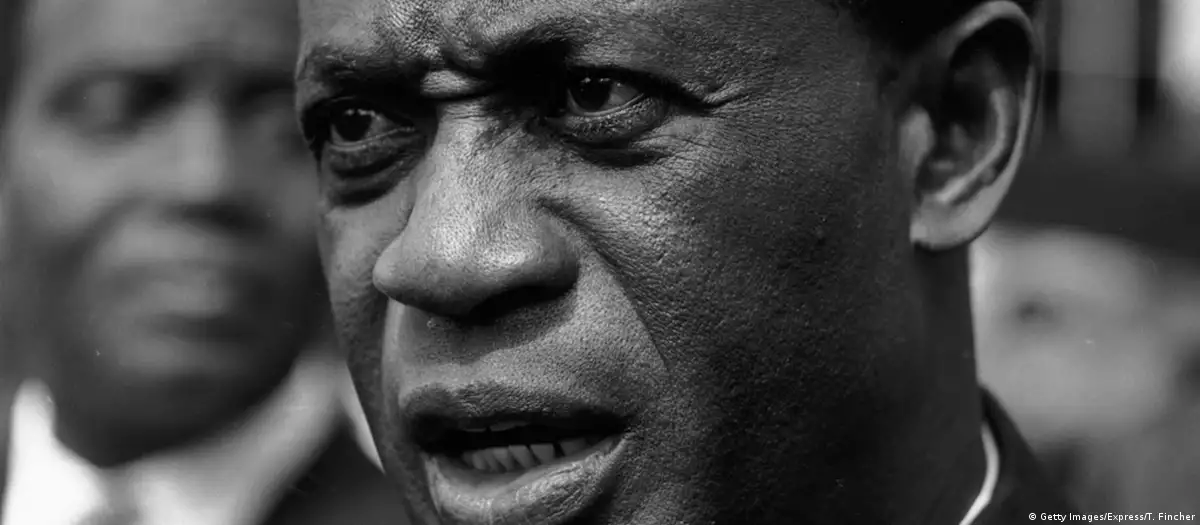
Nkrumah grasped something that the reparations debate is only now forcing back into mainstream consciousness: that Africa's underdevelopment was not an accident of geography, culture, or capability. It was the consequential output of a system. First the slave trade, then colonialism, that had deliberately extracted Africa's wealth while preventing the accumulation of the conditions necessary for self-directed growth. His concept of neocolonialism, elaborated in his 1965 book of the same name, described precisely the dynamic our earlier Black Star Ledger piece documented: the formal end of colonial rule that leaves the extractive economic architecture intact. The governors leave, the debt structures, the trade dependencies, the currency arrangements, and the interest rate penalties all remain.
Nkrumah's vision for Ghana was ambitious and, for its time, radical. He invested heavily in education, building the University of Ghana at Legon and driving up literacy rates at a scale that was unprecedented in West Africa. He constructed the Akosombo Dam, one of the largest hydroelectric projects on the continent, as part of a deliberate industrialisation strategy. He drove the Volta Aluminium Company project, attempting to ensure that Ghana's bauxite, a raw material, would be transformed into aluminium on Ghanaian soil, generating manufacturing jobs and retaining value inside the country. This was development theory in action: the insistence that Africa must process its own resources, not export them raw for others to profit from. He was deposed in a CIA-linked military coup in 1966 while travelling abroad. The Akosombo project was completed, but the broader industrialisation agenda was left without a leader. Ghana's trajectory bent further away from the model Nkrumah had imagined. The aluminium smelter processes imported alumina even to this day, not Ghanaian bauxite. The lesson endures: development interrupted mid-course does not merely pause, It reverses without a strong leadership. Nkrumah's legacy is complex. His later years in power were allegedly marked by authoritarian tendencies and economic mismanagement contradictions he himself never had the chance to fully resolve. But his intellectual contribution to the argument that Africa's poverty is structural, imposed, and solvable only through deliberate, self-directed, Pan-African development was correct then and remains correct now. It is the intellectual foundation upon which the modern reparations argument rests.
A CONTINENT IN MOTION: WHAT AFRICA WAS BUILDING
The persistent lie embedded in the Western historical imagination and absorbed into too many African minds through colonial education systems, is the claim that Africa before European contact was a land of barbarism and a primitive civilization. The historical record does not support this. Not even slightly. The Mali Empire, at its height in the 13th and 14th centuries, was among the wealthiest political empires on earth. Mansa Musa's 1324 pilgrimage to Mecca, flooded Egyptian and Mediterranean gold markets and disrupted prices across the region for over a decade. His empire controlled the trans-Saharan gold and salt trade, maintained a professional military, and supported a sophisticated bureaucratic apparatus.
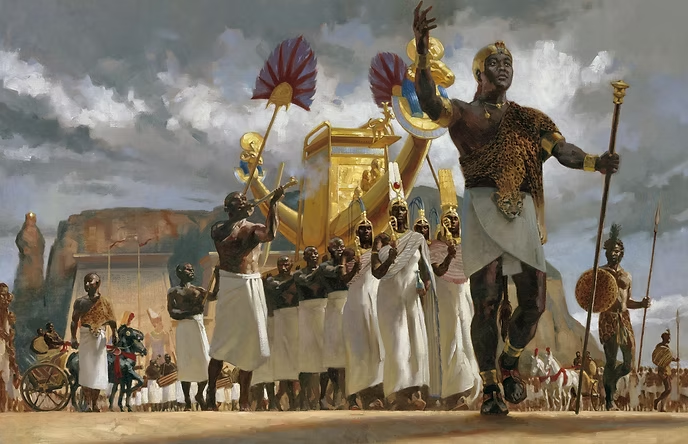
The Songhai Empire, which succeeded Mali as the dominant force in West Africa, stretched across what is now Mali, Niger, Senegal, and parts of Nigeria. The empire’s great city of Timbuktu was not a remote outpost, it was a centre of Islamic learning, commerce, and intellectual culture. The University of Sankore produced scholars whose manuscripts on mathematics, medicine, jurisprudence, and astronomy survive to this day in libraries in Bamako and beyond. These were not primitive recordings. They were contributions to global knowledge, extensively documented. Further south, Great Zimbabwe rose between the 11th and 15th centuries as the capital of a sophisticated civilisation whose granite walls, constructed without mortar, still stand. The Zulu developed botanical knowledge systems of remarkable sophistication. The Dogon of Mali possessed astronomical knowledge whose precision continues to attract the attention of modern scientists. The Ashanti confederacy, as noted, built constitutional governance structures of genuine complexity.
WHAT FOUR CENTURIES OF RESOURCE EXTRACTION ACTUALLY DID
Between the 15th and 19th centuries, the transatlantic slave trade transported an estimated 12 to 15 million Africans. Our earlier Black Star Ledger piece documented the macro-economic consequences the Nathan Nunn research linking slave trade exposure to present-day income levels, the demographic collapse from 13 per cent of global population in 1750 to 8 per cent by 1900. But the damage was structural in ways that statistics struggle to capture. Consider the human capital dimension. Those enslaved were disproportionately young and able-bodied, exactly the demographic necessary for innovation, building institutions, raising families, and transmitting knowledge across generations. Their displacement was not simply a labour loss. It was the systematic extraction of Africa's future-builders, decade after decade, for four hundred years. Researchers estimate there would have been 112 million more Africans alive by the 20th century had the slave trade never happened.
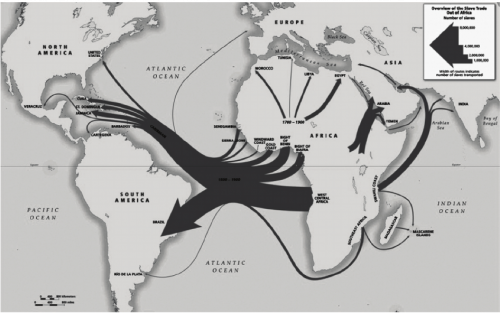
The political consequences were equally devastating. Empires and communities that might have developed into stable, expanding states were instead drawn into cycles of warfare and raiding each other to supply the slave market. Trust eroded. Ancient alliances fractured. Political development was not slowed; it was actively reversed. Regions that were building toward greater complexity and integration were fragmented and conflict. Economic development was warped. The slave trade shifted African economies from production growing, making, trading toward extraction and capture. Communities organised themselves around the supply of human beings rather than the supply of goods. Infrastructure that might have supported agricultural surplus, craft specialisation, and commercial expansion was redirected toward fortification, raiding, and survival.
And there is the psychological dimension, the hardest to quantify and perhaps the most enduring. The forced separation of families, the deliberate erasure of African identities the slaves faced from their masters, the sustained campaign to make subjugation feel natural these were not incidental cruelties. They were a systematic assault on the sense of self-actualization and self esteem. The internalisation of that assault is what Frantz Fanon would later call the colonised mind. It persists, in various forms, even to this day.
THE COUNTERFACTUAL: WHAT MIGHT HAVE BEEN
Counterfactual history is a careful enterprise. History does not run controlled experiments. But the reparations debate demands that we at least attempt the question, because the answer shapes both the moral case for repair and the practical vision for reconstruction. Consider the comparative evidence. Parts of East Asia, Japan, Korea, China experienced extensive foreign interference and internal conflict, but none experienced the systematic mass trade of people for centuries. By the time Europe industrialised in the 18th and 19th centuries, these societies retained the institutional continuity, the population density, and the accumulated social capital to eventually industrialise themselves. Africa, by contrast, entered the industrial age hollowed out.
It is reasonable to suggest that without the slave trade, West Africa in particular would have developed stronger, more centralised states with greater institutional depth. The wealth that flowed out of Africa through enslavement and later colonialism might instead have funded infrastructure, education, and the surplus accumulation that enables industrialisation. More unified trade networks might have created the conditions for a form of continental economic integration, an early version of what the African Continental Free Trade Area is now attempting to build, centuries later and from a much weaker base.
The point is not that Africa without the slave trade would have been a paradise. Human societies are complex everywhere. The point is simpler and more fundamental: Africa would have been internally driven. Its development would have responded to its own needs, its own resources, its own political logic, not to the demands of an external market for human bodies.
COLONIALISM:
THE INFECTION THAT FOLLOWED THE WOUND
If the slave trade was the wound, colonialism was the infection. The two phases of European extraction were not separate episodes. They were a continuous assault, each building on the vulnerabilities created by the previous one. The Scramble for Africa, formalised at the Berlin Conference of 1884-85 where European powers divided the continent among themselves with not a single African at the table, imposed artificial borders that cut across ethnic, linguistic, and cultural lines. Groups that had shared governance structures for centuries were separated. Groups that had been historic rivals were forced into the same administrative units. The resulting tensions were not incidental side effects. In many cases, they were deliberately cultivated as tools of colonial control.
Colonial economic policy was explicitly extractive. Raw materials flowed out; manufactured goods flowed in. Railways ran from mines to harbours, not from city to city. The architecture of dependency was carefully engineered. By the time formal independence came for most African nations in the 1950s and 60s, the institutions they inherited were designed for extraction, not development.
Ghana's independence in 1957, while historic, illustrated this dynamic precisely. The institutions Nkrumah inherited the bureaucracy, the legal system, and the trade relationships were all oriented toward serving British interests. Reorienting them toward Ghanaian development proved enormously difficult, even for a leader as capable and visionary as Nkrumah. The game had changed. The rules had not.
THE PRESENT QUESTION:
WHAT DO WE DO WITH WHAT WE HAVE?
Here is where, as we argued in The Black Star Ledger, the conversation must shift not abandon history, but refuse to be paralysed by it. Understanding the weight of what was done is necessary. It is not sufficient. The question is no longer only what was done to Africa. It is also what Africa does with what it has. This is not an invitation to let colonisers off the hook. History explains the wound. It does not prevent healing. And the two obligations, the obligation of those who extracted to repair, and the obligation of those who inherited the damage to rebuild are not in conflict. They are complementary.
GOVERNANCE
The governance failures of post-independence Africa are well documented. Leaders who looted national treasuries. Electoral systems designed to subvert rather than reflect popular will. Institutions so weak that a change of government meant a change of everything. Rwanda emerged from genocide less than three decades ago. Botswana built one of Africa's most stable economies through deliberate choices about transparency and rule of law. Governance is not destiny. But it is consequential. The reparations agenda that Ghana is leading at the UN will require governance infrastructure capable of managing the resources and accountability demands of any settlement. That infrastructure must be built now.
MINDSET AND MENTAL LIBERATION
Nkrumah understood and Fanon articulated that the deepest damage of colonialism was not material. It was psychological. The colonised mind: the internalisation of the coloniser's values, the devaluation of African culture, the preference for Western expertise over African knowledge. Decades after formal independence, this persists. It appears in educational systems that still train children to aspire to emigrate rather than build. It appears in the ambivalence many Africans feel about African languages, philosophies, and ways of knowing. Mental liberation is not a soft prerequisite. It is the foundation without which genuine, self-directed development is impossible.
ECONOMIC DEVELOPMENT AND RESOURCE STEWARDSHIP
Africa sits atop extraordinary natural wealth. Oil, gas, diamonds, gold, coltan, lithium, and cobalt, the minerals that power the 21st-century global economy, are disproportionately located on African soil. And yet the majority of African nations remain net exporters of raw materials and net importers of manufactured goods. The colonial trade structure, in its essential logic, persists.
This is precisely the dynamic the reparations movement must address not as charity, but as structural correction. As we outlined in The Black Star Ledger, the argument emerging from the AU and the broader reparations coalition is not simply 'pay us.' It is 'stop charging us to access a system built from extracting our wealth.' Debt cancellation, IMF conditionality reform, the proposed Pan-African Credit Rating Agency these are not peripheral demands. They are the core economic logic of repair.
ARE WE DOING ENOUGH? AN HONEST ASSESSMENT
There is genuine, remarkable progress to acknowledge and we should acknowledge it without qualification. The mobile money revolution that began in Kenya and spread across the continent has brought financial services to millions who never had bank accounts. African fintech is now world-class. The Afrobeats explosion driven by Nigerian artists but now carrying voices from across the continent has reshaped global popular culture. African writers, filmmakers, and fashion designers are commanding international attention on their own terms. The African Continental Free Trade Area, if properly implemented, could do what Nkrumah dreamed of: build a unified continental market that enables industrialisation at scale.
Ghana's own trajectory since the reparations push illustrates the possibility. The Year of Return initiative Nkrumah's vision of diaspora reconnection translated into policy generated over $1.9 billion in economic activity. The 17th Region concept, recognising the African diaspora as part of Ghana's national fabric, is both symbol and economic strategy. It is what development looks like when it is internally driven and culturally grounded. And yet. The pace of transformation is not commensurate with the urgency of the need. Governance in too many countries remains captured by narrow elites. Economic diversification is advancing too slowly. The brain drain continues to bleed the continent of the talent it most needs. Democratic backsliding coups, election manipulation, the erosion of judicial independence has accelerated in recent years. Climate change, for which Africa bears the least historical responsibility, threatens the agricultural systems on which hundreds of millions depend.
There is a particular paradox that haunts post-independence Africa: freedom without transformation. The formal structures of oppression are gone. But the structures of the economy, of too many governments, and of the mind remain oriented toward serving external interests over internal needs. This is the paradox that must be named, confronted, and dismantled.
THE WAY FORWARD:
REWRITING AFRICA'S STORY
The narrative of Africa is not finished. It has barely begun. The same continent that produced Mansa Musa and Queen Nzinga, that built the walls of Great Zimbabwe and the manuscripts of Timbuktu, that gave the world Kwame Nkrumah's vision of self-determining Pan-African development, this continent is not waiting for rescue. It is waiting for itself.
What does the way forward require? It requires education that teaches children to think, to create, and to build not merely to pass examinations designed for colonial bureaucracies. It requires institutions built to last beyond individual leaders: constitutions honoured, courts genuinely independent, electoral systems that reflect rather than subvert the will of the people. The boring, unglamorous, absolutely essential work of institution-building is the precondition for everything else. It requires Pan-African collaboration in economic, political, and cultural. The AfCFTA is a beginning. It must be deepened. The artificial borders drawn in Berlin did not only separate peoples; they created the smaller national markets that make industrialisation harder and the rival governments that make collective bargaining with external powers weaker. Africa's strength has always been collective. That remains true.
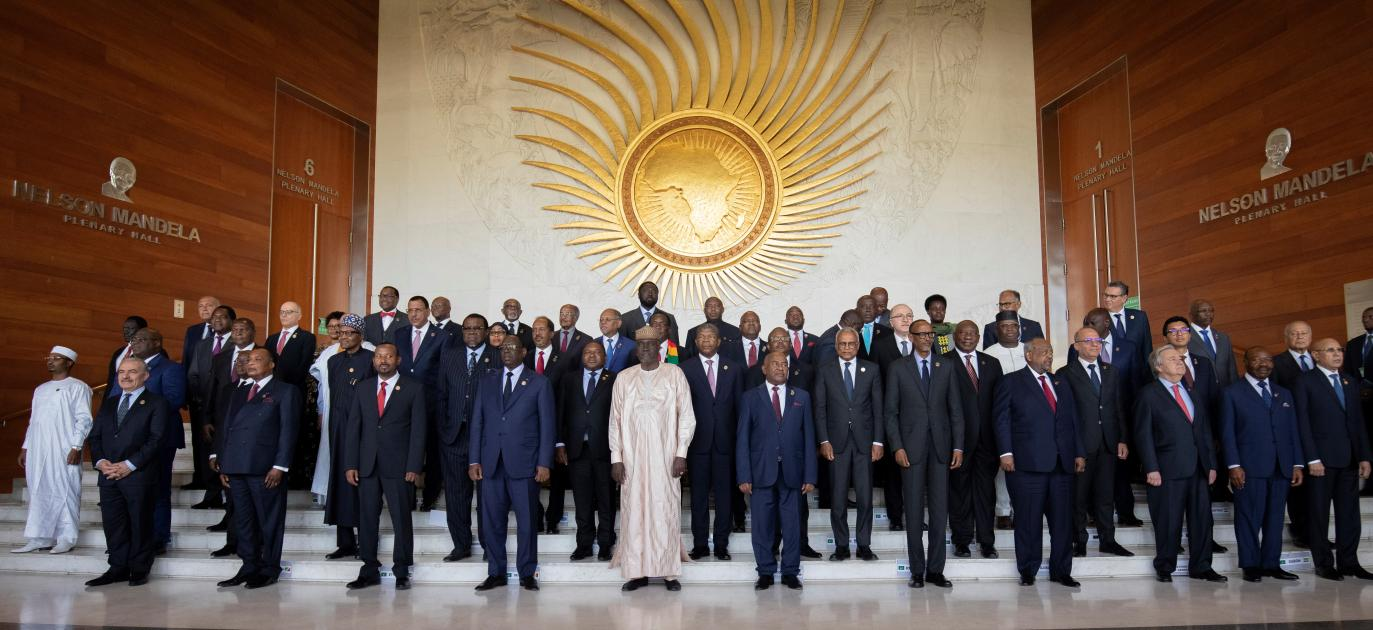
It requires cultural confidence. African languages, philosophies, artistic traditions, and governance structures are valid and valuable not secondary derivatives of Western equivalents. This is the psychological foundation Nkrumah insisted on, and it is the foundation without which genuine development is impossible. And it requires the hundreds of millions of Africans under 35 to see themselves not as inheritors of failure, but as architects of possibility. The demographic reality of Africa is, paradoxically, one of its greatest advantages. A young continent educated, employed, and empowered is a continent with extraordinary creative energy available for deployment. That energy is not waiting for the right conditions. It is being deployed right now, in a thousand ways, by a thousand people who wake up every morning and choose to build.
THE QUESTION THAT DEMANDS AN ANSWER
We began this series, in The Black Star Ledger, with a vote 123 countries at the United Nations declaring the transatlantic slave trade the gravest crime against humanity in recorded history, and Ghana standing at the centre of that declaration. We noted then that the vote changed the global conversation from 'Was this wrong?' to 'What are we going to do about it?'
This piece has tried to answer a deeper version of that question, not the diplomatic one, but the developmental one. What was interrupted? What was being built? What does building actually mean?
The slave trade happened. Colonialism happened. They shaped the world we inherited. But they cannot shape the world we build unless we allow them to. Unless we choose passivity over agency, blame over responsibility, grievance over ambition. Africa's story is being rewritten. Not by those who disrupted it but by the millions of Africans: farmers and engineers, teachers and artists, coders and community organisers, mothers and fathers who wake up every morning and choose, against considerable odds, to develop something. Something internal. Something self-directed. Something that responds to African needs, African priorities, and the African capacity to determine its own future.