Kenya’s Gen Z Protests Still Matter After Two Years.
On June 25, 2026, flowers returned to the streets before the chants did. Outside Kenya’s Parliament, families of young people killed during the 2024 anti-government protests gathered to lay wreaths on police barricades that had once separated demonstrators from the state.
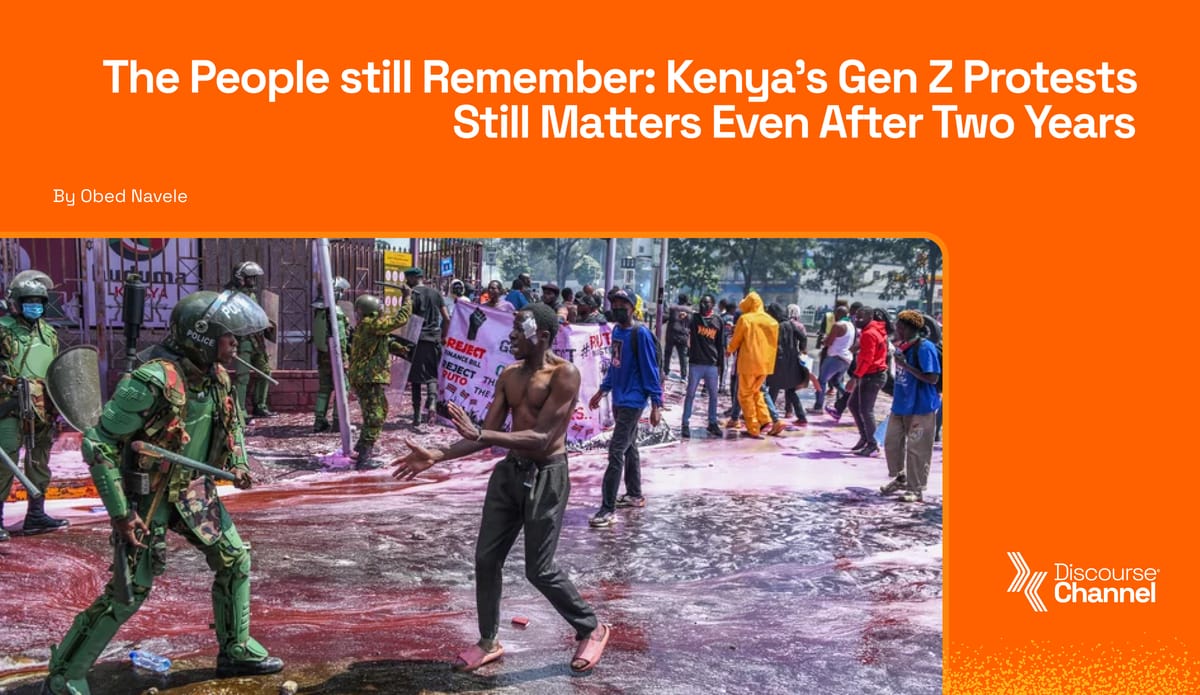
On June 25, 2026, flowers returned to the streets before the chants did. Outside Kenya’s Parliament, families of young people killed during the 2024 anti-government protests gathered to lay wreaths on police barricades that had once separated demonstrators from the state. It was an act of remembrance, but also one of quiet defiance. Two years after the demonstrations that transformed Kenya’s political landscape, the demand remained unchanged: justice for those who never returned home.
The government’s response suggested that the chapter was far from closed. Central Nairobi was placed under heavy security, police established roadblocks across the city, hundreds of protesters were arrested nationwide, and tear gas was again used to disperse crowds.
The images were strikingly familiar. They also raised an important question that reaches beyond Kenya: what happens when a protest movement outlives the event that created it?
More Than an Anniversary
The demonstrations began as opposition to proposed tax increases under the Finance Bill. Young Kenyans argued that higher taxes would deepen an already difficult cost-of-living crisis marked by unemployment, rising prices and economic uncertainty. But the protests quickly became about far more than taxation.
They evolved into a broader expression of frustration over governance, corruption, accountability and the growing disconnect between political leaders and ordinary citizens. Organised largely through social media and without traditional political leadership, the movement represented a new generation of civic participation that challenged long-standing assumptions about how political mobilisation occurs in Africa.
For many observers, the protests marked one of the most significant moments in Kenya’s democratic history since the reintroduction of multiparty politics.
Two years later, their mission remains unfinished.
When Justice Remains Unresolved
Anniversaries usually commemorate events that have reached some form of conclusion. Either reforms have been implemented, investigations completed or political disputes settled. The continued commemorations in Kenya suggest something different. For many families, the anniversary is not simply about remembering those who died. It is about insisting that their deaths remain part of the national conversation until accountability questions are answered.
This distinction matters. Public memory often becomes politically significant when official processes are perceived to be incomplete. Where citizens believe justice has been delayed, remembrance itself becomes a form of civic engagement. Flowers, vigils and peaceful gatherings therefore carry meanings beyond grief. They communicate that unresolved questions cannot simply disappear with time.
The Rise of Africa’s Digital Generation
One of the defining characteristics of Kenya’s Gen Z movement was how it organised itself.
Unlike many earlier protest movements led by political parties, trade unions or established civil society organisations, much of the mobilisation occurred online. Young people coordinated demonstrations through social media, shared live updates, fact-checked information and raised funds independently.
The movement reflected a broader transformation taking place across Africa. The continent’s population is among the youngest in the world. Increasing internet access and widespread smartphone use have created new spaces for political participation that operate outside traditional institutions.
Young Africans are increasingly willing to question government decisions directly rather than waiting for political elites to speak on their behalf. This shift changes the relationship between citizens and the state. Governments now confront movements that are decentralised, rapidly organised and difficult to contain through conventional political negotiation.
Governing in the Age of Networked Protest
Every government has a legitimate responsibility to maintain public order and protect lives. At the same time, democratic governments depend on public confidence that citizens can express disagreement without fear of excessive force.
Balancing those responsibilities is becoming increasingly difficult. Heavy security deployments may reduce immediate risks of violence, but they also carry political consequences. When anniversary commemorations require extensive policing, they can reinforce public perceptions that the underlying tensions remain unresolved.
The challenge therefore extends beyond managing demonstrations. It involves rebuilding trust between governments and citizens who increasingly expect transparency, accountability and meaningful engagement.
Kenya Is Not Alone
Kenya’s experience reflects wider developments across Africa.
In recent years, youth-led movements have influenced political debates in several countries. Demonstrations have addressed police brutality, constitutional reform, governance, economic hardship and democratic accountability. While each movement has emerged from different national circumstances, many share common characteristics: young organisers, digital mobilisation and demands that extend beyond a single policy issue.
These movements suggest that African politics is undergoing an important generational transition. Rather than viewing citizenship primarily through elections held every few years, many young people increasingly see participation as continuous. Public demonstrations, digital campaigns, investigative journalism and civic advocacy have become part of everyday democratic engagement. Governments therefore face a changing political environment in which legitimacy depends not only on electoral outcomes but also on sustained responsiveness to public concerns.
The Politics of Memory
Memory has always played an important role in political life. National holidays celebrate independence. Memorials honour those lost in conflict. Annual commemorations preserve shared histories. What distinguishes Kenya’s anniversary is that remembrance itself has become part of an ongoing political conversation.
The families returning to Parliament are not only preserving history. They are asking whether the country has fully confronted what happened during one of its defining political moments. This transforms memory from something retrospective into something active. It becomes a continuing dialogue about responsibility, accountability and the kind of democracy citizens wish to build.
Lessons Beyond Kenya
The Kenyan anniversary illustrates an important lesson.
Political movements rarely end simply because demonstrations stop. Where grievances remain unresolved, movements often evolve. They become embedded in public memory, civil society, community organising and national political identity. For policymakers across the continent, this suggests that restoring public order is not necessarily the same as resolving political conflict. Long-term stability depends not only on security measures but also on institutions capable of investigating grievances, building trust and responding credibly to citizens’ concerns.
Why This Matters
The flowers placed outside Kenya’s Parliament represented more than remembrance. They symbolised a continuing conversation between citizens and the state about justice, accountability and democratic participation. Two years after the Gen Z protests, Kenya is no longer debating only what happened in 2024.
It is debating what should happen next.
That distinction is important because the strength of a democracy is measured not only by how it manages moments of protest, but also by how it responds once the crowds have dispersed. For Kenya and increasingly for many African countries, the challenge is no longer simply preventing demonstrations.
It is ensuring that the issues which brought people into the streets are not left unresolved. Until then, each anniversary is likely to serve as more than a memorial. It will remain a reminder that political movements do not always survive through marches alone. Sometimes they endure because citizens refuse to let memory fade before justice arrives.