Africa Is Demanding Recompense for Slavery
The global conversation on reparations has been trapped between two narratives. To some, it represent a moral obligation owed to the descendants of slavery & colonialism. To some, it is viewed as an impractical attempt to assign responsibility for historical crimes to contemporary societies.
EDITOR'S NOTE:
This piece is the third in a continuing series. It follows our earlier investigations, The Black Star Ledger: Centuries of Debt, Why Ghana's UN Reparations Push Could Redefine Africa's Economic Future,. In that piece, we explored what the UN resolution of March 25, 2026 means legally, financially, and diplomatically and why Ghana stood at the centre of that historic vote. This piece asks a hard question underneath all of it: What did Africa actually lose? And what does it mean to develop from that loss?. The second piece HAD IT NEVER HAPPENED -Africa's Stolen Potential, The True Meaning of Development, and the Weight of What Remains. It explores the structural and cultural potential lost in Africa prior to colonial arrival, arguing that true developmental progress requires understanding this historical extraction. The article argues that repairing this loss involves redefining development by recognizing the scale of what was stripped away.
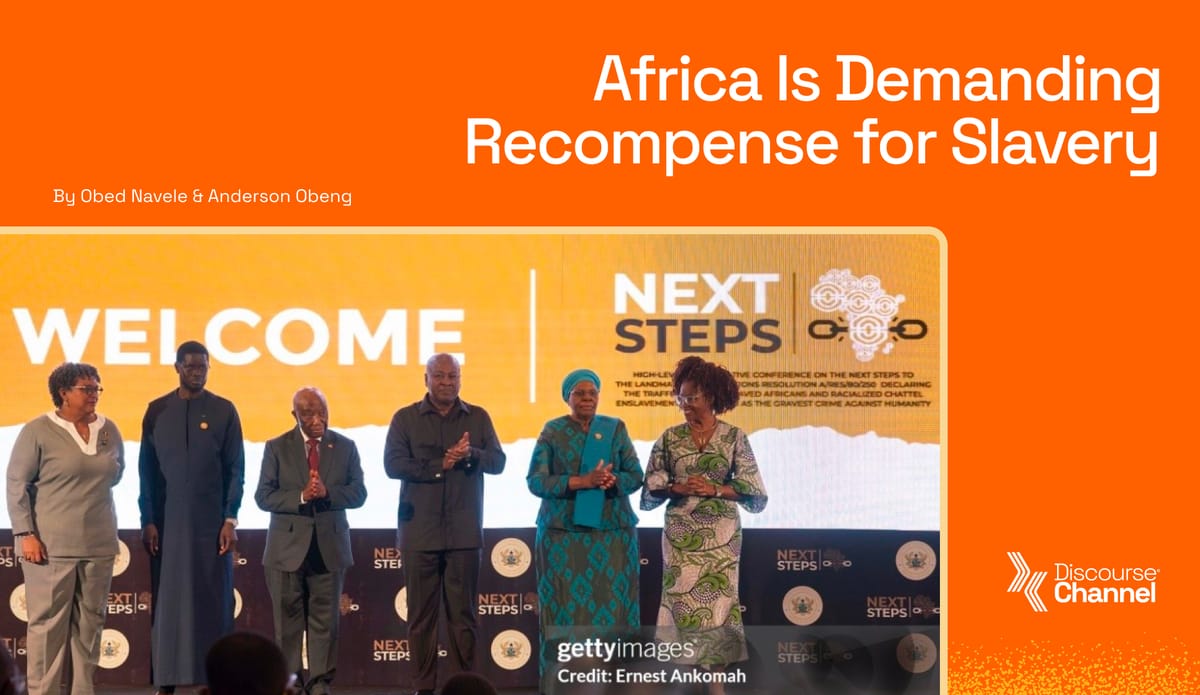
Today, the reparations debate is no longer considered just about history. In Ghana, African and Caribbean leaders, scholars, lawyers and activists gathered to make a broader argument: that the legacy of slavery and colonialism is not only a matter of remembrance, but a live political and economic issue that still shapes the present.
The past has a way of hiding inside the present, quietly dictating who wins and who loses long after the history books are closed. For decades, the global conversation on reparations has been trapped between two competing narratives. To some, reparations represent a moral obligation owed to the descendants of those who suffered slavery, colonialism, and racial exploitation. To others, they are viewed as an impractical attempt to assign responsibility for historical crimes to contemporary societies. Lost between these positions is a deeper question: what does justice look like when the consequences of historical injustice continue to shape the present?
At the centre of the discussion raises a reflective question: what should justice look like now? The Ghana Reparations Conference, held from June 17 to 19, 2026, gave renewed momentum to a campaign that has long been pushed by Pan-Africanists, historians and diaspora communities. For decades, advocates for reparations have argued that states and institutions that benefited from slavery and colonial exploitation must do more than acknowledge the past. They must take practical steps to repair the damage. What was once treated as a moral appeal is increasingly being framed as a question of accountability, international law, economic justice and political responsibility.
A Historical Wrong With Present-day Consequences
The case for reparations rests on the argument that the wealth generated by slavery and colonial exploitation helped build Europe and the Americas, while leaving African societies weaker, more fragmented and less able to develop on their own terms.
Supporters of reparations say the effects of that history are still visible today. They point to persistent inequality, underinvestment, broken institutions, land dispossession, lost cultural heritage and structural disadvantages that were never fully reversed after independence.
In that sense, the Ghana conference was not just a look backward. It was also a conversation about the present. The speakers and participants treated reparations as a response to unfinished business: the economic, political and social consequences of centuries of extraction that continue to affect African countries and Black communities across the world.
Key Voices At The Conference
Although Ghana hosted the conference, the discussion was never only about Ghana. The issue cuts across the African continent and the wider Black diaspora. Many speakers framed reparations as a Pan-African question, one that links African states with descendants of enslaved people in the Caribbean, the Americas and beyond. That connection was central to the conference’s significance. It reflected a growing belief that the politics of reparations must also include diaspora engagement, since the effects of slavery stretched far beyond Africa’s shores.
This is why citizenship and rights of return came up as part of the debate. For some advocates, reparations should include mechanisms that rebuild historical relationships broken by the slave trade. That could mean easier access to citizenship, stronger cultural ties, and formal recognition of the African diaspora as part of a broader reparative project.
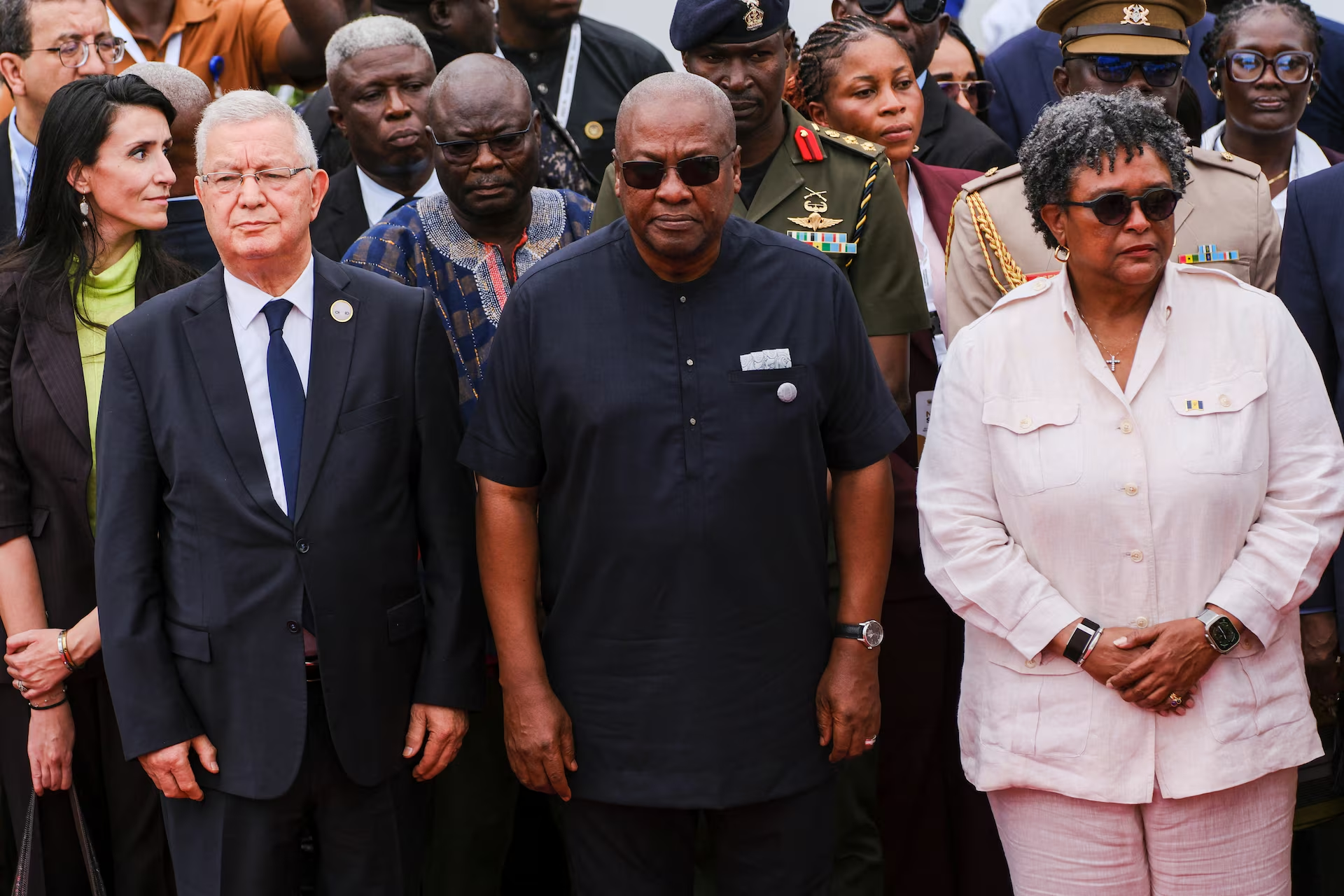
HE. John Dramani Mahama, African Union Champion on Advancing the Cause of Justice and Payment of Reparations; ‘’Reparatory justice will not be handed to us. Like political independence, it must be asserted, pursued and secured through determination and unity. The transatlantic slave trade was the gravest crime against humanity, and the structural inequalities, racial discrimination, and economic disparities we see across the Global South today are its direct, enduring scars. We must now move beyond symbolic apologies and the simple return of artifacts. The international community must transition from mere recognition to actual responsibility, establishing concrete legal and financial pathways under international law to secure the formal repair and economic equality that our people have been denied for centuries’’.
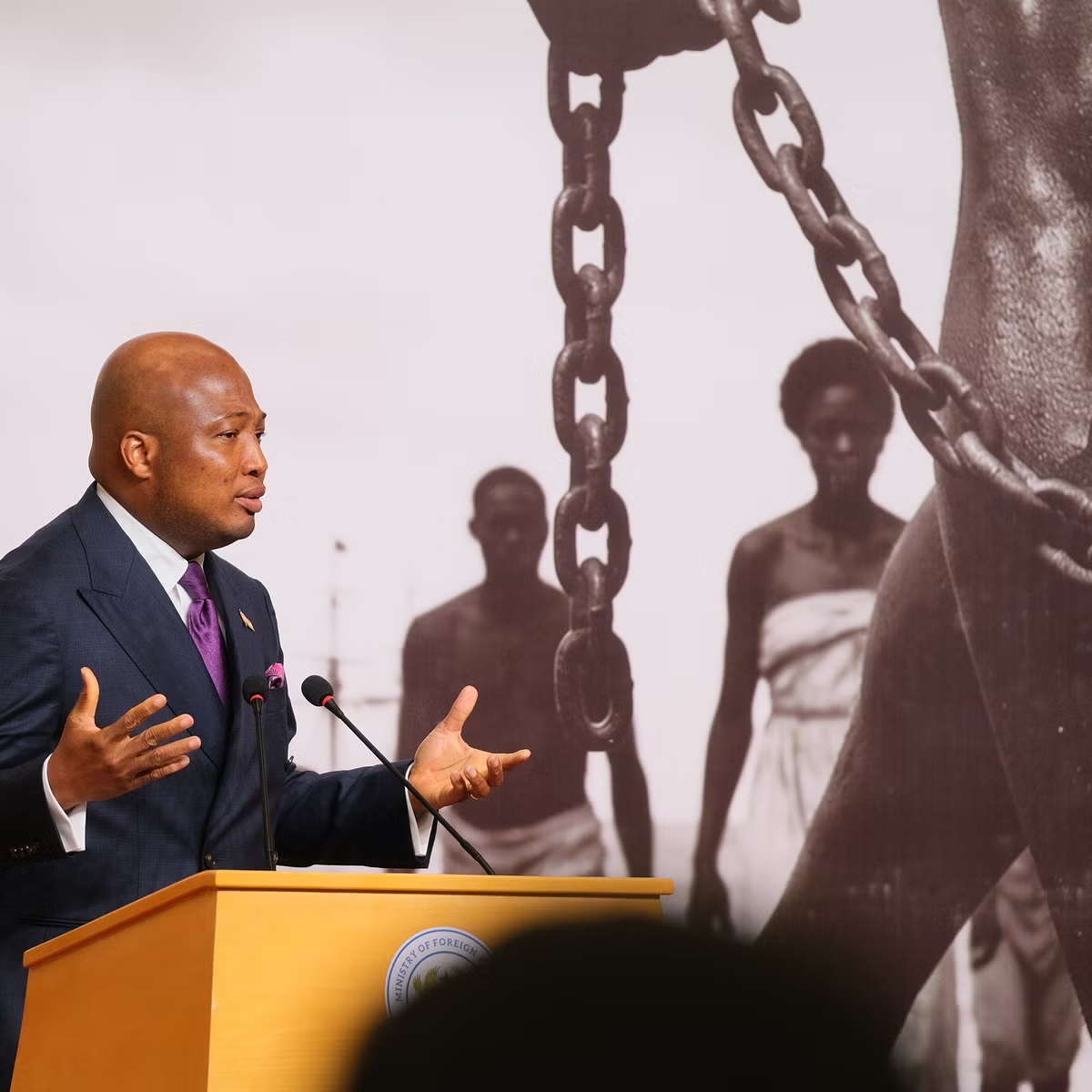
Samuel Okudzeto Ablakwa, Ghana’s Minister for Foreign Affairs; Ghana's proactive efforts to move beyond symbolic apologies toward securing concrete reparations and the return of looted artifacts from Germany and the Netherlands. The initiative aims to transform historical sites of colonial atrocities into global hubs for healing, emphasizing a shift toward systemic equity, structural reform, and the restitution of cultural heritage.
President Bassirou Diomaye Faye ; "The time has come to move from words to action" regarding the global reparations agenda. He emphasized that implementing the landmark UN resolution on the transatlantic slave trade serves as a critical test for both the African continent and the international community.
Prime Minister Mia Mottley; She called for coordinated and sustained efforts among all stakeholders to advance reparatory justice. She cited investments in education, healthcare, land reform and economic empowerment as essential forms of repair. She outlined key elements of CARICOM’s revised Ten-Point Plan for Reparatory Justice, including formal apologies, cultural restitution, public health initiatives, educational development, psychological rehabilitation, debt relief and measures to support sovereignty and sustainable development.
HE. Dr. Netumbo Nandi-Ndaitwah; She said that the pursuit of justice is often slow and complex but expressed optimism that through sustained engagement reparatory justice would be achieved. She further stressed the importance of African unity and solidarity, noting that the African diaspora remains an integral part of the future of the continent. She called for greater efforts to address all aspects of the legacy of slavery and colonialism and urged Africans to continue reclaiming their history, confidence and identity.
Hilary Beckles argued that humanity cannot progress with the toxic remnants of colonization and urged using the CARICOM Ten-Point Plan as a unified global blueprint to clear this historical mess; Wole Soyinka insisted that reparatory justice must extend beyond financial payouts to focus heavily on the collective restoration of African identity, dignity, and memory; Emmanuel Macron acknowledged the dehumanizing horror of the slave trade, stating that reparations should be part of an ongoing process of historical recognition rather than just a written check to close the story.
Ultimately, the collective voice of the conference issued an undeniable verdict: the era of voluntary charity is over, and the era of enforced accountability has begun. The demands ranged from the restitution of cultural heritage and debt relief to the radical reform of global financial institutions, forming a comprehensive blueprint for repair. Even acknowledgements from former colonial powers that reparations are "more than a check" served only to validate the conference’s deeper insistence on institutional change.
What Ordinary Africans Are Saying
If you leave the conversations that went on at the conference hall and go into the streets, markets, taxis, campuses and churches, many ordinary Africans may not use the word “reparations” every day. But they understand injustice when they see it. A market woman, a farmer, a young graduate, a trader, a teacher, they may all speak differently, but many would ask the same thing: why should Africa still be the one carrying the burden of a history it did not choose?
Our interviews with citizens across Africa reveal a profound disconnect between high-level political discourse and daily life. For them, the continental crisis is not a matter of abstract policy, but a stark, lived reality marked by eroded roads, underfunded schools, crumbling healthcare infrastructures, and skyrocketing youth unemployment. When these communities are reminded of how Africa's immense wealth was historically extracted to build foreign empires, it requires no academic seminar for them to grasp the connection. They understand instinctively that today's structural poverty is the direct, enduring legacy of yesterday's exploitation.
The African diaspora; For Africans in the diaspora, the reparations conversation carries another layer. Many of them are not only thinking about compensation. They are thinking about home. For descendants of enslaved Africans in the Caribbean, the Americas and elsewhere, the loss is not only economic, It is genealogical, spiritual, cultural, and a rupture of identity.
In our discussions with them, certain questions kept coming up:
- Where do I belong?
- Can I return?
- Can I claim citizenship?
- Can I reconnect with the continent that was taken from my ancestors?
- Can I be made whole in some way?
That is why the idea of citizenship pathways and rights of return keeps appearing. For many Africans in the diaspora, justice is not only a check. It is a door. A door back to ancestry, back to recognition and back to the continent.
And this is a powerful part of the reparations debate, because it shifts the discussion from punishment to restoration
What Reparations Could Actually Mean
The conversation in Ghana went beyond apologies. Participants discussed whether reparations should include financial compensation, return of stolen cultural artefacts, formal apologies, development support, citizenship pathways and other measures aimed at addressing the continuing effects of historical injustice.
For many of the advocates, the issue is not whether slavery and colonialism caused harm. That part of the argument is settled. The real debate is how that harm should be recognised, measured and repaired. That shift matters. It means reparations are no longer being discussed only in moral terms, but also in policy terms. The conference showed that the movement is trying to move from symbolic recognition to concrete action.
One of the strongest themes to emerge from the conference was feasibility. If reparations are going to matter, they must be more than a slogan. That means asking what form justice should take.
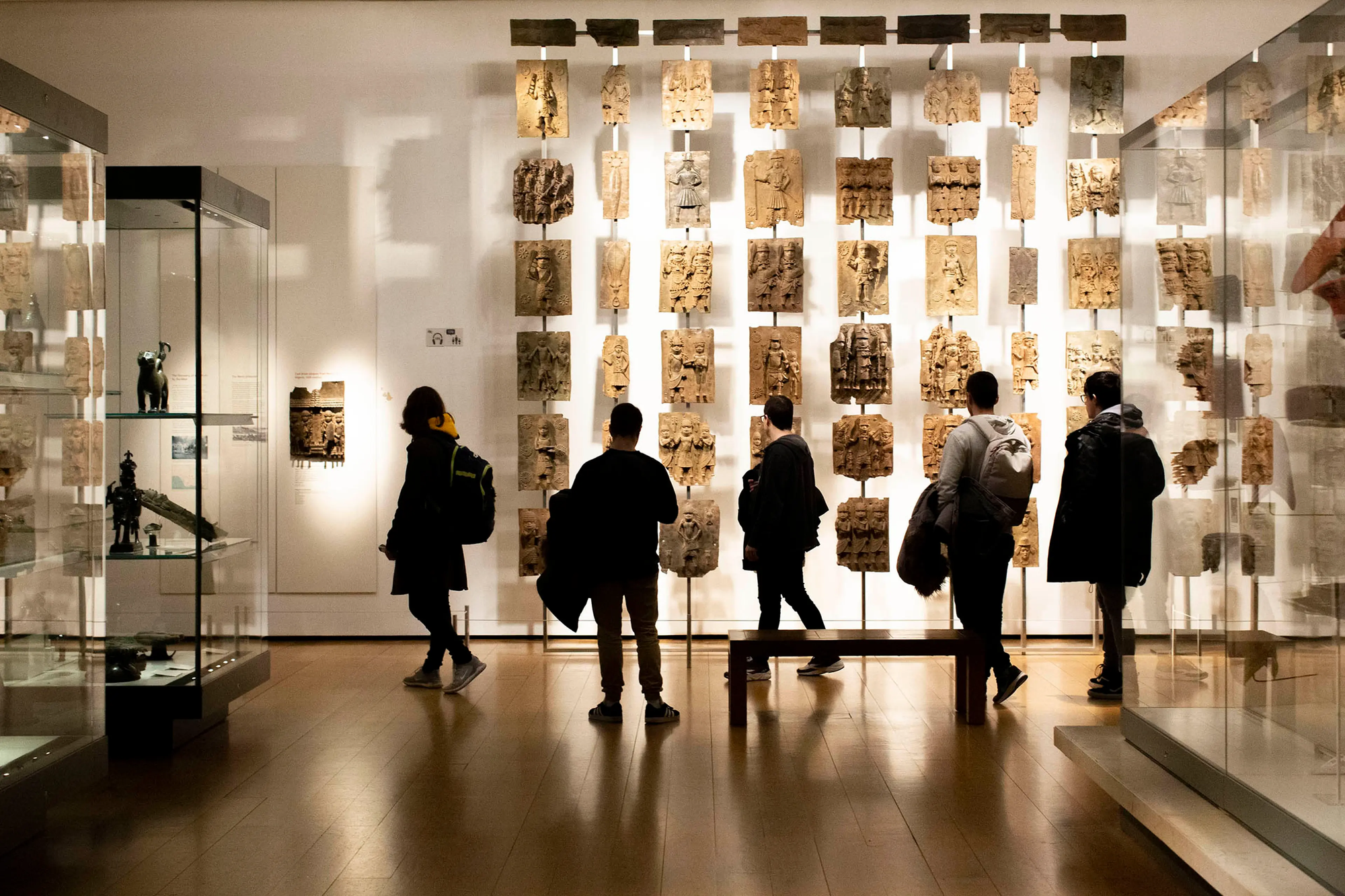
Among the measures discussed were:
- Financial compensation for the harms caused by slavery and colonialism
- Restitution of cultural artefacts taken from Africa
- Formal apologies from states and institutions that benefited from exploitation
- Investment in education, public infrastructure and development programmes
- Citizenship rights or pathways to return for members of the African diaspora
- Stronger institutional partnerships between African states and diaspora communities
These ideas reflect a wider view that reparations should not be seen as a single payment or a one-time gesture. Instead, they could be a set of actions designed to restore dignity, rebuild historical ties and deliver long-term benefits. That broader framing is important because the consequences of slavery and colonialism were not limited to money. They affected identity, land ownership, political power, family structures, language, culture and mobility. A meaningful reparations framework, advocates say, should reflect that complexity.
The Hard Questions
Who should pay? Should it be former colonial powers, institutions, corporations, churches or all of them? Who should receive compensation? Should it go to states, communities, descendants of enslaved people, diaspora groups or all of the above? And how can the damage caused by centuries of exploitation be measured in a way that is fair and workable?
Those questions are central to why reparations have remained so difficult to implement.
Unlike a straightforward political demand, reparations require agreement on history, responsibility, legal framework and delivery. Even among supporters, there is no single model. Some favour financial compensation, others argue that the priority should be the return of cultural property, policy reforms or symbolic recognition. Still, the Ghana conference suggested that the debate is moving forward. Even if agreement is distant, the pressure to define what reparations should look like is growing.
Why The Timing Matters
The Ghana conference happened at a moment when global attention to colonial history is again intensifying. Across Europe and Africa, there have been renewed debates about looted artefacts, historical memory and the responsibility of former colonial powers. Some governments and institutions have begun returning cultural objects taken during the colonial era, while others remain resistant.
That broader context has given new energy to the reparations agenda. Advocates say these developments show that the world is finally beginning to confront how deeply slavery and colonialism shaped modern global inequality. But they also warn that symbolic acts alone are not enough. Returning artefacts or issuing apologies, they argue, should be part of a wider process that includes material repair and structural change.
The Role Of Africa’s Leaders
Another major takeaway is the importance of political leadership. Supporters of reparations are increasingly looking to African leaders to push the issue from the stage of advocacy into formal diplomacy. That includes building consensus within the African Union, strengthening links with Caribbean governments and using international platforms to press for accountability.
Some leaders have already positioned themselves as champions of the cause. Their role is important because reparations will only move forward if African states speak with greater coordination and consistency. If reparations are to become more than a historical demand, they will need a political home one that can transform advocacy into negotiation.
From History To Action
The strongest argument is that the reparations debate must now shift from memory to action. Remembering the past is important. But advocates say memory alone is not justice. The legacy of slavery and colonialism was not abstract, It was material. It created wealth in some places and deprivation in others. It displaced people, broke families, emptied communities, and stripped societies of cultural and economic resources. That is why so many people argue that reparations must be practical. They must address the harm in ways that are measurable and meaningful.
A Demand That Is Becoming Harder To Ignore
The Ghana conference marked a pivotal moment in the global conversation on repatriation not just as a symbolic gathering, but as the first coordinated step toward tangible action. It succeeded in uniting diverse stakeholders, clarifying shared goals, and establishing a framework for future collaboration.
What comes next is critical. The momentum built in Ghana must now translate into concrete policies, sustained dialogue, and measurable outcomes. Key actions include formalizing international agreements, increasing transparency around provenance research, and empowering source communities in decision-making processes.
Editor's Statement
This is an unfolding story of systemic reckoning, and our reporting does not stop here. We will continue to follow the legal, cultural, and economic developments of this historic shift, bringing you deep-dive investigations and real-time updates as they happen. Stay tuned to this channel as we continue to track Africa’s journey toward true accountability and structural justice.