Africa Expands Underground Water Mapping to Combat Drought
Water scarcity is increasingly shaping political decisions, agricultural planning, and infrastructure investment across Africa. As climate pressures intensify, governments are shifting from surface-water dependency toward deeper scientific approaches that map and unlock underground reserves.
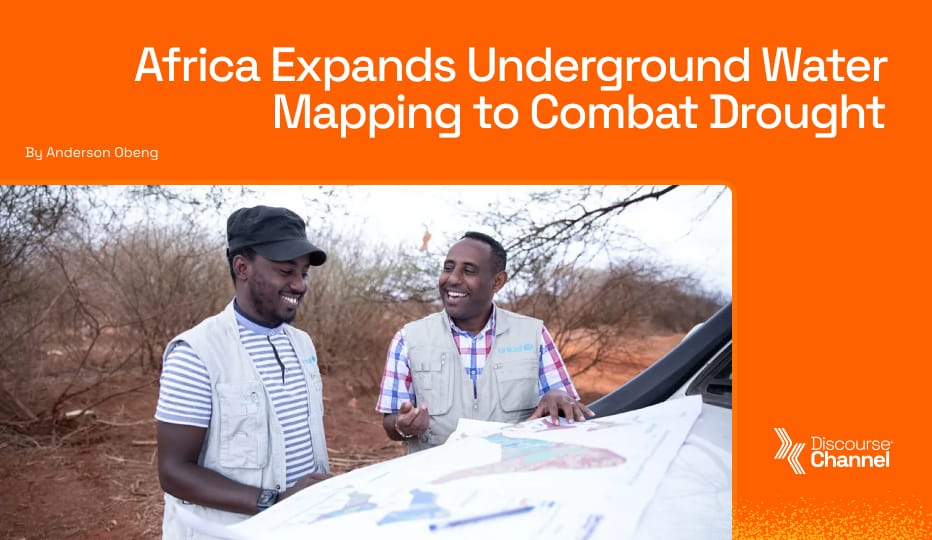
Water scarcity is increasingly shaping political decisions, agricultural planning, and infrastructure investment across Africa. As climate pressures intensify, governments are shifting from surface-water dependency toward deeper scientific approaches that map and unlock underground reserves. This week, new studies highlighted how water systems are becoming central to long-term climate resilience strategies.
The focus is on improving groundwater assessment systems, using advanced mapping technologies to better understand aquifer distribution and availability. These studies are becoming increasingly important as climate variability reduces the reliability of surface water sources.
Governments and research institutions are also exploring how improved water intelligence can support agriculture, urban planning, and emergency drought response systems. By strengthening knowledge of subsurface water resources, policymakers aim to reduce vulnerability in regions repeatedly affected by water shortages.
The developments reflect a broader shift in water governance, where long-term resilience is being prioritized over short-term supply responses. Investment in hydrological research is being positioned as a critical tool for climate adaptation across the continent.
What we are watching:
- Leaders from the Sahel region convened in Niamey, Niger, for a major summit focused on shared environmental security and regional resource management strategies.
- Research published in Nature confirmed that higher forest species diversity plays a key role in strengthening watershed protection, offering new scientific backing for conservation policy across African ecosystems.
The growing focus on underground water mapping and ecosystem-based research signals a broader shift in Africa’s climate response strategy. Water security is increasingly being treated not only as an environmental issue, but as a foundation for agriculture, stability, and long-term economic resilience.