Forty Percent of Sub-Saharan Africa’s Schools Have No Electricity.
By 2050, one in every four people on Earth will be African. The median age on the continent is 19.7, compared to nearly 40 in China. This "youth bulge" is either the engine of a global economic dividend or a ticking time bomb of social unrest.

Only 40 per cent of schools across sub-Saharan Africa have electricity. Not internet access. Not computers. Electricity. That figure, from the International Telecommunication Union’s 2022 connectivity report, is a number that should anchor every conversation about artificial intelligence, digital literacy, and the future of African education. It rarely does.
The Continent Is Debating What Comes Next.
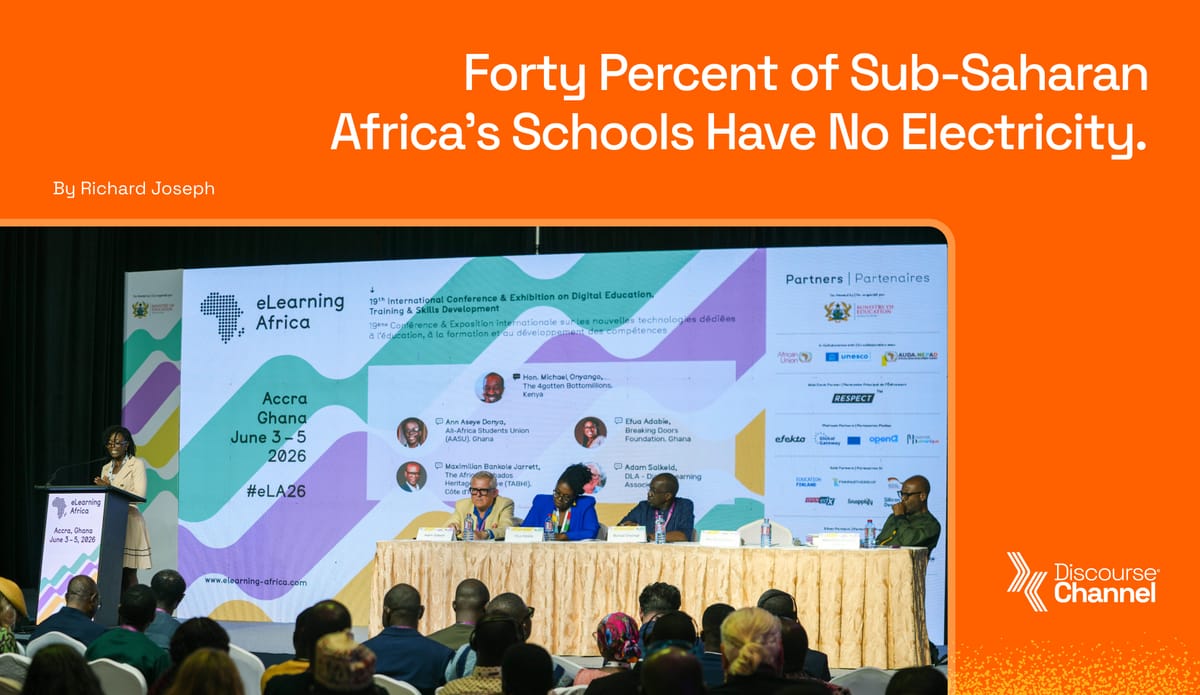
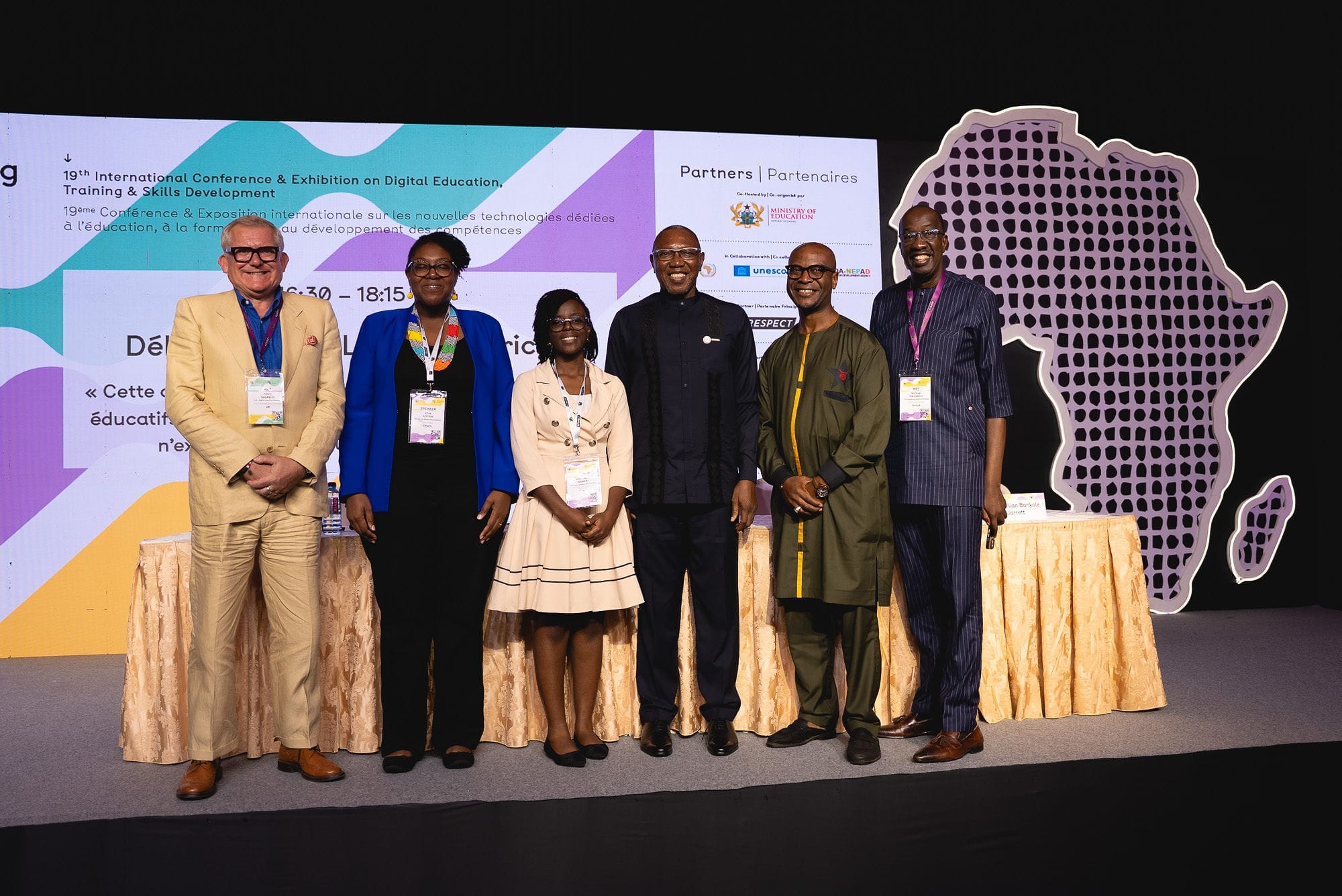
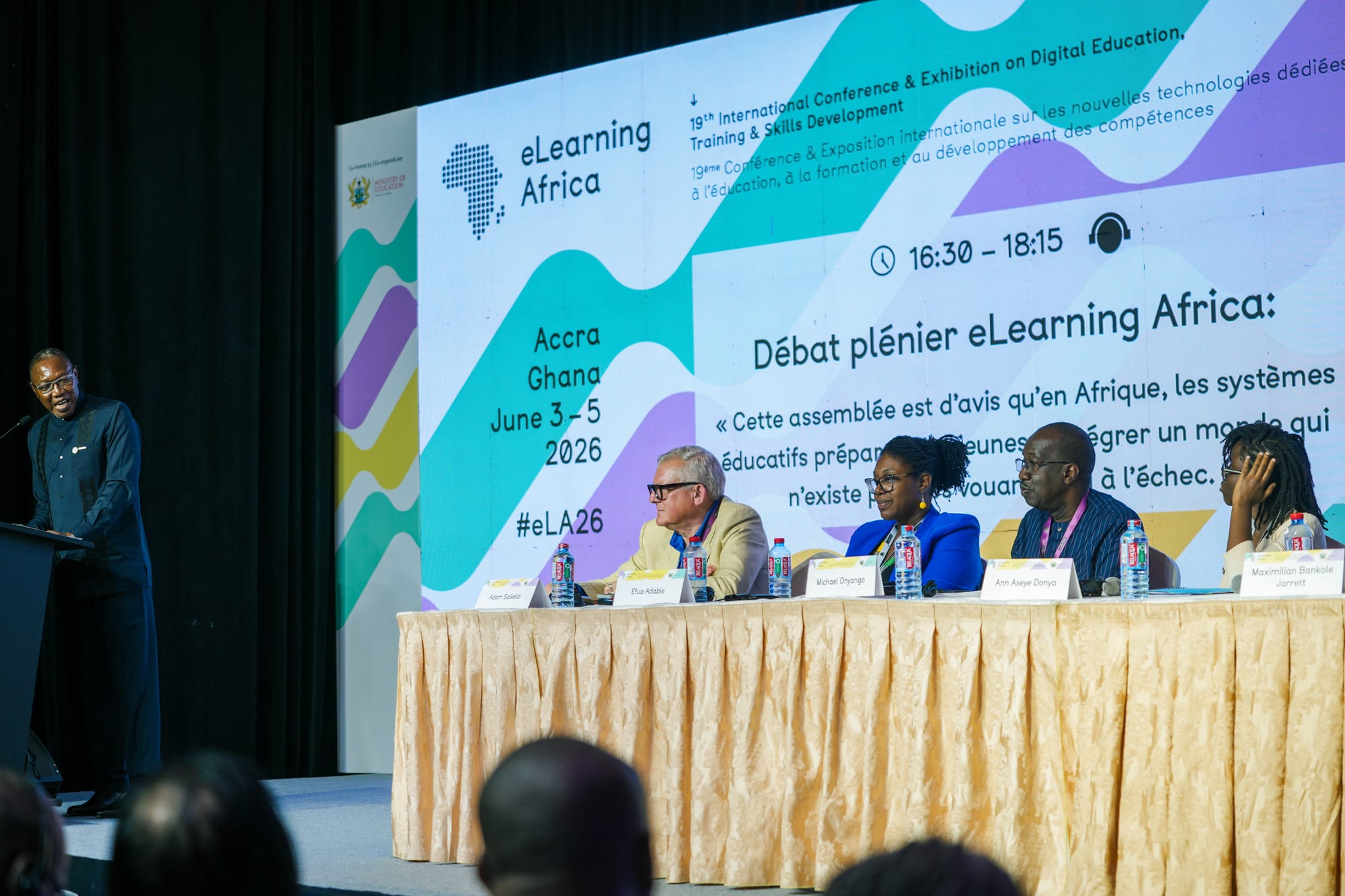
The 19th International Conference & Exhibition on Digital Education, Training & Skills Development closed with a formal debate that most international conferences would not have the courage to stage. The motion before the house was direct, deliberately uncomfortable: “This house believes that Africa’s education systems are preparing young people for a world that no longer exists and setting them up to fail as a result.” Four practitioners — two proposing the motion, two opposing it — each making their case. The audience, composed of educators, policymakers, technologists, and development professionals from across the continent and beyond, voted at the end. The motion passed, narrowly. Ghana’s Deputy Minister for Education, Dr Clement Apaak, who watched the vote from the front of the room, thought it might have been a tie.
Whether it was a tie or a narrow majority is not the point. The point is, the people who design, fund, and deliver African education gathered in the same room for three days and could not reach a consensus on whether their systems are working.
That result is the news peg. It is not the story. The story is what the four speakers and their audience collectively exposed the structural condition of African education, its genuine achievements, its documented failures, and the particular kind of governance deficit that sits between the two. This article uses the debate as its starting point and the continent’s structural reality as its subject.
The four debaters were drawn from the practitioner layer of the education sector, not its theoretical periphery. Proposing the motion were Ann Aseye Donya, a Ghanaian law student and policy adviser for gender equity at the All-Africa Students Union (AASU), and Maximilian Bankole Jarrett, Vice Chairperson of The Africa-Barbados Heritage Initiative (TABHI) and a former Divisional Manager at the African Development Bank Group, with 35 years spanning the BBC World Service, the United Nations system, and the Geneva-based Africa Progress Panel. Opposing them were Efua Adabie, educator and co-founder of the Breaking Doors Foundation in Ghana, with over two decades of hands-on teaching experience across the continent, and Adam Salkeld, Co-Founder and Director of Digital Learning Associates (DLA), a UK-based enterprise whose Ready to Run video series reaches 50 million learners worldwide and whose career began at the BBC as a producer on programmes including Panorama.
THE STRUCTURAL PROBLEM: Why Africa keeps diagnosing the right problem and implementing the wrong solution.
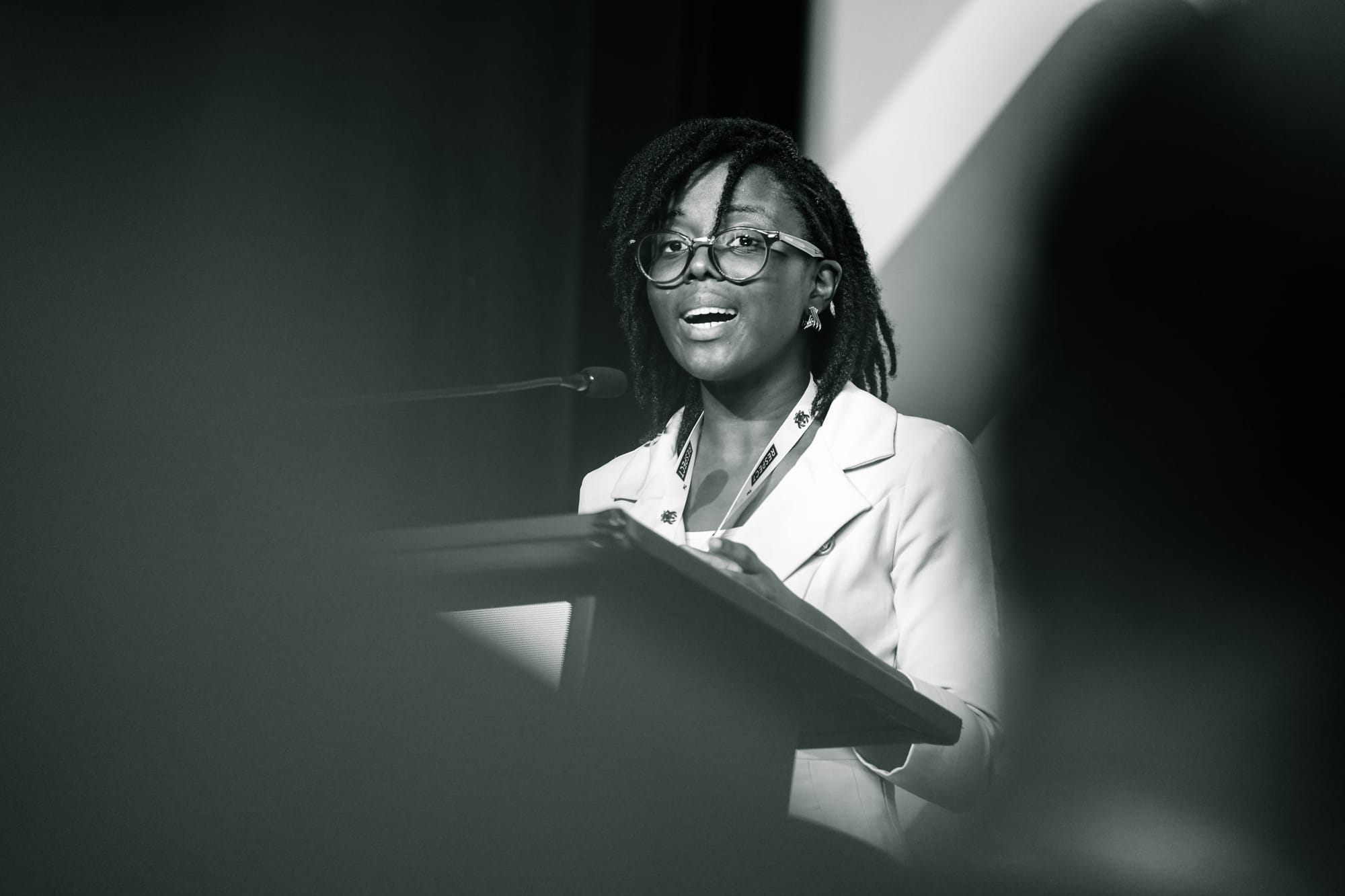
Donya opened with a theory. Lauren Berlant, the American cultural theorist, coined the term ‘cruel optimism’ in 2011 to describe a relationship in which the very thing a person is told will save them is quietly destroying them instead. Donya applied it to African education: a system that raises a generation’s hopes and, systematically, breaks them. Her reference, the World Economic Forum’s Future of Jobs reports across three consecutive editions, identifies the same four skills as most valuable in the global economy — problem-solving, digital literacy, adaptability, and creativity. The dominant model across most African university systems, she argued, addresses none of them.
“The lecture has the knowledge. The student receives it. The examination tests whether the student can reproduce it. There is no premium on questioning or building or applying knowledge to novel problems. There is a premium only on memory and compliance.” — Ann Aseye Donya, All-Africa Students Union
The comparative frame she built was precise. South Korea in the 1960s was poorer than many African nations today; its literacy rate was low, and its infrastructure was destroyed by war. Despite this, they built an export-driven economy by tying university admission quotas directly to national manpower forecasts, calculating how many engineers, chemists, and technicians the economy would need in ten years and calibrating enrollment accordingly. It invested in teacher quality until teaching became the most competitive profession in the country. Samsung and Hyundai are the downstream consequences. China reinstituted its national university entrance examination in 1977, subsidised STEM enrollment, and built elite research universities. It now produces approximately 1.4 million STEM graduates per year, more than the United States and Europe combined. Huawei and ByteDance are the downstream consequence of decades of deliberate, sustained state investment.
Africa, Donya argued, has consistently and correctly diagnosed the same problem and failed to implement the solution. In 2016, the African Union launched Agenda 2063 with education transformation as a foundational continental priority. Eight years later, UNESCO’s 2023 Global Education Monitoring Report found that the majority of national curricula across sub-Saharan Africa remained examination-oriented, content-heavy, and skills-light. The problem was identified. The solution was designed. The announcement was made. Implementation stalled, underfunded, and collapsed.
THE COUNTER-ARGUMENT: Islands of Excellence Are Real. They Are Not a System.
Adabie did not dispute the infrastructure deficit. She disputed the framing. To compress 54 nations with radically different fiscal capacities, colonial inheritances, and governance structures into a single narrative of failure is not analysis. The Democratic Republic of Congo and Rwanda do not share an education system. Neither do Lagos and the Breaking Doors Foundation. The motion, she argued, condemned African education for failing to do what no system in human history has achieved: accurately forecasting the jobs of a generation ahead.
She introduced Eugenia, a student from Mawuko Girls Senior High School in Ghana’s Volta Region, daughter of a kenkey seller, who studied at Ashesi University, pursued postgraduate work in Rwanda, and is now conducting AI-driven cancer research. She also introduced Mercy, educated entirely in Ghana’s public education system, now an architectural technician who uses AI to shape built environments. These are specific, documented, and important examples. They are also precisely the examples that prove the proposers’ point.
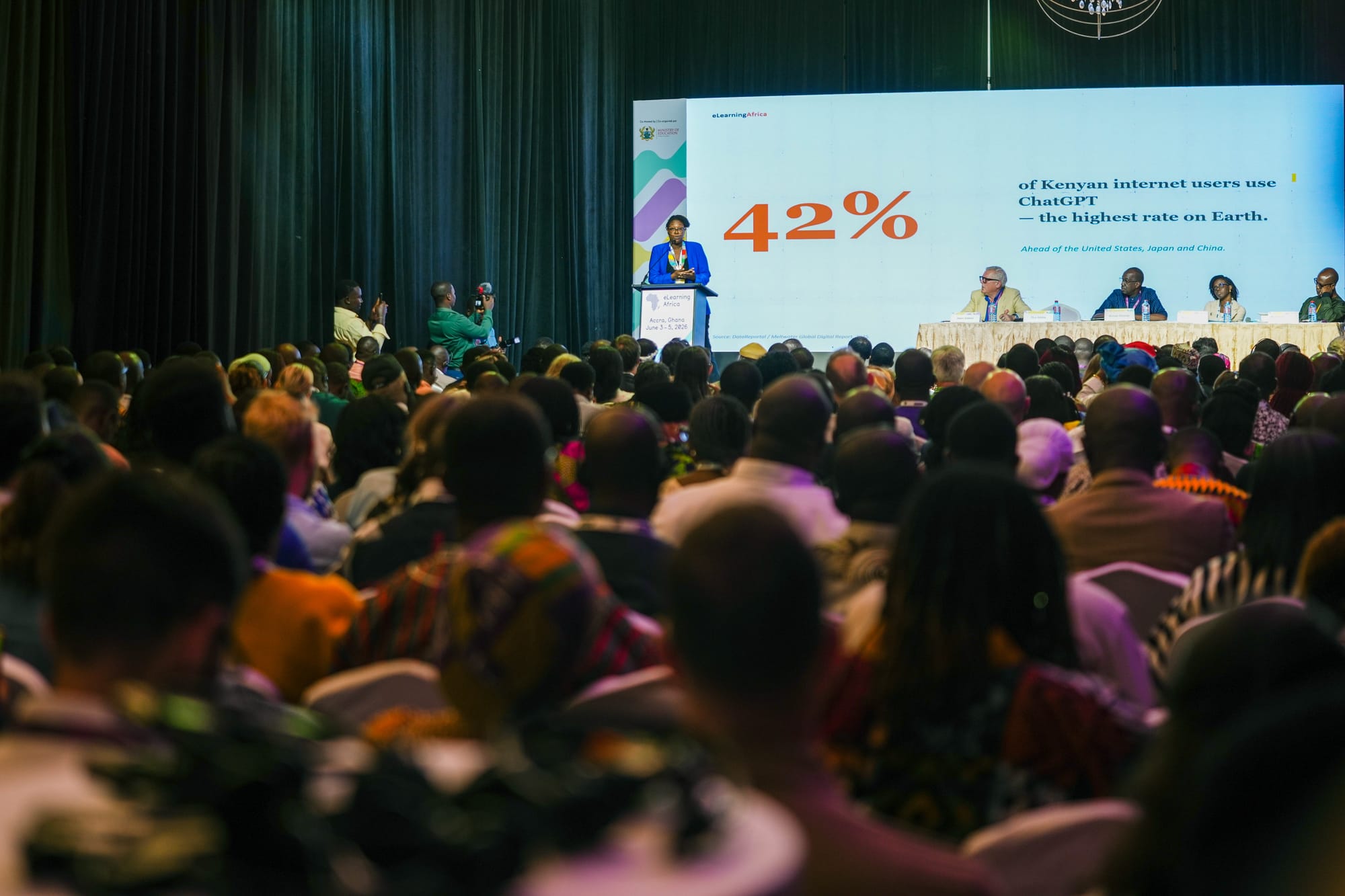
The proposers never claimed excellence was impossible within African systems. Their claim was that excellence was not occurring at the scale the demographic reality demands. Africa’s current median age is 19.7 — compared to 39 in China and approaching 40 across most of Europe. The continent’s population will reach nearly 2.5 billion by 2050, with one in four people on Earth being African. Youth unemployment sits above 50 per cent in several African economies. The arithmetic of that youth concentration means that islands of excellence, however real, cannot substitute for systems that work at scale.
“Yes, there are islands of success. But we don’t have the scale that we need.” — Maximilian Bankole Jarrett, The Africa-Barbados Heritage Initiative
From the floor, the evidence of the scale gap was personal and immediate. Usman Abdul Latif, President of the National Youth Parliament of Ghana, voted for the motion. He told the room that he first used a laptop at age 22. He is not an outlier. He is a data point about what decades of policy declarations have produced at the point of delivery.
THE DEEPER PROBLEM: Who Controls the Infrastructure of Knowledge
Salkeld’s opposition argument moved past the motion’s terms toward the question that matters more. An education system, as UNESCO defines it, is not simply what happens in a school. It encompasses the full range of formal, informal, and non-formal learning — family, community, peer networks, and, increasingly, digital environments. He calculated the hours: a student spends fewer than 1,200 hours per year in a formal classroom. After sleep, approximately 4,650 waking hours remain outside school. The question of who shapes those hours and who controls the digital environments that increasingly fill them is as consequential as any curriculum reform.
Africa generates enormous amounts of data. The infrastructure used to collect, analyse, and monetise it is controlled almost entirely beyond the continent’s borders. The AI systems being trained on that data — systems that will define the labour markets Africa’s graduates enter — are governed by a small number of companies whose ownership and decision-making are concentrated in the global north. Dr Apaak named the implication directly in his closing address.
“Every day, Africa generates enormous amounts of data. Yet much of the infrastructure used to collect, analyse, and monetise that data is controlled beyond our borders. Knowledge sovereignty and data governance are not peripheral issues. They are central to our development agenda.” — Dr Clement Apaak, Deputy Minister for Education, Ghana
He also set the infrastructure benchmark that the continent’s ministries of education need to internalise. Fifty years ago, educational infrastructure was measured in bricks and mortar. Today, it must be measured in broadband connectivity. A classroom without internet access is no longer fully equipped for the demands of the modern learner. On that measure, with 40 per cent of sub-Saharan African schools still lacking electricity, the baseline is not a policy aspiration. It is a crisis with a price tag that has not been publicly calculated.
THE FINDING: Inadequate Is the precise word
Donya’s closing argument delivered the most precise formulation of the debate’s real stakes. To choose both reform and continuity, she said, you must first believe that what exists now is inadequate. You do not need to believe it is failing altogether. You just need to believe it is inadequate to set Africa up for a world that is moving beyond it.
Inadequate is the right word. Not failed — the competency-based curriculum reforms underway in Kenya, Rwanda, and Ghana represent genuine structural shifts in how learning is assessed, moving away from pure memory reproduction toward demonstrated competency. Not hopeless — Dr Apaak’s commitment to operationalising Ghana’s national AI education policy, to treating connectivity as infrastructure rather than luxury, to competitive teacher compensation as a non-negotiable investment rather than a discretionary line item, is the kind of specific, named, implementable commitment the continent needs more of and gets too rarely.
But inadequate is serious. It means that Eugenia and Mercy — the students who travel from a resource-limited classroom to the frontier of cancer research or architectural technology — are succeeding despite the system as much as because of it. It means that the 4,650 hours a young African spends outside the classroom each year are being shaped by digital infrastructure she does not own, and AI systems trained on values she did not set. It means that by 2050, converting demographic weight into economic power will depend on decisions being made right now, in education ministries that are still measuring success by examination pass rates.
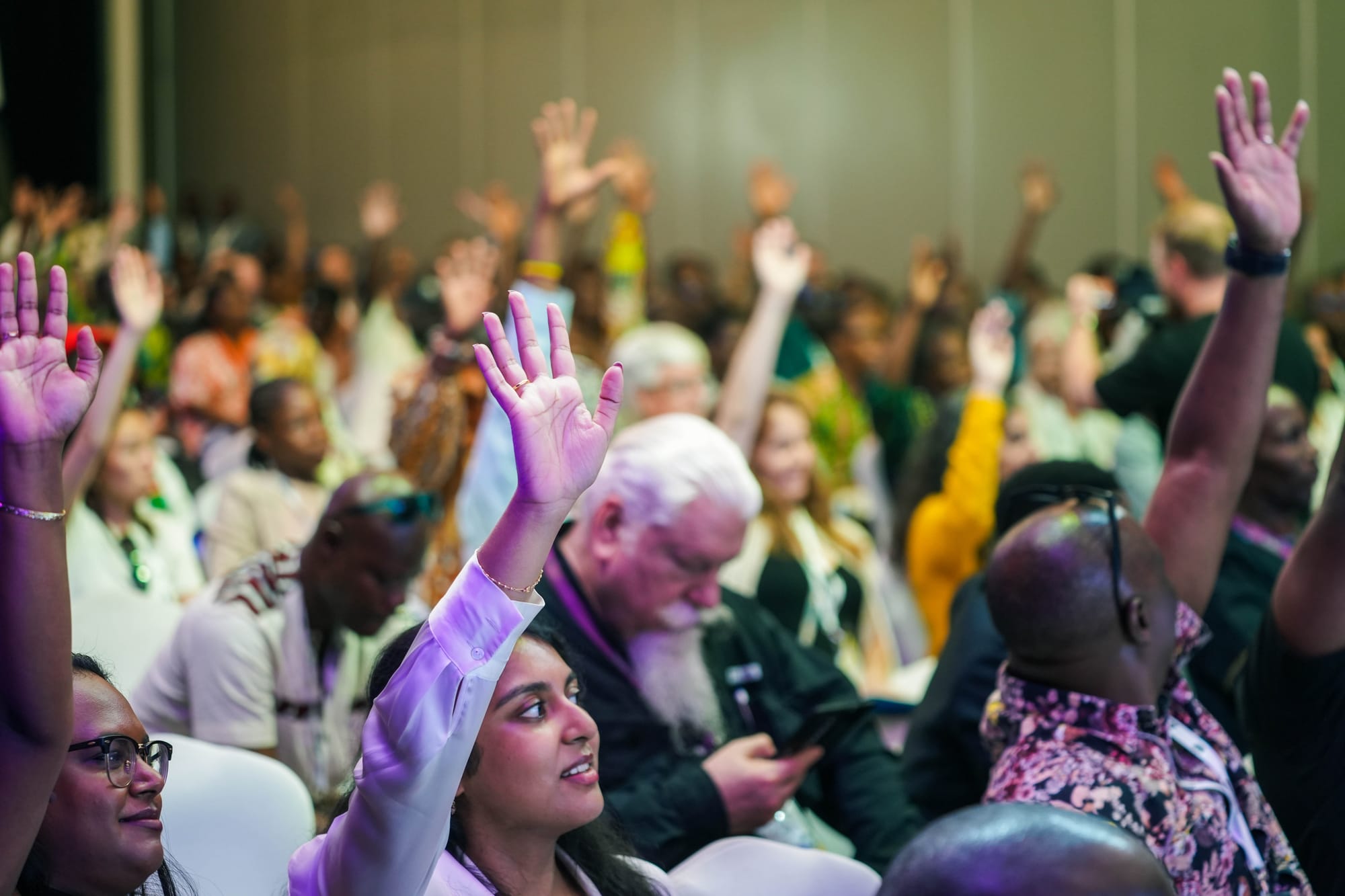
The vote in Accra was narrow. The structural problem it exposed is not. Africa’s education systems are not preparing the continent for a world that no longer exists. They are running out of time to prepare it for the one that is arriving.
Note on sourcing:
All speaker quotations are drawn verbatim from the recorded debate transcript, 19th e-Learning Africa Conference, Accra, June 5–6, 2026. Speaker names and affiliations are confirmed from the official conference programme and independently verified. Statistical figures are attributed to their original institutional sources as cited during the debate or independently cross-checked.
© 2026 Africa Discourse Channel · Providing a snapshot of the players, organisations, decisions, and perspectives defining Africa’s integrated future.