WHO Declares Ebola Emergency as DRC and Uganda Face Cross-Border Outbreak Response
An infectious disease outbreak in one country in Africa rarely remains contained for long. With porous borders, and uneven health infrastructure, response speed and coordination often determine how far it spreads. That is the reality shaping the current Ebola situation in the DRC and Uganda.
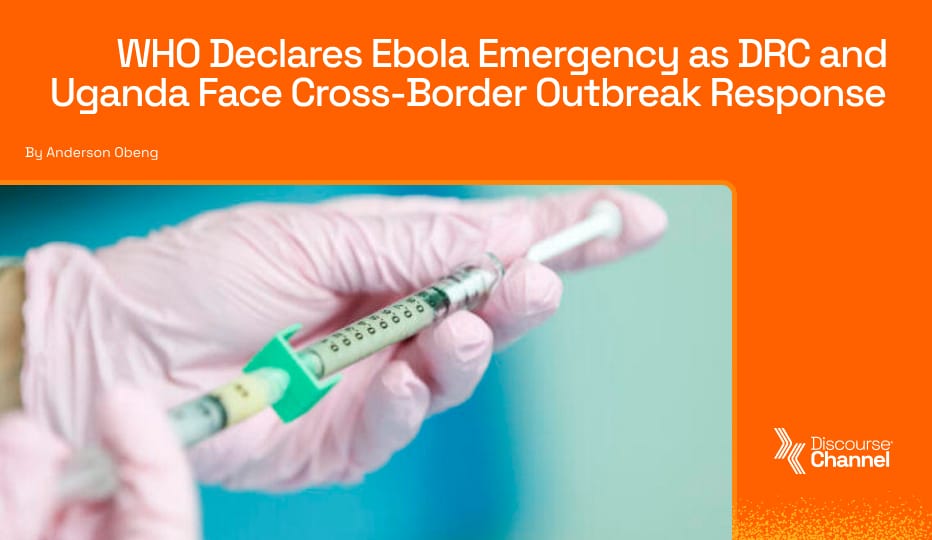
An infectious disease outbreak in one country in Africa rarely remains contained for long. With porous borders, high mobility, and uneven health infrastructure, response speed and coordination often determine how far it spreads. That is the reality shaping the current Ebola situation in the Democratic Republic of Congo (DRC) and Uganda.
The outbreak has been linked to dozens of suspected deaths across both countries, with health authorities continuing investigations to confirm transmission chains and total case counts. The Bundibugyo strain, while historically less widespread than other Ebola variants, still carries significant fatality risk and requires aggressive containment measures once transmission is confirmed in community settings.
The response has now shifted from isolated national interventions to coordinated cross-border containment operations. This includes intensified surveillance in border districts, screening at key transit points, movement monitoring in high-risk communities, and rapid deployment of response teams to newly identified clusters.
A major concern for health authorities is the speed at which suspected cases can move across informal border routes, where tracking and enforcement are more limited. This increases the complexity of containment, particularly in densely connected communities between eastern DRC and western Uganda.
The WHO emergency declaration elevates the outbreak into a higher coordination category, unlocking international technical support, emergency response funding, and expanded surveillance systems. It also signals concern about the potential for regional spread if early containment windows are missed, particularly given the history of Ebola transmission patterns in Central Africa.
What we are watching:
The current situation highlights two parallel but connected trends in Africa’s health landscape.
First, infectious disease outbreaks are increasingly being treated as regional security events rather than isolated national health incidents. The Ebola response across DRC and Uganda reflects how quickly health threats now require cross-border coordination, real-time surveillance, and international intervention frameworks.
Second, there is a growing push toward digital transformation of health systems, as seen in Ghana’s AI-driven health initiative. This reflects an effort to move from reactive outbreak response to predictive and data-led health management systems capable of identifying risks earlier and responding faster.
Taken together, these developments point to a structural shift: Africa’s health systems are gradually moving toward integrated surveillance networks supported by technology, where early detection, data coordination, and cross-border collaboration become central to outbreak control rather than secondary tools.