Trillions spent to Prepare for War; At the cost of saving lives?!
Every year, the world pours more than $2 trillion into weapons, armies, and military equipment, while children go unschooled, hospitals lack equipment, and the world burns. If we keep choosing weapons over schools, then what we pass on is a world more unequal, and unstable than the one we received.
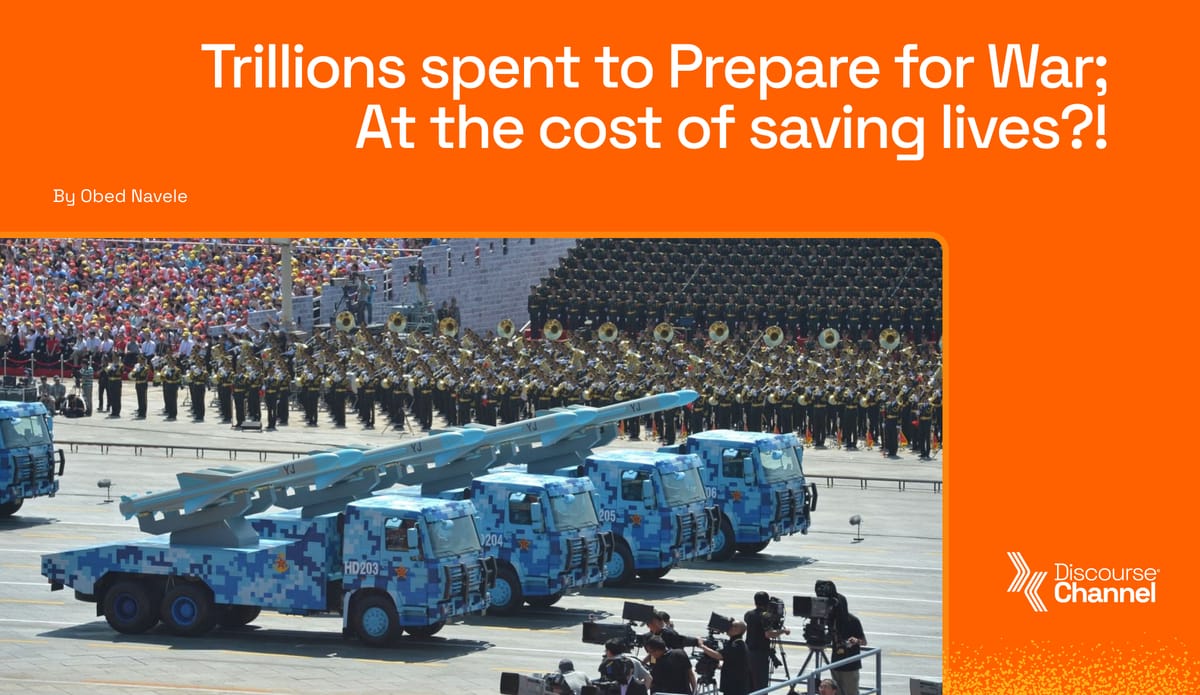
Every year, the world pours more than $2 trillion into weapons, armies, and military equipment, while children go unschooled, hospitals lack equipment, and the world burns. We can never say this is a coincidence, It is a choice.
At its basic level, last year 2025, the world spent more money preparing for war than it has ever spent in recorded human history. More than during World War II, more than during the Cold War. And the scary part? There’s no global war happening right now. The Stockholm International Peace Research Institute (SIPRI) reported that global military expenditure reached $2.44 trillion in 2023, a significant increase for the ninth consecutive year. For context, that figure is larger than the entire GDP of all but a handful of countries on earth.
When we hear the word "conflict" we usually think of big, noisy commotions: active wars, airstrikes, boots on the ground. But that is just the top of the iceberg. True conflict is quieter and hides everywhere. It lives in secret papers signed to sell weapons behind closed doors, in military bases built in foreign countries, planting a permanent threat on someone else’s soil. It lives in billion-dollar nuclear weapons under treaties promising they would never be used. Conflict is the cold fact of a world permanently preparing for violence while claiming to want peace. What this article is really asking is a simple, uncomfortable question: What are we sacrificing for that preparation? And who, specifically, pays the price?
The $2.7 Trillion Treadmill: Why is Global Security Getting More Expensive and Less Certain?
If you spent one million dollars every single day, it would take you nearly 6,600 years to spend $2.7 trillion. If you stacked $100 bills, the pile would stretch from the Earth to the Moon and back. These comparisons feel absurd because the number itself is absurd. According to trends in world military expenditure 2023 , The United States alone accounts for roughly 37% of all global military spending about $916 billion in 2023. China follows at an estimated $296 billion. Then come Russia, India, Saudi Arabia, and the United Kingdom. Together, the top five military spenders account for more than 60% of the world's total defence expenditure. This money isn't just growing; it's accelerating. Since the Russian invasion of Ukraine in 2022, European NATO members have dramatically increased their defence budgets. Germany, which had held its military spending deliberately low since World War II as a matter of conscience and law, crossed the 2% of GDP threshold for the first time. Poland now spends more on its military as a share of its economy than almost any country in the world.
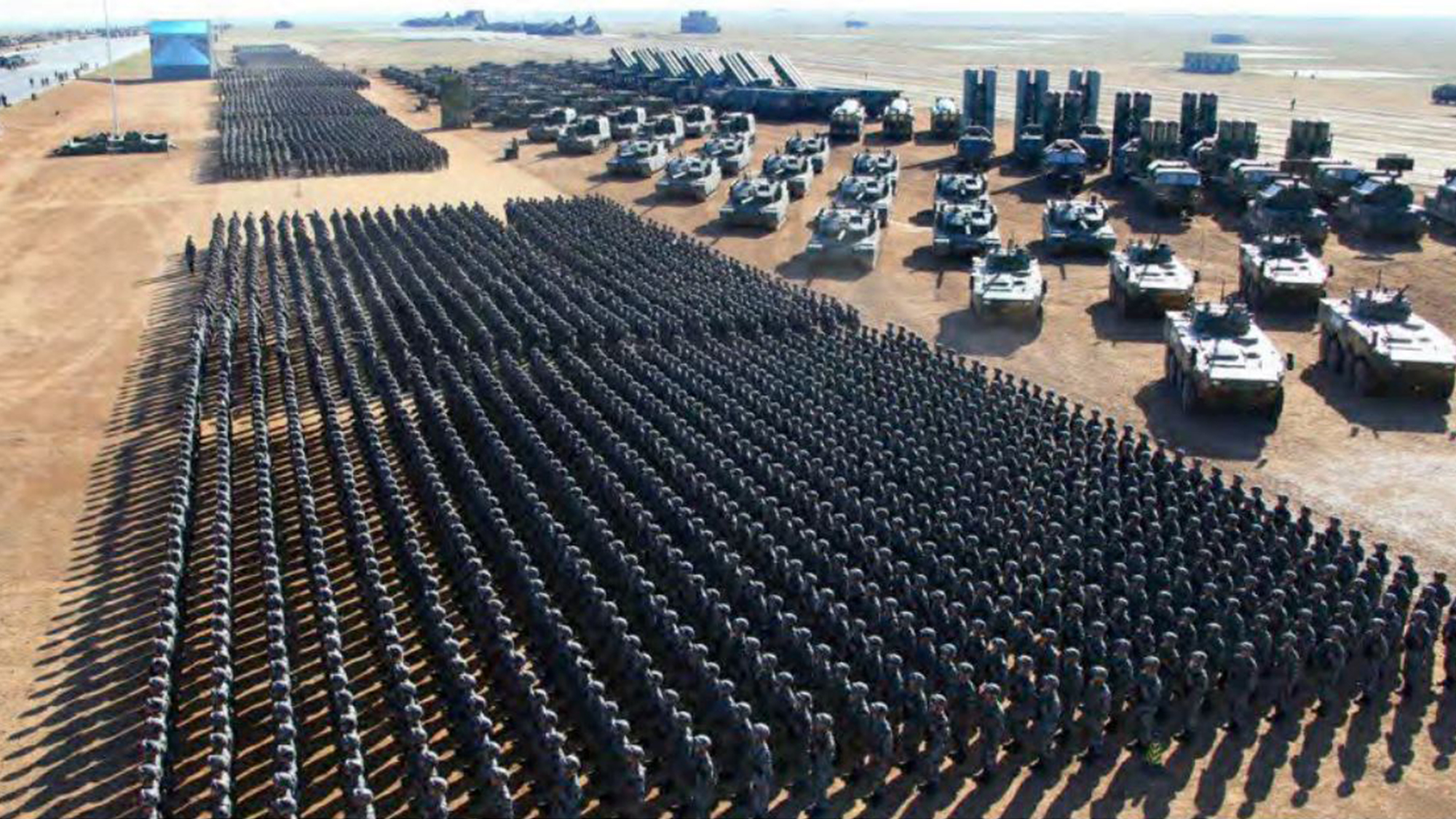
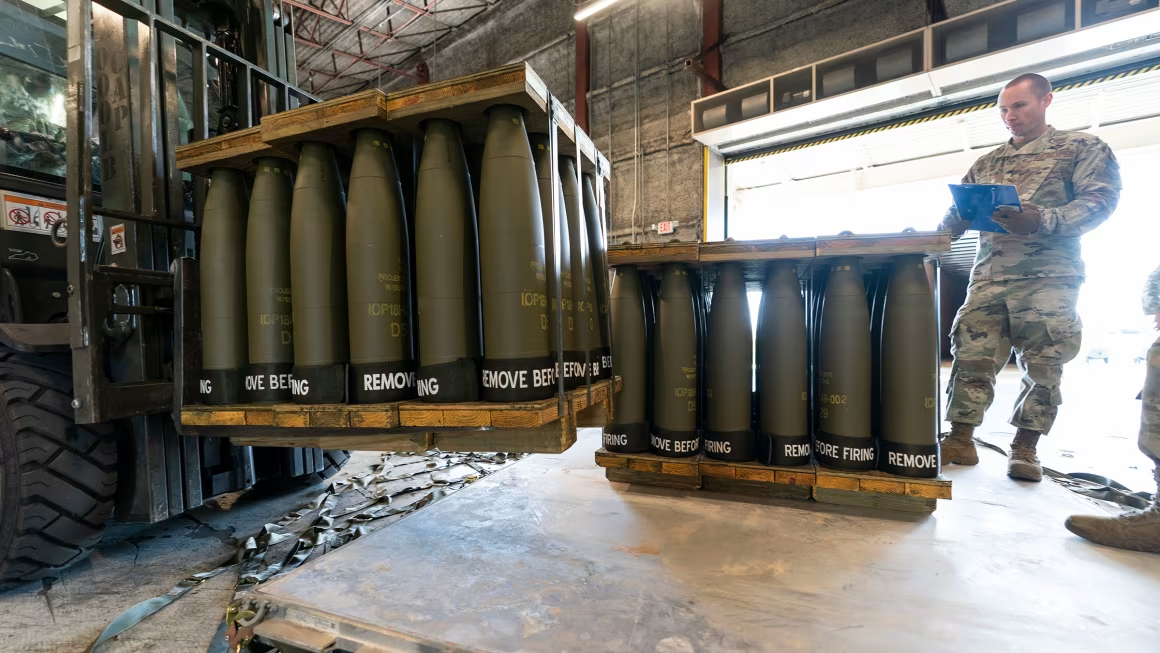
The justifications are understandable, Russia is real, Taiwan tensions are real, the world does feel less stable. But there is a pattern worth noticing: spending always goes up. It never meaningfully comes down. After every crisis that justifies an increase, the increase stays and the next crisis justifies another one. Global military spending has increased every year for nine years straight. The question is not whether threats are real. The question is whether this is the only or the best response to them. It is also worth asking who profits. The arms industry is not a passive supplier, it is an active participant in the political systems that decide how much to spend. Lockheed Martin, Raytheon, BAE Systems, Airbus Defence, Leonardo these are among the most profitable companies on earth. Their shareholders do well when the world feels threatened and they do better when it actually is. But, is that actually the best for humanity?
The Cost of War Is Measured in Missed Chances
Honestly, most people do not instinctively object to defence spending. The idea of protecting your country, your borders, your people is not wrong. It is human. The question is not whether any money should go to security. The question is whether spending this much money is the right choice, when other human needs are unmet on a catastrophic scale.
Consider Hunger; Not as a statistic, but as a daily reality for hundreds of millions of people. Hunger is waking up and your stomach physically hurts. It is watching your children cry and having nothing to give them. It is the slow, grinding erosion of a person's dignity, energy, and hope. There are no explosions, no breaking news alerts, no satellite footage. It happens quietly, in poor households, displaced persons camps and urban slums, largely invisible to the people who run the world.
The United Nations Food and Agriculture Organisation estimates that 733 million people faced hunger in 2023. The World Food Programme calls the situation a "hunger crisis of unprecedented scale." In countries like Sudan, South Sudan, Haiti, Gaza, and parts of the Sahel, famine-level conditions are either present or on the brink. Now here is the number that should stop you: the World Food Programme estimates that it would cost approximately $40 billion per year to end acute hunger globally to feed every person who is currently starving or at severe risk. Forty billion dollars. The United States alone spends more than that on its military every eighteen days.
Consider Poverty; The same comparison holds for poverty. The World Bank estimates that lifting every person above the extreme poverty line giving 700 million human beings enough to eat, clean water, and basic stability would cost between $40 and $100 billion a year. For context, that is less than what the top military powers spend in a single month. This is not a resource problem. It never was.
Consider Health; The World Health Organization estimates that Universal Health Coverage giving every human being access to basic healthcare would require an additional $371 billion per year in low- and middle-income countries. It is also less than half of what the United States alone spends on its military in a single year.
Consider Education; The UNESCO Institute for Statistics estimates that low- and lower-middle-income countries face a funding gap of $100 billion per year to ensure every child completes primary and secondary school. One hundred billion dollars, that is roughly 4% of what the world currently spends on its militaries. For four cents out of every defence dollar, we could educate every child on earth.
Consider The Climate; The independent Climate Policy Initiative estimated that the world needs to invest approximately $4.3 trillion per year by 2030 to stay on track for climate targets under the Paris Agreement. That is more than military spending but not so much more. And crucially, the cost of not acting on climate in flood damage, crop failure, displacement, and conflict is projected to far exceed the cost of acting.
In South Sudan, a country rich in oil but torn apart by decades of armed conflict, one in ten children dies before their fifth birthday. The weapons fuelling this conflict are not manufactured in South Sudan; they are produced by wealthy nations and flow into the country through a lethal synergy of international profit and regional trafficking. This system is sustained by domestic actors who prioritize military spending over human life, leaving children as the collateral damage of a global architecture that harms the world while neglecting the investments needed for their survival.
Across the Sahel, Mali, Burkina Faso, Niger, Chad the same story repeats. Coups, insurgencies, and foreign military interventions have devastated communities that were already fragile. Food production collapses when farmers cannot reach their fields. Aid corridors close when roads become warzones. Children who should be in school, are instead either fleeing, recruited, or simply trying to survive. Hunger is a consequence of the conflict.
What Are We Even Fighting About?
Strip away the geopolitics, the indoctrination, the strategic jargons and ask the question: what are these people actually dying for?
In Ukraine, people are dying over territory, over national identity, over one man's conviction that a neighbouring country does not have the right to exist as an independent nation. In Gaza, people are dying over land claimed by two peoples, over decades of occupation and dispossession, over a cycle of retaliation that has consumed generation after generation. In Sudan, people are dying over who controls the army and the money. In the Sahel, over who controls the mines, the routes, the power.
Almost none of the people doing the dying made the decisions that led to the fighting. The soldiers recruited into the armies are often from under-privileged communities, and because the army is the only place they can find a job. They do the hard fighting, but they are not the ones who decided to start the war. The civilians caught in these conflicts did not choose to be there. The children orphaned by airstrikes did not select their cities, their country, or the particular patch of earth that powerful people decided was worth killing over.
We have dressed war in the language of honour, of duty, of historical necessity and sometimes those things are relevant. Ukraine's resistance to Russian invasion is a genuine act of self-determination. But even just wars exact an unjust price on the people who survive them. And the wars that are not just the resource wars, the power grabs, the manufactured conflicts kept alive by arms dealers and warlords who profit from chaos, those wars are obscene. They are a crime against the regular human who wants to live their lives, to work, to raise their children in peace.
There is something deeply, specifically wrong about a world in which a head of state can order a bombardment from a comfortable office, sign an arms contract over dinner, and then give a speech about human dignity all in the same week. The physical distance between decision-makers and consequences is one of the great moral scandals of our time.
Follow the Money: Who Actually Wins?
Here is something that rarely makes it into polite political conversation: war is an industry, and a very profitable one. The world's largest arms manufacturers reported combined revenues in the hundreds of billions of dollars in recent years. On December 1, 2025, the Stockholm International Peace Research Institute (SIPRI) released its annual report on the world’s 100 largest arms-producing and military services companies, revealing that combined arms revenues surged to a record $679 billion in 2024.Their stock prices often rise during periods of conflict or heightened tension. Their shareholders include pension funds, investment banks, and ordinary people with retirement accounts who have no idea their money is in the weapons business.
These companies do not just manufacture weapons, they shape the political environment in which defence budgets are set. They maintain some of the most well-funded lobbying operations in Washington and in European capitals. They hire retired generals and admirals as board members and consultants. They fund think tanks that publish papers arguing for higher military spending. They sponsor conferences attended by the very lawmakers who vote on defence budgets. None of this is secret. All of it is legal. And all of it adds up to a system in which the people with the most financial interest in more military spending have the most influence over the decisions that determine spending levels.
It was Dwight D. Eisenhower, a five-star general who commanded the Allied forces in World War II before becoming US President who, in his farewell address in 1961, issued the most prescient warning in modern American political history. He told his country to beware of the military-industrial complex: the growing, self-reinforcing alliance between the defence industry and the government institutions that fund it. He was a soldier. He had seen war. And he was scared not of external enemies, but of the machine his own country was building. More than sixty years later, that machine is larger than he could have imagined. And it is now a global industry.
The People Left Behind in The Business of War.
The United Nations High Commissioner for Refugees reported in 2023 that 117 million people were forcibly displaced, the highest number ever recorded in human history. Let that settle for a moment. One hundred and seventeen million people. That is larger than the entire population of the Philippines, Egypt, and Ethiopia. A country of displaced people, the largest nation on earth by that measure living in tents, in overcrowded flats, in other people's countries, trying to reassemble lives that were dismantled by violence they did not ask for.
Displacement is not just a logistical problem but a psychological catastrophe. Researchers who study communities emerging from conflict have found that psychological damage, anxiety, the PTSD, the shattered sense of safety that used to feel automatic follows people for decades and passes to their children. A child who grew up running from gunfire sees the world differently. Their nervous system has been rewired by fear. And that damage lingers without active help.
In Yemen, the Saudi-led coalition armed substantially by the United States and the United Kingdom has been conducting airstrikes since 2015. The UK alone approved £23 billion in arms sales to Saudi Arabia during this period. The result in Yemen: over 150,000 killed, millions pushed to the edge of famine, and Cholera, a disease that barely exists in countries with clean water. It spread among millions of people whose water infrastructure was destroyed by the war. The British and American companies that sold those weapons are profitable. The Yemeni families who absorbed the consequences have nothing. This is the accountability gap that defines war in the modern era. The people who profit from it are insulated from its consequences. The people who suffer the consequences had no say in the decisions that caused it. Trauma does not end with a ceasefire. It persists within the bodies and minds of children who will carry it for the rest of their lives.
There Is Another Way — and It Is Not Naive
This is where some people would expect the argument to collapse into wishful thinking. Abolish armies! Declare world peace! But that is not the message here, and it is not what the evidence suggests is possible or even necessary.
The case for a different world is not based on the idea that humans are naturally peaceful and that conflict is just a misunderstanding. The case is more grounded than that: it is that, the conditions which produce war, poverty, inequality, competition over resources, the absence of functioning institutions, historical grievances without legitimate outlets can be systematically reduced through intentional investment and political will. Countries which invest seriously in human development, over time, tend to be more stable and less prone to violent conflict. That prevention is far cheaper than war. And most countries invest almost nothing in it.
The United Nations' entire peacekeeping budget covering operations on multiple continents is approximately $5.4 billion per year. The United States spends more than that on its military every three days. The diplomatic missions, early warning systems, and conflict mediation bodies that prevent wars from starting are perpetually starved of funding, while the budgets that respond after prevention has failed keep growing.
Costa Rica abolished its army in 1948. It was a small country in a relatively stable region. The comparison is imperfect. But Costa Rica has since built some of the best human development indicators in Latin America. It has not been invaded. Its children are educated. Its citizens are healthy. The money went somewhere useful. It is not a model for every country, but it is a proof of concept: security does not have to mean military spending. The United Nations Development Programme developed the concept of "human security" in the 1990s the idea that real security means freedom from want and fear, not just freedom from military attack. A person dying of preventable disease is not secure. A family without clean water is not secure. A community without education is not secure. This framework challenges us to think about what we are actually trying to protect when we spend on defence and whether the spending is actually achieving it.
Debt cancellation for countries trapped in poverty cycles partly caused by conflict and economic exploitation is another prospective lever for progress. Climate finance genuine, scaled, and delivered would reduce the resource stress that drives conflict over land and water. Investment in education, consistently identified as one of the highest-return interventions in development, increases economic productivity, and correlates strongly with community stability and reduced conflict. None of these are silver bullets. All of them are evidence-based. And all of them are chronically underfunded relative to the military spending of the countries most capable of providing them. If we spent on peace-building what we spend on war, the world would be unrecognisable within a generation.
What Can We Do as Individuals?
It is fair to ask. You did not design the defence industry. You did not vote for an invasion. What does any of this have to do with what you do tomorrow?
More than you might think. Democratic governments respond to what their citizens make visible and loud. The countries that spend the most on weapons are, most of them, democracies which means there is a mechanism, however imperfect, through which public opinion can change policy. When citizens consistently tell their representatives that healthcare, education, and climate investment matter more than a marginal increase in the defence budget, that conversation shapes what is politically possible. It does not happen overnight. But it happens.
Where you put your money matters too. Banks and investment funds that hold significant positions in arms manufacturers are ones you can choose not to use or ones you can pressure to divest. The campaign to get universities and pension funds to divest from fossil fuels changed the conversation around climate. Similar pressure on arms industry investment is not impossible. Support organisations on the ground. The World Food Programme, Médecins Sans Frontières, the International Rescue Committee, UNHCR these organisations are doing the work of picking up the human wreckage that conflict leaves behind. They are always underfunded. A recurring donation, however small, is a concrete act in a world that can feel overwhelming. And perhaps most importantly: pay attention. Not just to the wars that look like your wars, the ones covered in your language, in your media, involving people who look like people you know. Pay attention to Sudan. To the DRC. To Myanmar. To the 117 million displaced people whose names we will never know but whose suffering is as real and as urgent as anyone else's. Attention is the precondition for action. And in an era of engineered distraction, sustained attention is its own form of resistance.
The World We Are Leaving for Prosperity.
Every generation inherits the choices of the ones before it. The children growing up right now in Kyiv apartment blocks, in Sudanese displacement camps, in Gaza rubble, in Sahel villages, and also in the comfortable cities of wealthy countries will inherit what we build and what we fail to build. If we keep choosing weapons over schools, military pacts over climate agreements, arms contracts over aid, then what we pass on is a world more armed, more unequal, and more unstable than the one we received. The institutions that might have held it together will be hollowed out. The crises that might have been prevented will become conflicts. The hunger that might have been ended will become famine.
And if we choose differently even imperfectly, even incrementally, even in the face of the very real threats that are used to justify this spending we pass on something else. Not a utopia. But a world with a little less hunger tonight. A few more children in school tomorrow. A slightly cooler planet in fifty years. A few fewer wars in the generation after ours. The people who run the world will tell you that these choices are complicated, that security is non-negotiable, that you don't understand the threats they face. And some of what they say is true. The world is genuinely dangerous. But the people saying it are also the people who benefit most from the current arrangement, and the least from changing it. That conflict of interest is worth remembering when you hear them speak.
The mothers in the Sahel, wondering if there will be food tomorrow, is not asking for much. They are asking for what every human being should have access to. Basic human rights: safety, food, a future for their children. That is not a lot to want. It is, in fact, the minimum. We have the resources to give, yet we spend them elsewhere. That is the choice we are making. We do not lack the means to build a better world. We lack, so far, the will to make that choice.