Threads of Africa – Episode 2: Kete and the Fabric of Togo’s Creative Economy
In this episode we uncover how fabric functions as far more than attire, but a living archive of history, identity, and economic resilience. Among the many textiles found across Togo, the Kete stands out as one of the most culturally resonant and visually distinctive fabrics.
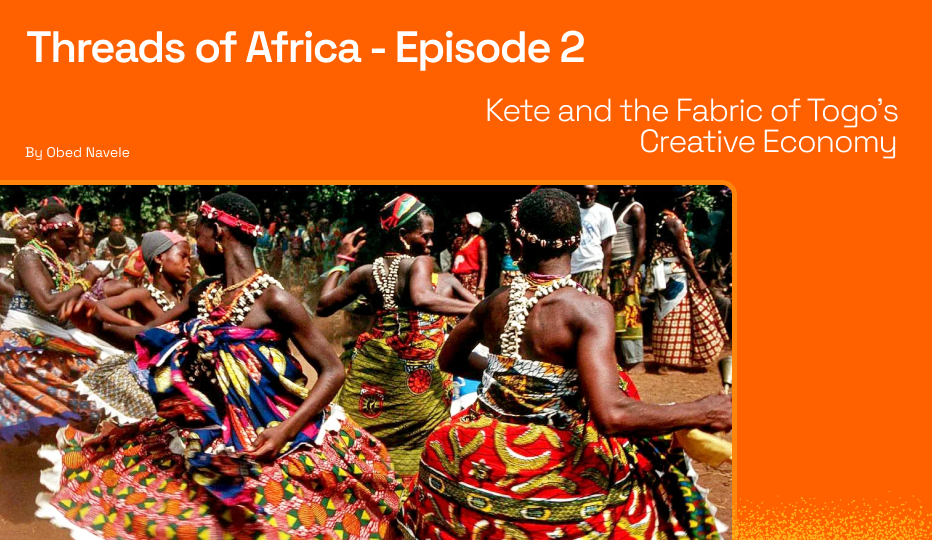
We continue our journey with this series to the slender nation of Togo, West Africa. In this episode we uncover how fabric functions as far more than attire, but a living archive of history, identity, and economic resilience. In Togo, textiles like Kete , Pagne, and the Grand Boubou are not just worn; they speak. Among the many textiles found across Togo, the Kete stands out as one of the most culturally resonant and visually distinctive fabrics. While textile traditions across West Africa often overlap due to centuries of migration and trade, kete has developed a unique identity that reflects the worldview and artistry of the Ewe people. Originating from the Ewe communities of southern Togo and south-eastern Ghana, this cloth is widely recognized for its cotton foundation, complex woven patterns, and symbolic storytelling. Each strip of cloth carries designs that are rarely random. Instead, they represent proverbs, historical memories, moral lessons, or observations about everyday life.
Unlike the silk-dominated Kente associated with the Asante kingdom in Ghana, the kete is traditionally woven with cotton and often incorporates figurative motifs. These may depict animals, tools, musical instruments, or scenes from daily activities. Through these visual elements, the cloth becomes a medium for storytelling and conveying narratives.
In this way, the garment functions as more than a decorative fabric. It becomes a medium through which communities preserve knowledge, transmit values, and celebrate cultural identity. This episode explores how Togo’s traditional garments, especially Ewe Kente, embody craftsmanship, cultural sovereignty, and economic empowerment.
A brief cultural portrait of Togo
Togo is a small country in West Africa, it stretches from the Gulf of Guinea in the south to the dry lands of the Sahel in the north. Even though the country is a narrow, small country, it is rich in culture and diversity. Togo is home to more than 37 recognized ethnic groups, including the Ewe people in the south, the Kabye people and Tem people in the central highlands, and the Gurma people in the north. Each group has its own language, traditions, and way of dressing. For these communities, weaving is not something new. It has always been part of life, passed down through countless generations, growing and changing slowly over time. Weaving and garment making, like in all civilizations, served as a necessity but with trade and convenience it became its own market. . Skilled artisans passed their techniques across generations, and markets created demand for beautifully made garments. Because of the strong tradition of craftsmanship and community pride, fabric making has continued to grow and thrive and Togo is not so different. Today, the country’s garments are not only symbols of culture but also a source of economic strength and creativity.
Traditional Fabrics of Togo
Before focusing on Togo’s most defining textile, it is important to understand the variety of traditional garments worn across the country. Togo’s rich cultural diversity has produced many forms of dress, each reflecting the traditions and lifestyles of different communities. While these garments are widely worn in Togo and have connections to neighbouring cultures, they have become an important part of the country’s clothing heritage. By exploring them, we gain a clearer picture of the fashion traditions that shape Togolese identity and then we turn our attention to one of the most symbolic textiles of all: Ewe Kente, locally known as Kete
As we explore Togo’s cultural traditions and customs, one cannot overlook the beautiful traditional clothing and jewellery worn by different communities. Each ethnic group has its unique style, often incorporating colorful fabrics, intricate beadwork, and symbolic patterns.
The Pagne
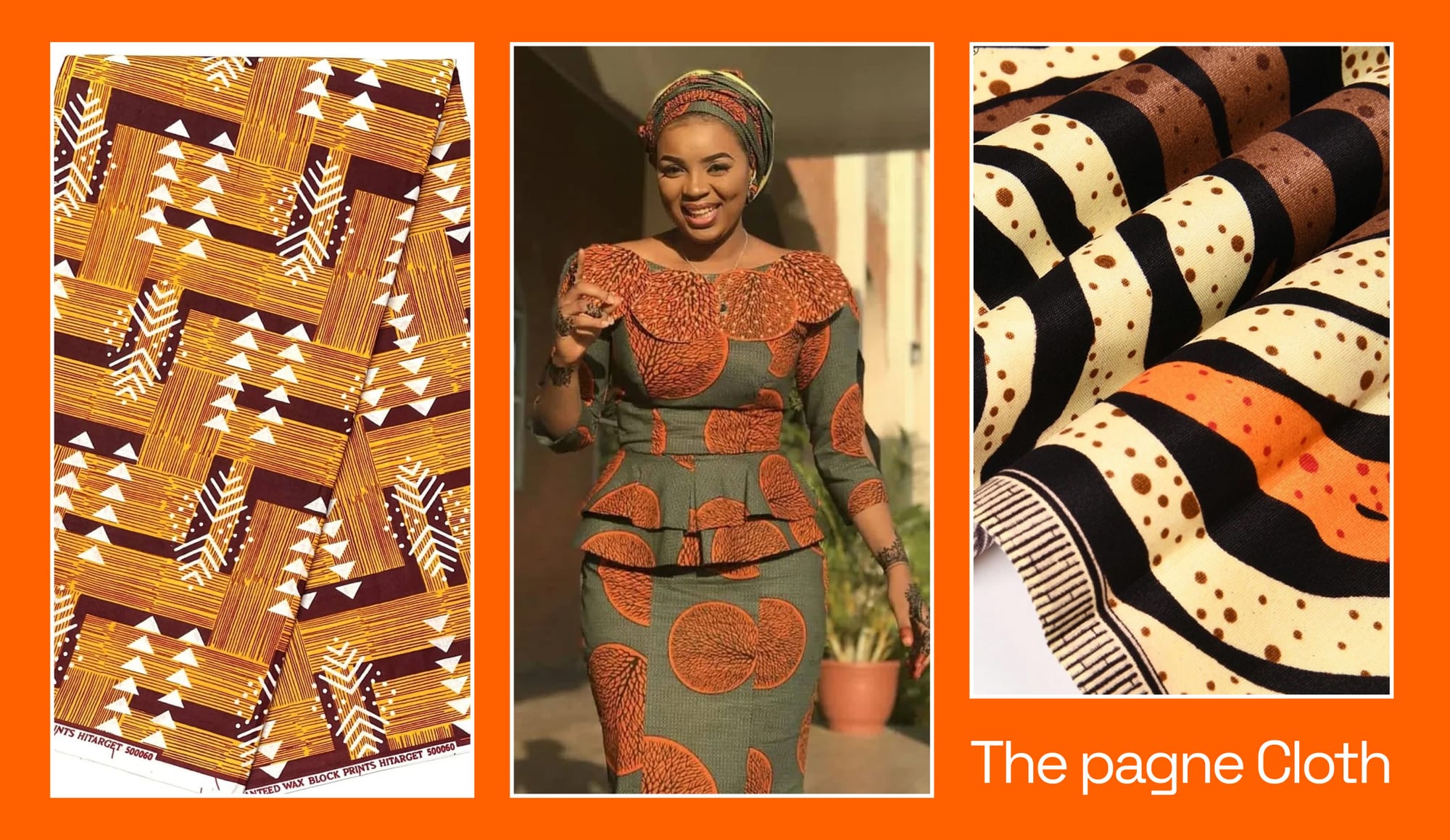
The pagne is the heart of women’s traditional fashion in Togo and common among the Ewe people, Mina people, and Guin people in southern Togo. It is a large piece of colorful fabric, usually made from cotton or wax-print material, that women wrap around their waist like a skirt. It can also be worn as a dress, a headwrap, or even used to carry a baby on the back. Pagne fabrics are known for their bright and lively colours. They often combine bold tones such as red, yellow, blue, green, orange, and purple with striking patterns and prints. Some designs also include softer tones like brown, black, or cream to balance the bright colours.
What makes the pagne special is not just how it looks, but what it says. The patterns and colors are not random, there is a hidden language among them. They often tell proverbs, life events, or convey social messages. A woman can choose her pagne to express joy, mourning, status, or even send a quiet message to those who understand the symbols. This is why the pagne is more than clothing; it is an intricate part of communication and culture to the people of Togo.
The Grand Boubou
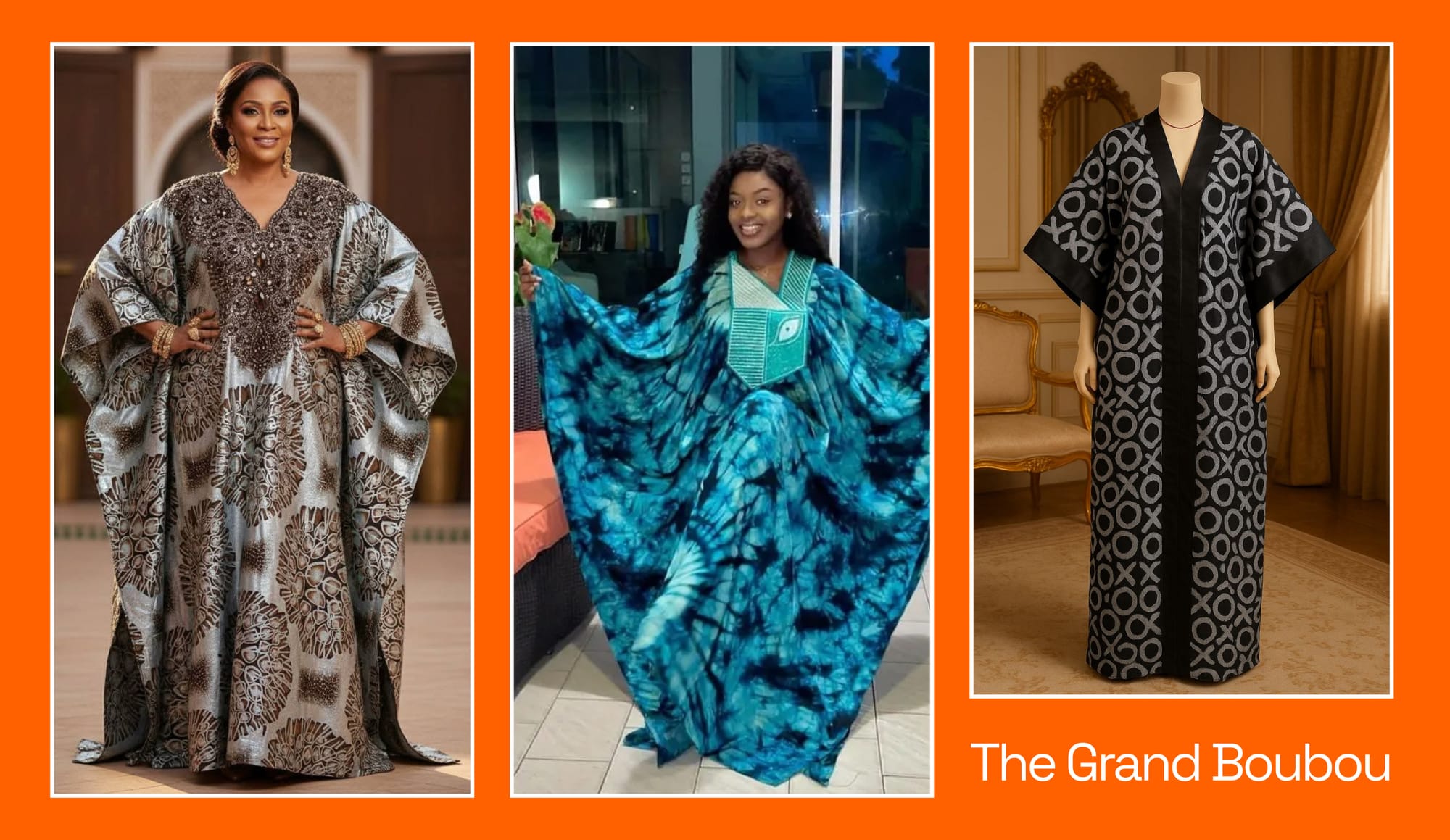
The Grand Boubou is widely worn among the Kabye people, Tem people, and other northern communities. It is a long, flowing robe worn by both men and women, especially during important events. It is loose and comfortable, perfect for Togo’s warm weather, and made from fine fabrics like cotton, silk, damask, or brocade. Grand Boubous are often seen in rich and dignified colour tones such as deep blue, royal purple, cream, white, gold, and soft earth colours like brown or beige. Some are plain and elegant, while others combine bold colours with detailed patterns The neckline and chest are often decorated with beautiful embroidery. Wearing a Grand Boubou shows dignity and respect. It is common at weddings, religious events, festivals, and official gatherings. For many people, it represents not just style but honor and tradition. The way the garment moves gracefully as the wearer walks adds to its elegance.
The Agbada
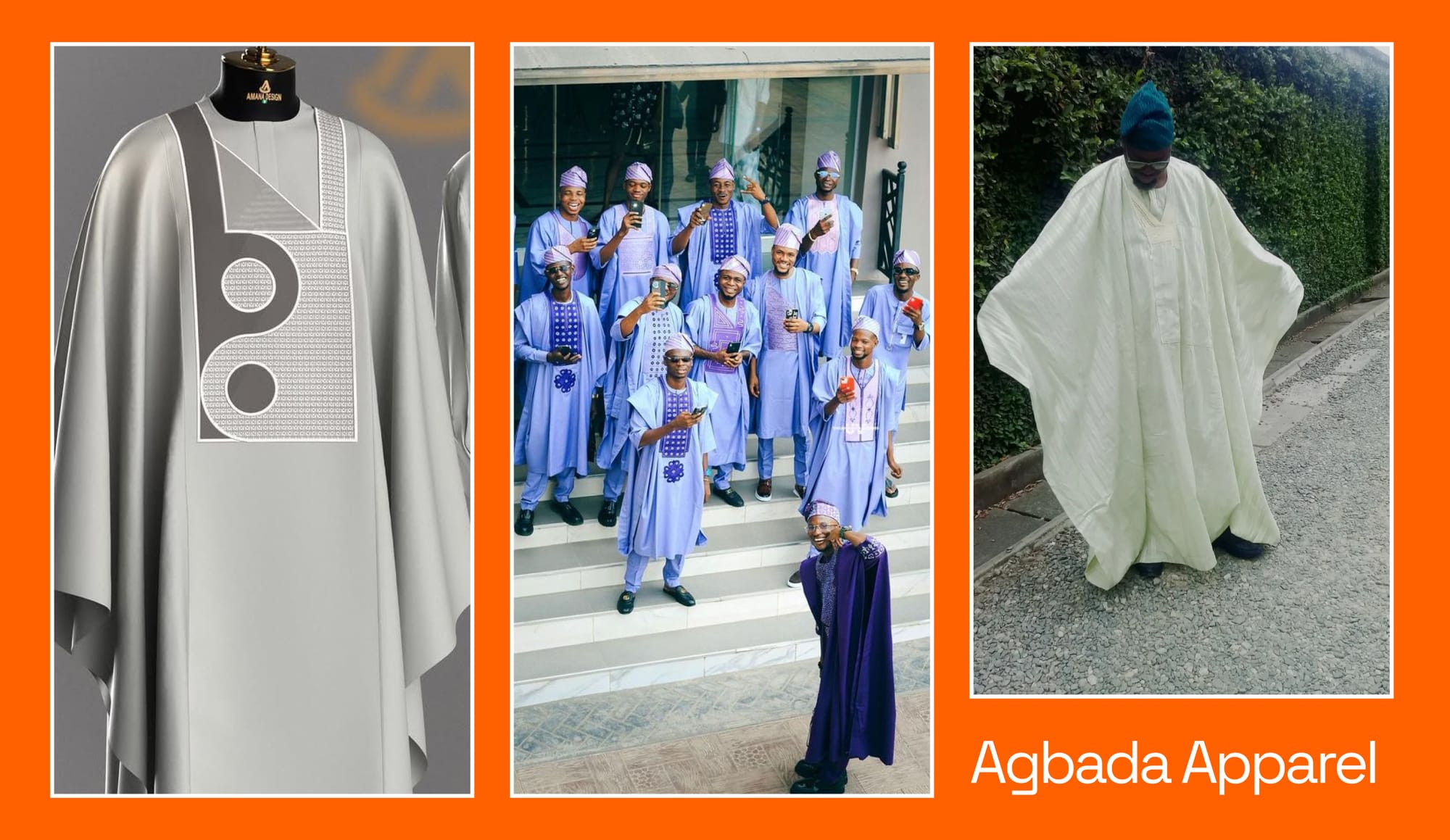
The Agbada is a grand version of the boubou. It is mostly worn by men in communities with strong cultural ties to the Yoruba people in southern Togo. They wear them during big celebrations such as weddings, chieftaincy events, or festivals. It has wide, flowing sleeves and is made from rich fabrics like brocade, lace, or handwoven cloth. Agbadas are usually made in strong and striking colours such as white, cream, navy blue, deep green, burgundy, and sometimes bright colours with contrasting embroidery that makes the garment stand out. The embroidery is detailed and often covers the chest, sleeves, and front. The Agbada is not only about looking impressive, it also reflects the wearer’s status, wealth, and pride. In communities with strong cultural ties to the Yoruba people, found in parts of southern Togo, the Agbada is highly respected and sometimes passed down through generations as a symbol of honor.
Each of these garments carries its own story across Togo. From the everyday elegance of the pagne to the grand presence of the Agbada, every cloth reflects culture, history, and identity. These traditions also connects Togo with neighboring countries such as Ghana and Benin, showing how fabrics and styles move across borders while still keeping their local meaning.
Now, we turn our focus to one of Togo’s most defining traditional textiles: Ewe Kente, locally known as Kete
Defining Garment of Togo: Kete
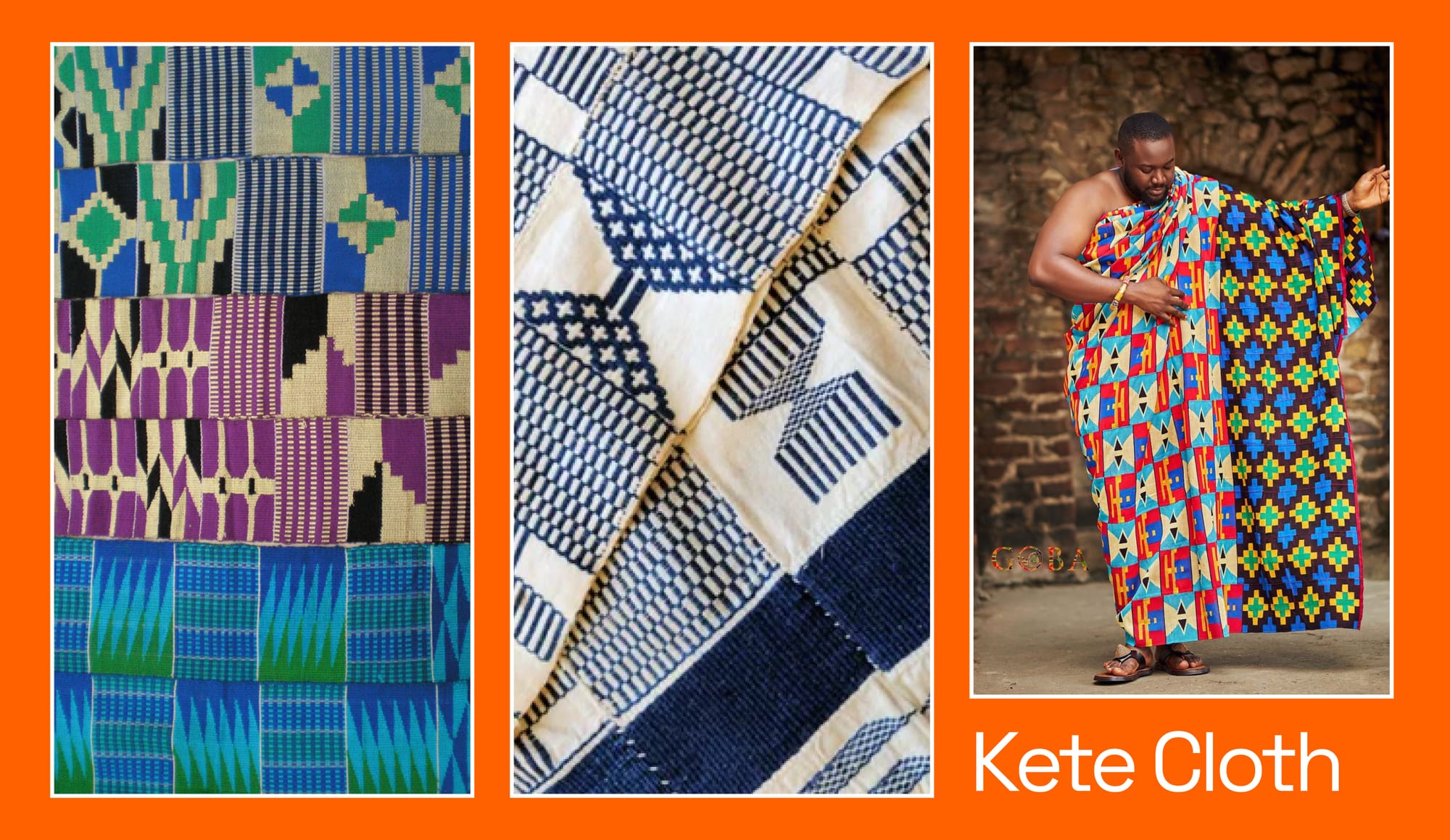
Among the many fabrics worn in Togo, the Kete stands out as one of the most meaningful. It is closely connected to the traditions of the Ewe people and has become one of the fabrics that strongly represents cultural identity in Togo. Kete is known for its carefully woven patterns and bright colors. It is known for its bright and powerful colour combinations. Common colours include red, yellow, green, blue, black, and white. These colours are often bold and vibrant, arranged in striking geometric patterns that make the cloth visually powerful and easy to recognize. Each design is created with purpose. The shapes and patterns often represent ideas, lessons, or stories from everyday life. Because of this, the cloth is more than decoration. It reflects the thoughts, values, and experiences of the people who make and wear it. Beyond its cultural meaning, it also plays an important role in the creative economy. The making of the cloth brings together different groups of people who each contribute their skills. Farmers, artisans, traders, and designers all take part in the journey of the fabric. Through this process, the cloth supports local businesses and helps preserve traditional knowledge while also creating opportunities for economic growth.
The Origins and History of the kete has been an integral aspect for many generations among the Ewe people. Steadily, weaving became an important craft that communities passed from parents to children. Skilled weavers learned how to combine threads and patterns in ways that expressed meaning and identity. As the craft developed, different communities improved their weaving techniques and created new designs. Trade and cultural migration helped the cloth spread across towns and villages. Because of this, the fabric became well known not only as a cultural symbol but also as a valuable product that supported the local economy
Today, the tradition continues to grow. Many artisans still stick to the craft while also adapting their work to modern fashion and market trends and demands.
How Kete Is Made
The making of Kete is a careful process that involves several stages and many skilled hands. Each step is important in bringing the cloth to life. The process begins with threads, spun from cotton, dyed and are carefully arranged and chosen for their colors and meanings.
The weaving itself is done on a traditional narrow-strip loom. Using a double-heddle technique, the weaver creates strips about 4 to 5 inches wide. This stage requires patience and great skill because the patterns are complex and symbolic. The name "Kete" actually comes from the rhythmic movements of the weaver: "ke" (opening the weft) and "te" (pressing the warp).
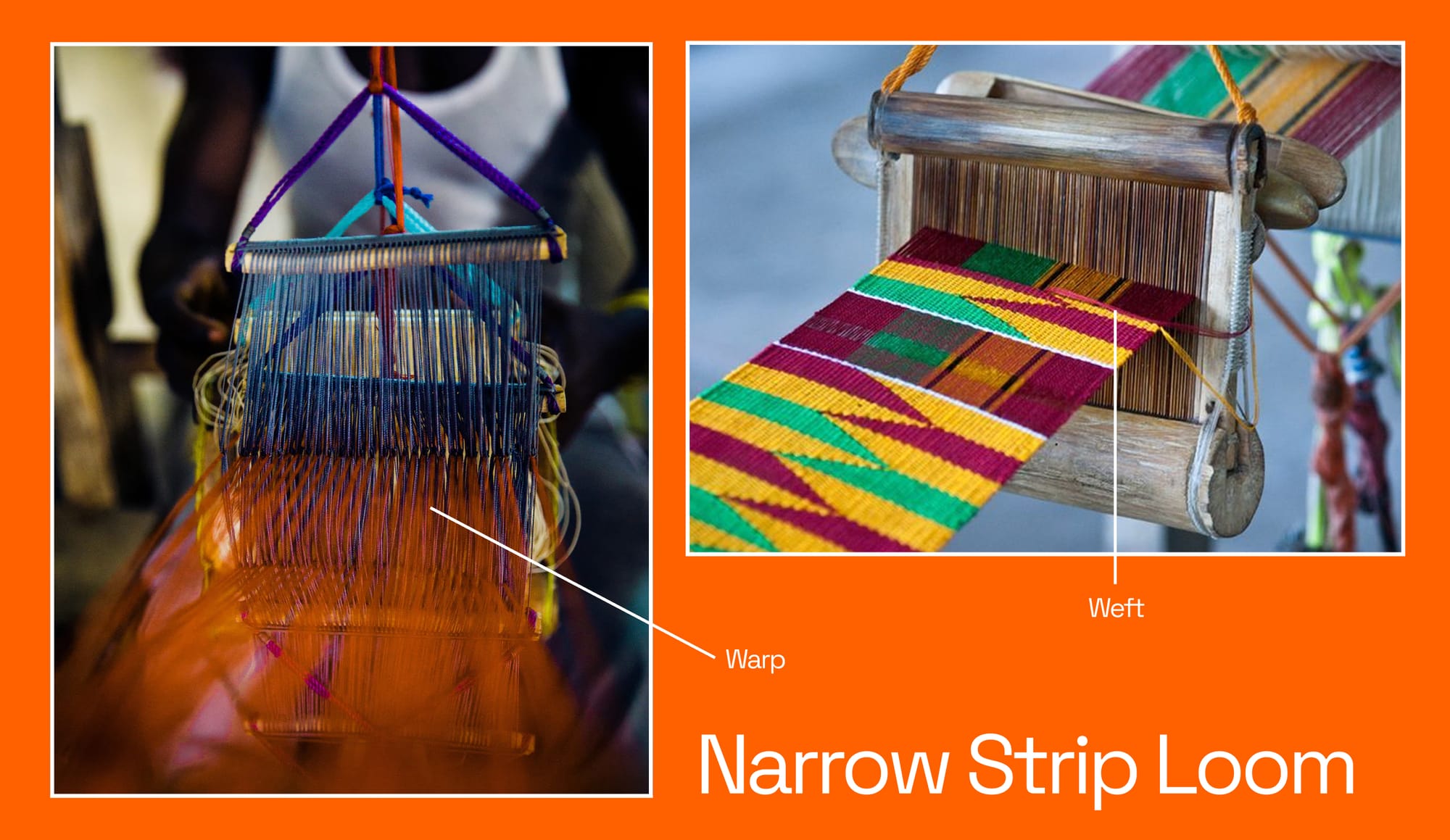
Because these patterns are so detailed, a single piece can take weeks or even months to complete. Once enough strips are woven, they are passed to expert tailors who sew them together to form a full cloth.
This process may seem straightforward, however it connects several different communities/experts. The weavers work with cotton farmers, thread spinners, and merchants. In this way, it shows how culture and local industry work together to support the creative economy.
How The Kete is Supporting the Local Economy
The kete is a vital source of income for thousands of Togolese families. Its economic impact goes far beyond the weaver but a value chain that includes cotton farmers, thread dyers, master weavers, tailors, and the traders who bring the fabric to the world. In towns such as Agbozume and Kpalimé, weaving is treated as a serious profession. To become a recognized artisan, a person must complete about three years of apprenticeship. After this training, they receive certification from the Chambre des Métiers. This system helps maintain high quality and also creates a clear career path for young people. Because of this, many young artisans can build a life in their own communities instead of leaving for the crowded cities.
The Industry in Numbers and The Potential for Growth
While exact data for Togo alone can be difficult to track, the broader African fashion and textile market is estimated to be worth over $31 billion.This highlights the massive potential for growth. A key driver of this economy is the Agbozume Market. This market operates four days every week and is one of the main trading centers for textiles in the region. It attracts traders not only from Togo but from neighbouring countries like Benin, Nigeria and Ghana. Many buyers travel there to purchase fabric and export it to other markets. And with respect to employment, almost 60% of households depend on some part of the textile trade for their daily income in many of these weaving communities. This shows how important the industry is for the local economy.
Far from being hidden, Togolese fabrics are now making a strong impression on the world stage. Designers are taking their work beyond local borders, showcasing it in international fashion hubs like Paris and New York. The International Fashion Festival in Togo (FIMO 228), founded by Jacques Logoh, has even organized catwalk shows in Paris to bring African fashion to a global audience. Togolese heritage is also appearing in mainstream global brands for example, Brooklyn-based designer Jacques Agbobly collaborated with Nike on a high-end collection that debuted at New York Fashion Week. Togo’s creativity was recognized further when it won the Creativity Award at the 7th International Exhibition of African Textiles (SITA) in 2021.
Modern Togolese designers are also reinterpreting traditional fabrics to suit contemporary tastes while respecting cultural roots. Many focus on sustainability, upcycling discarded textiles into luxury pieces to raise awareness about the environment. Others combine traditional Togolese weaving with European tailoring, creating a “universal” style that appeals to international luxury markets. Cultural centers like the Palais de Lomé and industrial projects such as the Plateforme Industrielle d’Adetikopé (PIA) are supporting these innovations, helping transform the textile industry from a local trade into a symbol of modern, global fashion.
The Border Challenge: Trade or Trouble?
Togo is located in a good position for regional trade. However, selling goods across borders is not always easy, especially in Africa. Even though Togo is part of the Economic Community of West African States (ECOWAS), which promotes free trade, artisans and traders still face several difficulties.

The Reality Check
Border Friction and Informal Costs: Traders moving goods between Togo, Ghana, and Benin frequently face rules and restrictions that mark trade difficult, including multiple police checkpoints and discretionary documentation requests. Research shows that up to 60% of small-scale traders have been exposed to bribery or "facilitation payments" at borders, which are often demanded even when trade rules should allow free passage.
High Transportation Burden: Moving goods in Africa is among the most expensive in the world. Poor roads, high fuel costs, and long travel times make transportation difficult and costly. For a small weaver, these challenges, combined with unofficial “tolls” or bribes, can take a big chunk out of profits. In some West African trade corridors, informal payments alone can equal 8% to 71% of a vehicle's variable costs, making it nearly impossible for small businesses to scale. Unlike in many developed countries, there are few cheaper alternatives like trains, which means traders and artisans often have no choice but to rely on costly road transport.
Profit Erosion and Changing Demand: For artisanal producers, the combined weight of high transport fares and border delays can drain a massive portion of their potential earnings. This "cost of distance" is estimated to be over five times higher in some African countries than in the U.S., directly limiting the ability of local weavers to compete in the global market. On top of this, demand for traditional fabrics is dropping in some communities as more Africans turn to Western clothes and imported fabrics, further limiting opportunities for local artisans.
What is the Togo fabric economy Missing?
If Togo wants Ewe Kente to grow into a strong global industry, some important steps must be taken. It is not only about producing more cloth; it is about improving the way the business works.
1. Legal Protection (GI Status); In 2025, Ghana received Geographical Indication (GI) status for the kente of the Asante people. This type of protection shows the true place of origin of a product, similar to how Champagne must come from a specific region in France. Togo could do the same for Ewe Kente. Without this protection, factory-made copies from other countries will continue to flood the market, reducing the income of the local artisans and sacrificing quality.
2. Modern Branding; Some international companies, such as Bole Road Textiles, have shown that people around the world are willing to pay more for handmade and ethically sourced products. If Togolese artisans are to gain better access to digital marketing and online platforms, they could share their craft directly with global buyers.
3. Eco-Friendly Innovation; Sustainability is becoming very important in global fashion. Organizations like the United Nations Development Programme (UNDP) have started supporting projects that promote sustainable, eco-friendly production methods. Using natural dyes and sustainable cotton could help Togolese textiles reach high-value markets in Europe and North America, where customers prefer environmentally friendly products.
A Call to Action for Leadership
For Kete to truly improve the living standards of the people, support must come from different levels of leadership. Local leaders need to invest in equipment and tools for weaving communities. They should also ensure reliable electricity, create training centers, and provide tax breaks and loan programs for artisans. Investor support and better internet access would also help weavers sell their work online and reach new markets. These efforts would allow Kete artisans to grow their businesses, increase their income, and preserve this important cultural craft. With International Partners on the other hand, Instead of focusing only on aid, partners can encourage trade and collaboration. Working with Togolese designers and artisans on global fashion projects can create lasting income and visibility for the industry.
The Big Questions
For Leadership: If systems around trade, production, and market access were simpler and more supportive, how many more lives could improve? How can leadership create policies and infrastructure that help local industries like textile production grow and contribute to broader economic prosperity?
For All: When we look at the beautiful patterns of Kete and other traditional textiles from Togo, such as Pagne and the Grand Boubou, an important question remains: Are we doing enough to support the people who create them? Are we valuing, promoting, and investing in the artisans whose work carries culture, history, and identity?
Togolese fabrics carry the work and knowledge of many generations. Through this craft, artisans have kept their traditions alive and passed them down over the years. These fabrics continue to play an important role in daily life, ceremonies, and the identity of many communities.
This work also supports people’s livelihoods. Weavers, traders, designers, and small businesses all depend on it. When the textile industry grows, it creates opportunities, strengthens local markets, and supports families.
Now imagine what could happen with the right support. Better trade systems, stronger protection for original designs, and access to modern technology could help artisans reach larger markets and grow their work while keeping their traditions strong. In that way, the weaving traditions of Togo continue to move forward, carrying the story of the people while creating new opportunities for the future.