Threads of Africa - Episode 1; The Fugu Mandate: How Ghana is Stitching Culture into National Credit
This article marks the beginning of a series exploring traditional attire across African countries, examining how clothing reflects history, drives economies, and shapes modern identity. Each week will spotlight one nation and one defining cultural garment.
Episode 1
In every culture, how you are dressed is a significant contributor to how people perceive you, it is its own subtle language, either subconscious or consciously. Across Africa, this language takes many forms. Nigeria has Aso Oke, Ghana is globally known for Kente, Mali preserves history through their Bogolan (mud cloth), while Senegal expresses elegance through the flowing Boubou. Each garment carries centuries of craftsmanship and cultural meaning, linking communities to ancestry and social identity.
This article marks the beginning of a series exploring traditional attire across African countries, examining how clothing reflects history, drives economies, and shapes modern identity. Each week will spotlight one nation and one defining cultural garment.
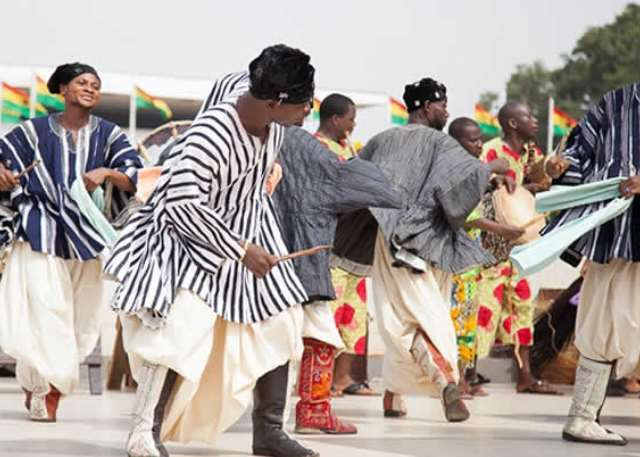
In this article, we take a look at the popular Ghanaian cultural garment, Fugu, also known as Batakari or the Northern Smock. In Ghana, what you wear says volumes even before you speak a word. While the world might recognize the vibrant colours of Kente, there is another fabric that carries the weight of history, authority, and northern craftsmanship which is the Fugu.
More than a cultural garment, fugu is a masterclass in local economic integration and creativity. It connects the work of farmers, artisans, and national leadership. Over the years, it was once seen primarily as a cultural garment for festivals, but is now at the center of a conversation about industrialization, trade, and African identity. This is not fashion nostalgia. It shows how a traditional garment can move from the farm to the market, and from home production to national pride.
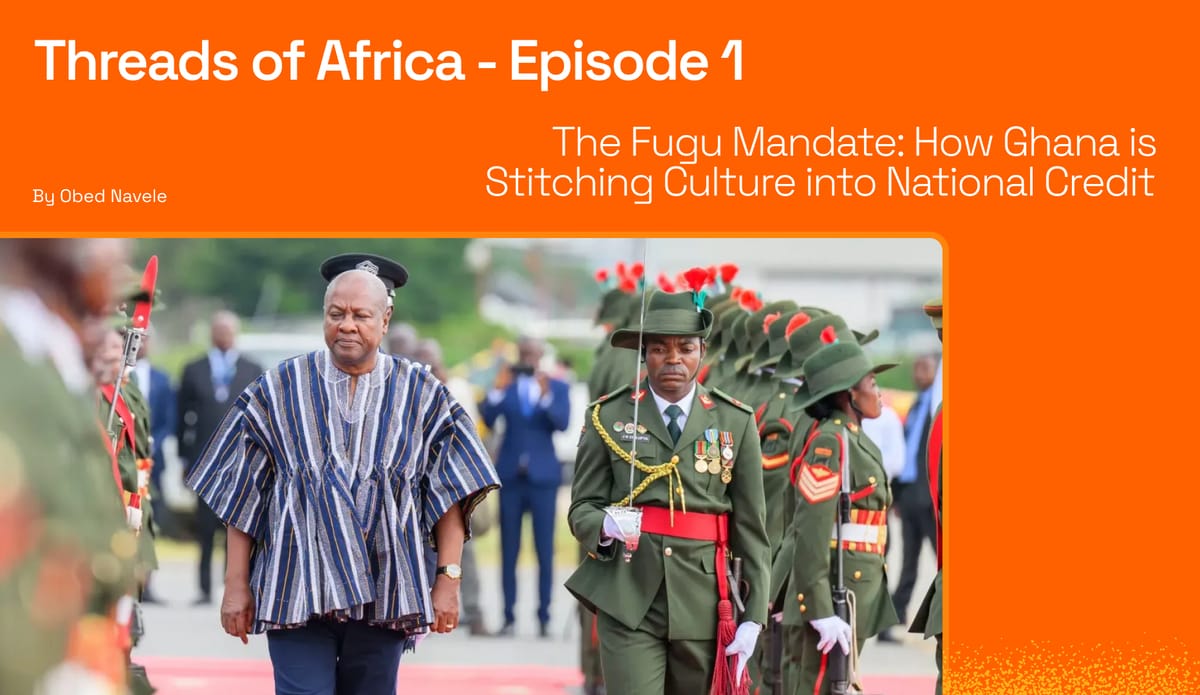
Today, the modern rise of Fugu is happening because Ghanaian leaders have re-interpretated it as a symbol of national pride. A big moment for this was when H.E. John Dramani Mahama, the President of Ghana, was spotted several times in Fugu in high level international meetings. By choosing the Fugu over a suit, he showed the world that Ghanaian clothes are powerful and should be recognized as professional attire. On February 9, 2026, H.E. John Dramani Mahama rocked the traditional northern smock during a high-profile state visit to Zambia. When he wore it, some Zambians shared their opinion online, mocking the outfit and they even got the name wrong. Ghanaians did not stay quiet. Across social media, many stepped in to correct the mistake and defended the attire. This wasn't just about the fashion of it, but a national awakening. The government moved swiftly, and on February 10, 2026, the Ministry of Tourism, Culture, and Creative Arts officially designated every Wednesday as "National Fugu Day" in Ghana. This is now changing how people see the garment, turning it into a symbol of modern leadership.
The Simple Story Of Innovation
The true value of the Fugu lies in the skill, tradition, and cultural knowledge that go into making it. The process of making a fugu begins in the cotton fields of Northern Ghana, where farmers provide the raw materials for weavers, who transform threads into hand-woven strips on traditional looms. A detailed academic study on cotton production in northern Ghana notes that cotton cultivation there is “purely done by smallholders (peasant)…” as part of an out-grower system where farmers and their households do the bulk of production. This supports the “smallholder” characterization in your sentence.
The loom itself is an indigenous technology. A handwoven Batakari can take 2 to 4 weeks to produce depending on pattern complexity and worker availability, slow by fast-fashion standards, but rich in labour value and local skill. That time is not inefficiency; it is concentrated human capital: the hands of spinners, the memory of designs, the precision of weavers who keep patterns. Each step creates work, each step supports a family. And this is what economists call a “value chain,” but in simple terms, it means one garment creates many jobs right in local communities. As demand for Fugu grows, it creates meaningful economic opportunities in northern Ghana, allowing skilled young people to build careers locally rather than leaving due to limited options.
A Strong Example of Connected Industries
To understand the economic value of Fugu, we must look at how many different industries are involved. Fugu production follows a connected value chain where every stage creates jobs locally:
- Agriculture (The Starting Point): The Cotton farmers grow the raw material. As demand for Fugu rises, cotton farming expands, helping reduce migration from northern communities to southern cities.
- Manufacturing: Production is a community effort. Women spin cotton into thread and dye it using natural, eco-friendly materials. While the Men weave narrow strips on hand-looms, which are later stitched together into smocks.
- Design and Innovation: Young designers and tailors modernize patterns, adapt fabrics, and experiment with new styles, making Fugu appealing to younger generations and international markets.
- Education and Skills Training: Master weavers and local workshops train apprentices, passing knowledge across generations and building skilled labour.
- Logistics and Technology: Digital platforms connect local weavers to global buyers. In some areas, drones and other tools are being tested to deliver plant seeds, materials, and finished products efficiently.
- Marketing and Retail: Shops, markets, online stores, and fashion shows promote Fugu to local and international consumers. Advertising and branding amplify demand.
- Tourism and Cultural Promotion: Cultural festivals, museums, and heritage tours showcase Fugu, attracting visitors and creating additional economic opportunities.
- Finance: Microcredit, seasonal loans, and small-business support for farmers, weavers, and tailors allow the industry to scale without depending solely on large investors.
The Economic Impact?
Fugu production is often informal, but its impact is very real. It supports household income, helps pass skills from one generation to the next, and creates local markets. Ghana’s textile ecosystem factories, tailors, market traders, and cottage weavers support hundreds of thousands of livelihoods. Many of these workers live in northern districts where there are limited job opportunities.
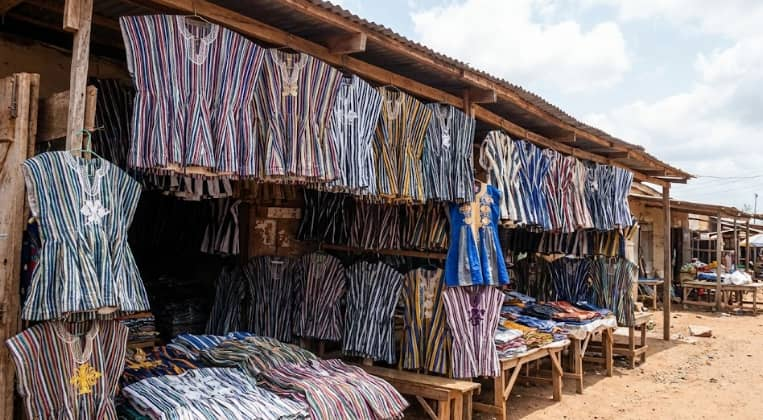
For families, Batakari can be a safety net during difficult farming seasons. Once the money is earned, it goes to many essential needs: paying children’s school fees, buying food for the household, covering hospital bills, and keeping the family afloat. For towns, it can become a recognised local product that attracts trade, supporting entire communities and creating a ripple effect of opportunity.
Government Support Without Taking Over
As already outlined earlier, the public defence of Fugu and the nationwide adoption of Fugu Wednesday marked a turning point. What followed was not just cultural pride, but a practical policy signal. One strong way to grow an industry is through local demand, especially when the government helps stabilise that demand.
By encouraging regular, nationwide use of Fugu, the state helped create a predictable market. If even 200,000 public-sector workers participate consistently, millions of dollars can circulate within the local economy. Tailors, weavers, traders, and cotton farmers all benefit. What appears to be a cultural gesture becomes economic coordination.
This is a form of economic diplomacy. It uses domestic identity to strengthen local production systems and reduce dependence on imported clothing.
Importantly, this approach is not about forcing culture from the top. It is about recognising what already works and scaling it carefully. The role of the state is not to replace the loom, but to reduce friction, manage risk, and provide stability where local systems already exist.
A Reflections on the Bigger Picture
The story of the Fugu forces us to rethink how we define “development.” Too often, we treat industries as separate lanes, agriculture over here, fashion over there, policy somewhere else, and culture as a soft add-on. But Fugu demonstrates a possibility for a path.
One garment quietly connects farming, manufacturing, design, finance, logistics, tourism, technology, and governance. It proves that development does not always begin with large factories or foreign capital. Sometimes, it begins with recognising the systems we have already built and allowing them to speak to each other.
This is where the real lesson lies: growth happens fastest at intersections. When cotton farmers are linked to designers, when culture meets policy, when tradition meets youth innovation, value multiplies. Jobs are created not by replacing local systems, but by strengthening the links between them.
This way of thinking is what ADC consistently looks out for. Not isolated success stories, but how sectors overlap, reinforce each other, and move together. The Fugu economy is not just about clothes; it is about coordination. It is about seeing Africa’s informal systems not as weaknesses, but as under-organised strengths waiting to be aligned.
The question, then, is not whether Fugu can grow.
The question is how many other “Fugus” already exist across the continent, quietly supporting lives, crossing industries, and waiting to be taken seriously.
The Fugu story challenges us not just to notice what exists, but to act on it. If we can connect, support, and amplify one overlooked system, why stop there? Across Ghana and Africa, countless other crafts, resources, and industries quietly sustain communities and hold untapped potential.
The real opportunity lies in seeing these “hidden engines” of growth, giving them the tools, networks, and confidence to scale, and letting local ingenuity lead the way. When we do this, development becomes homegrown, inclusive, and sustainable, and a future built not by imports, but by the hands, ideas, and traditions already at work.