The Evolution of the Ballot: Shifting from Independence Ideals to the Crisis of Modern African Governance
Africa’s ballot box is losing its liberatory power, morphing into a tool for regime survival. From Ethiopia’s exclusionary June 2026 polls to Guinea’s junta-led “transition,” elections are increasingly engineered to entrench elites. The cost is capital flight, fractured trust, and democratic erosion
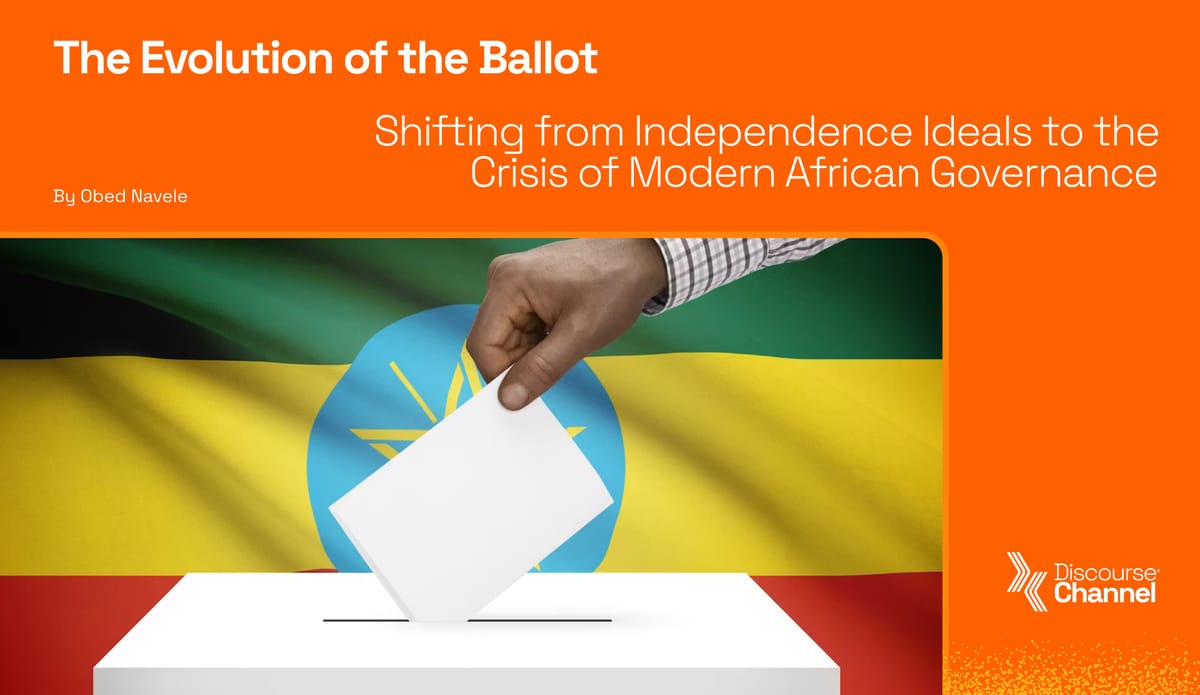
In the mid-twentieth century, as liberation happened across the African continent, the ballot box arrived with an almost sacred significance. For pioneers of Pan-African sovereignty, the franchise was far more than an administrative procedure; it was an act of historical reclamation. To drop a paper ballot into a box was to formally dismantle the institution of colonial rule, assert the collective dignity of the African person, and exercise the right to self-determination. Early democratic movements viewed elections as an expansive mechanism for nation-building, designed to forge a unified social contract out of fragmented, artificially bounded territories.
Over the decades, this foundational philosophy underwent a profound structural degeneration. The ballot box has largely been emptied of its liberatory substance, transforming instead into a sophisticated, weaponised tool for elite survival and regime preservation. Contemporary electoral exercises across much of the continent no longer seek to measure the authentic popular will; rather, they serve to manufacture a thin veneer of domestic and international legitimacy for entrenched political actors.
The historical shift occurred as the post-colonial state retained the centralised, extractive institutional designs of its former colonisers. Because control of the state apparatus remains the primary avenue for securing wealth, economic survival, and personal security, the executive presidency became a prize too valuable to yield. Consequently, elections have been stripped of their democratic ethos and repurposed as competitive arenas for institutional capture, where ruling factions use state infrastructure to secure political patronage and guarantee their own survival.
The Transom of Degeneration: Adopting the Maladies
The ease with which modern political actors across the continent adopt, refine, and export negative electoral practices points to a deeper, structural vulnerability within African governance architectures. Rather than innovating democratic models suited to diverse local contexts, political elites have perfected a suite of manipulative tactics: identity-based polarisation, fear-mongering tactics, strategic voter suppression, the weaponisation of the judiciary, and the deployment of state security forces for partisan enforcement. This rapid institutional decay is accelerated by specific, systemic drivers:
The Winner-Takes-All Majoritarian System inherited from Westminster, and the French constitutional frameworks ensure that the faction capturing the presidency gains absolute control over national resources while the losing faction faces economic marginalisation and political exclusion.
Structural Poverty and Economic Dependence: When a significant portion of the populace relies directly on state patronage or immediate cash transfers for baseline survival, the voting process is easily reduced to a transactional market. Economic vulnerability compromises the autonomy of the electorate, making vote-buying a highly effective strategy for political incumbents.
Weak Institutional Frameworks: Constitutional checks and balances are frequently hollowed out from within. When the appointment structures of judiciaries, anti-corruption agencies, and police forces depend entirely on the executive whim, these bodies are systematically transformed from independent public watchdogs into partisan instruments used to disqualify opposition candidates and legitimise flawed electoral outcomes.
The Human and Economic Toll: Case Studies in Crisis
When electoral governance frameworks fail, the systematic rigging of polls and subversion of institutional trust trigger a devastating chain reaction. This systemic electoral deficit drives both the weaponisation of the judiciary and security apparatus, and the deep polarisation of ethnic and regional factions. As institutional trust erodes and social cohesion snaps, these severe socio-political divisions erupt into catastrophic social fractures and physical conflict. The ultimate toll of this structural breakdown is measured in acute human suffering and systemic ruin. It leaves behind a severe humanitarian crisis marked by the loss of innocent lives and long-term community displacement. Simultaneously, it inflicts total economic paralysis through massive capital flight and the destruction of critical infrastructure.
This structural crisis manifests in distinct ways across different sub-regions:
In Ethiopia, in the Horn of Africa, the practice of conducting national elections within a deeply strained ethnic federal system highlights the dangers of majoritarian polling amid unresolved regional conflicts. When elections are held while major territories such as the northern Tigray region are structurally excluded or facing active security crises, the process ceases to be a tool for national cohesion. Instead, it becomes an exclusionary mechanism that deepens historical grievances, fuels active insurgencies in regions like Amhara and Oromia, and results in mass displacement and the breakdown of civic trust across the federation. This systemic dysfunction was vividly illustrated during the June 2026 general election, in which the Prosperity Party consolidated its power through sweeping preliminary victories while the entire Tigray region was reportedly excluded from voting. Compounded by severe polling disruptions caused by active Fano and Oromo insurgencies, the suppression of opposition parties, and a reliance on managed electoral processes amid unmanaged violence, the vote ultimately functioned to entrench domestic repression rather than foster democratic unity.
Guinea; In West Africa, the post-coup "transition" model reveals a different aspect of this democratic crisis. Following military interventions, ruling juntas frequently utilise engineered electoral frameworks and unilateral administrative decrees, such as the systematic dissolution of major opposition parties, to organise highly controlled elections. This strategic deployment of the law allows military actors to shed their uniforms and assume civilian titles, effectively using the formal mechanics of the ballot box to legitimise authoritarian control while silencing genuine civic participation.
This conceptual playbook crystallised directly into reality through Guinea's rapid transition process, orchestrated by junta leader General Mamadi Doumbouya. After altering the legal landscape via a new constitution that removed bans on military candidates, Doumbouya secured a seven-year mandate as an "elected" civilian president with 86.72% of the vote. Because major opposition figures were strategically barred or boycotted the contest, a process operated under highly managed conditions. The final phase of this engineered model concluded with a double-ballot legislative and communal election, completing a transition that allowed the military hierarchy to swap their uniforms for civilian titles while severely pruning the broader political ecosystem.
Broader Continental Echoes
These dynamics are part of a wider, systemic continental trend. The historical memory of post-election violence in East Africa, alongside the deep structural distrust and administrative irregularities that frequently plague large-scale elections in West Africa's major democracies like Nigeria, Benin, Togo, Cameroon, and Senegal, underscores a shared vulnerability. Across these varied contexts, the fundamental cost remains uniform: the total erosion of the citizen’s belief in the ballot box as a peaceful, predictable instrument for social change.
The Anatomy of Reform: Can the Trajectory be Reversed?
Reversing this generational decline requires a fundamental departure from cosmetic institutional adjustments. It is entirely possible to eliminate these systemic failures, but doing so demands structural constitutional engineering designed to alter the core incentives of political competition across the continent. This structural blueprint hinges on a tri-pillar framework: transitioning to Proportional Representation to eliminate zero-sum, winner-take-all dynamics that fuel ethnic polarisation; securing Absolute Autonomy for Electoral Management Bodies (EMBs) to insulate the voting process from executive capture and junta manipulation; and establishing Decentralised Power Bases to diffuse fiscal and legislative authority away from a hyper-centralised capital. By implementing this specific architectural reform, African states can systematically dismantle the structural failures that drive regional conflict, prevent the rise of engineered civilian-military regimes, and cultivate an environment where genuine civic participation can thrive.
Transitioning to Proportional and Inclusive Models
The dangerous stakes of the "winner-takes-all" system must be replaced with mixed-member proportional representation or mandatory power-sharing architectures. By ensuring that legislative and executive representation reflects the actual proportion of votes cast, minority factions and diverse regional or ethnic interest groups are guaranteed a seat at the governance table, neutralising the existential fear of political exclusion.
Absolute Autonomy for Electoral Management Bodies (EMBs)
Electoral commissions must be structurally insulated from executive control. This requires amending national constitutions to transfer the appointment, funding, and removal powers of electoral commissioners away from the presidency. Funding must be drawn directly from consolidated state funds, and appointment processes must be subjected to independent, cross-party civic vetting panels.
Decentralisation of Power Structures
To reduce the hyper-concentrated power of the central executive presidency, authentic administrative and fiscal power must be decentralised to local government authorities. When regional and municipal assemblies possess the legal autonomy to manage their own budgets, resources, and developmental priorities, the political premium placed on capturing the central state decreases significantly.
Deployment of Immutable, Transparent Technology
To restore civic trust, African states must deploy open-source, decentralised DPI technological solutions for voter registration and results transmission. Utilising blockchain-verified ledgers ensures that once a vote is recorded or a tally is submitted at a local polling station, it cannot be altered by central administrative actors or partisan computing centres.
The Reimagined Continent: The Dividends of Democratic Integrity
The structural stabilisation of African electoral governance is not an exercise in political theory; it is the vital prerequisite for a unified, prosperous continent. When the ballot box is successfully restored to an authentic instrument of popular sovereignty, the developmental dividends will transform the daily realities of the African people. True democratic stability acts as an immediate catalyst for economic transformation. It halts the catastrophic capital flight that regularly occurs around tense election cycles, creating a predictable policy environment that attracts long-term, sustainable intra-African investment. With secure governance frameworks, the continent can effectively leverage the African Continental Free Trade Area (AfCFTA) to build cross-border infrastructure, integrate regional supply chains, and build value-added industries without the constant threat of politically induced disruption.
Furthermore, a continent governed through authentic popular consent can effectively reverse the debilitating "brain drain" of its youth. When young African intellectuals, entrepreneurs, and artists believe that their domestic institutions are transparent, meritocratic, and responsive to their needs, they will invest their immense human capital at home. Cultivating this internal talent pool is essential for driving local technological innovation and building resilient knowledge economies.
Ultimately, an Africa characterised by democratic integrity will fundamentally alter its standing in the international arena. Shielded from the internal vulnerabilities that foreign powers frequently exploit, a unified bloc of democratically legitimate African states can negotiate with global institutions from a position of absolute sovereignty, ensuring that the continent's natural wealth and human capital are leveraged exclusively for the advancement of its own people.