Africa's Time, Africa's Terms: Learning for Sovereignty, Strength and Solidarity
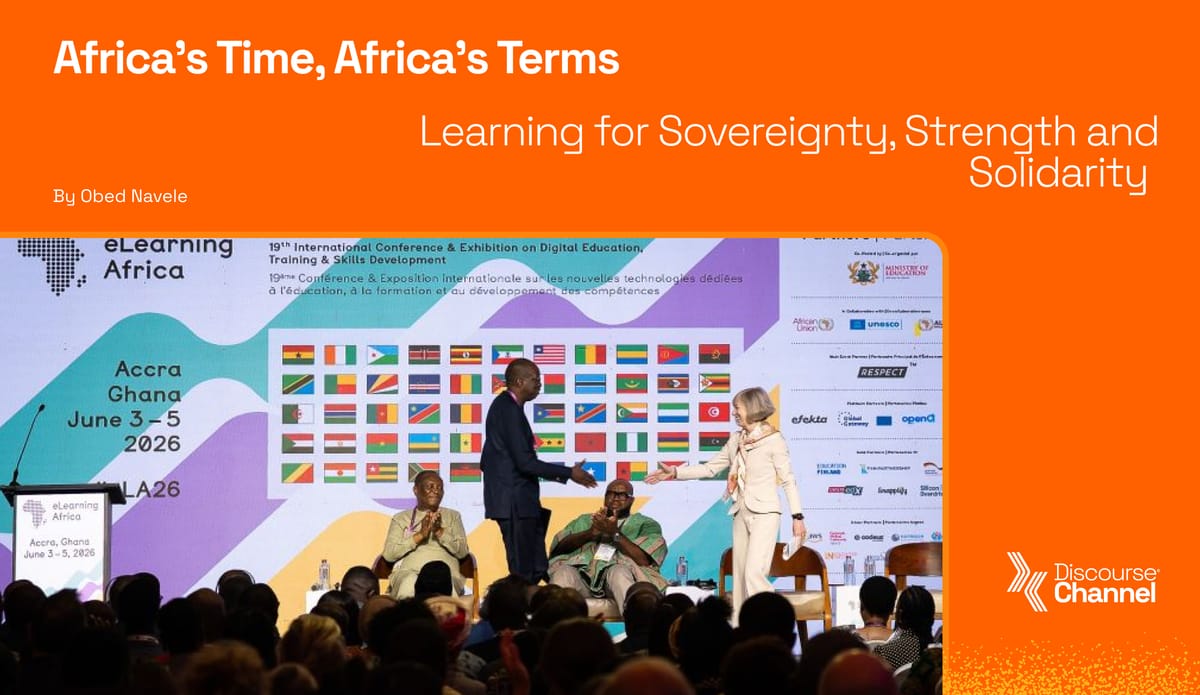
Moving completely away from the patronising language of international aid and boilerplate corporate philanthropy, the assembly rallied around a defensive, highly strategic manifesto: "Africa’s Time, Africa’s Terms: Learning for Sovereignty, Strength, and Solidarity."
In Africa, Between 85% and 95% of all digital data generated within is processed and stored on servers located outside the African continent. This stark macroeconomic reality represents an invisible, ongoing asymmetric extraction that directly compromises national security and intellectual autonomy.
Under current geopolitical structures, whenever an African student logs on to a digital platform, submits an assignment, or interacts with an educational application, their cognitive profile, linguistic nuances, and behavioural habits are outsourced to foreign cloud ecosystems. This systemic vulnerability is sharply exacerbated by weaponized international legal frameworks, most notably the United States CLOUD Act of 2018. This legislation grants foreign jurisdictions the extraterritorial authority to compel multinational technology corporations to surrender user data, student profiles, and institutional records stored anywhere on Earth, entirely bypassing local African sovereign courts, data protection commissioners, and national boundaries.
When foreign states can legally subvert the intellectual footprint of Africa’s future generation without domestic oversight, digital education ceases to be a mere tool for development; it becomes a direct channel for modern data colonialism. Precisely, this high-stakes threat landscape hovered over the delegates, policymakers, and tech architects who gathered in Accra for the eLearning Africa 2026 Conference. Moving completely away from the patronising language of international aid and boilerplate corporate philanthropy, the assembly rallied around a defensive, highly strategic manifesto: "Africa’s Time, Africa’s Terms: Learning for Sovereignty, Strength, and Solidarity."
From the perspective of a continent navigating an automated global economy, the eLearning Africa 2026, co-hosted by the Ministry of Education Ghana marked a profound paradigm shift. Digital Education is no longer being discussed as a passive exercise in adopting foreign software and hardware; it is being re-engineered as a primary frontline for macroeconomic survival, cognitive self-defence, and true systemic self-reliance.
In June 2026, staff from the Ghana Library Authority (GhLA) and Electronic Information for Libraries (EIFL) presented the outcomes of their "Digital Learning @ Ghana Public Libraries" project at the e-Learning Africa 2026 conference in Accra. It evolved into something far more radical than a standard literacy programme. Faced with a global internet increasingly fragmented by algorithmic bias, foreign geopolitical agendas, and regional misinformation, the initiative systematically rolled out localised Open Educational Resources (OER) explicitly engineered for Ghanaian youth aged 12 to 18.
Instead of importing off-the-shelf Western software packages that treat African students as passive consumers of foreign templates, the programme deployed targeted, competency-based digital literacy pathways operating entirely on regional servers. The results were structurally instructive: students were not merely taught to consume data; they were taught to dissect the architecture of the web, protect their personal digital identities, manage data footprints, and construct localised code to solve regional agricultural and logistical problems. This ground-up triumph serves as the definitive prologue to a broader, continental intellectual awakening.
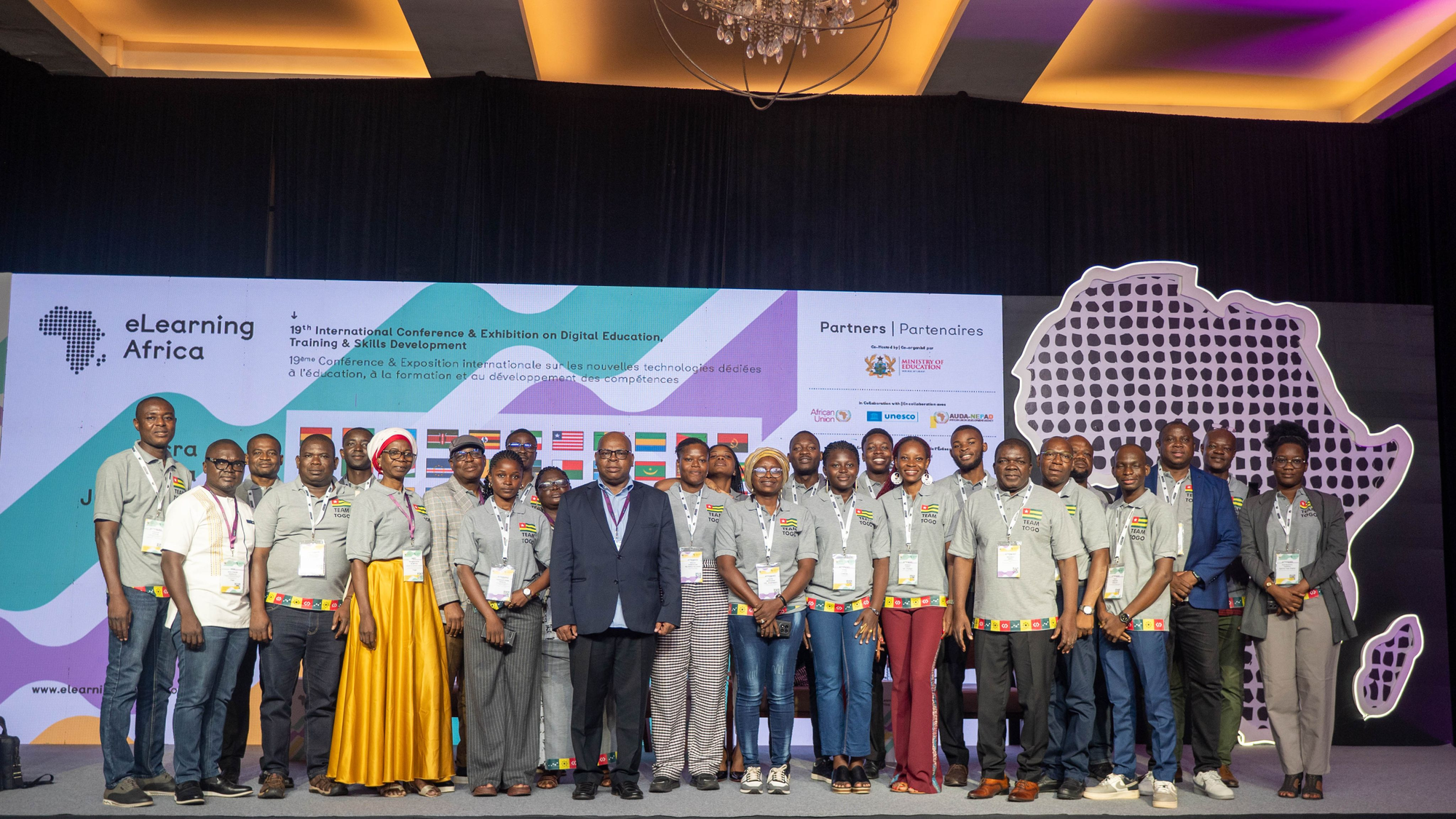
Africa's Path Through Sovereignty, Strength, and Solidarity
To grasp the systemic weight of the moment, one requires an unblinking, rigorous deconstruction of the conference’s core pillars.
Sovereignty: This is the foundational concept. For over two decades, African EdTech has frequently drifted into an unrecognised state of digital extractionism. Local universities, primary schools, and state training centres routinely outsource their data pipelines, student records, learning management systems, and intellectual property to foreign cloud servers based in North America, Europe, or East Asia.
Absolute digital sovereignty demands the immediate, structural halt of this intellectual drain. It requires the establishment of national data architectures, localised server hosting within continental borders, and rigid legal frameworks that prevent global technology conglomerates from treating African minds as free data for foreign machine-learning algorithms. If the behavioural data, cognitive profiles, and linguistic variants generated by an African child belong to a corporation in Silicon Valley or Beijing, then the education system remains structurally colonised, regardless of how many tablets are distributed to rural communities.
Strength: If we must talk about strength, then we must answer the question: “Are we preparing our youth for a world that no longer exists?" The structural misalignment between historical, colonial-era academic pathways and contemporary economic realities is glaring. For decades, the continent has produced graduates tailored for administrative bureaucracy rather than self-agency and innovation.
Building systemic strength means engineering an aggressive, state-backed institutional pivot away from rote-learning curricula and toward Technical and Vocational Education and Training (TVET), green energy engineering, automated logistics, advanced digital-economy capabilities, and other forms of applied, future-orientated learning. At the same time, Africa must invest in the humanities, social sciences, creative industries, languages, law, public policy, psychology, communication, entrepreneurship, and cultural studies, fields that develop critical thinking, ethical leadership, social cohesion, innovation, and effective governance. Academic credentials should no longer derive prestige merely from certification but from their demonstrated ability to produce functional, adaptive, and socially relevant capacities in a highly volatile global economy. However, these policies, projects and programmes should not elevate STEM above other disciplines, but to ensure that every field of study contributes meaningfully to economic productivity, civic development, cultural preservation, and human flourishing.
Solidarity: This is the continental scaling mechanism. Isolated national strategies are inherently vulnerable to being outmanoeuvred, underfunded, or co-opted by global capital and monopolies. Pan-African solidarity entails developing unified educational policies, cross-border credit transfer systems, and shared open-source repositories. By aggregating the continent’s purchasing and negotiating power through frameworks like the African Continental Free Trade Area (AfCFTA), African nations can collectively dictate terms to global tech entities. This ensures that hardware, software, and infrastructure agreements serve the collective interest rather than creating fragmented dependencies.
Balancing Democratic Opportunities and Structural Challenges
The positive possibilities within this sovereign framework are undeniable. When education is decoupled from rigid, physical real estate and high-tariff gatekeepers, the potential for democratisation scales exponentially. Decentralised, mobile-first peer-to-peer networks and hyper-personalised local OER can effectively circumvent historical infrastructural bottlenecks that have plagued Africa for a century. They lower the per-capita cost of world-class instruction to near zero, offering a lifeline to marginalised communities, nomadic demographics, and urban informal-sector workers who have long been priced out of institutional pipelines.
Furthermore, localised adaptive learning engines can act as force multipliers for teachers, handling administrative grading and fundamental assessments, thereby freeing up human educators to focus on mentorship, critical analysis, and emotional resilience.
Yet, as a matter of rigorous macroeconomic honesty, these possibilities must be violently contrasted with current structural hazards. The conference’s lofty rhetoric surrounding "AI-driven leapfrogging" exists in sharp, uncomfortable tension with material reality. According to recent International Telecommunication Union (ITU) data, approximately 38% of the African population actively uses the internet, leaving a massive, disenfranchised majority entirely in the digital dark in 2025. Concurrently, across Africa, youth unemployment stubbornly persists between 11% and 12% according to the International Labour Organisation, creating a volatile demographic paradox where 257 million young people are classified as NEET (Not in Employment, Education, or Training). This massive cohort represents highly connected but economically stranded citizens, as the continent's markets generate only 3 million formal jobs for the 10 to 12 million youth entering the workforce annually. There is an intellectual hypocrisy in advocating for advanced, cloud-dependent artificial intelligence platforms in regions still choked by rolling power grid failures, prohibitive data costs, and a lack of a widely accessible internet infrastructure.
The continent faces a profound AI Dependency Trap. Deploying educational platforms built on large language models (LLMs) trained exclusively on Western or Asian data repositories. Subtly but systematically could erase African history, complex linguistic nuances, and socio-economic realities. It risks encoding foreign biases, consumerist philosophies, and historical distortions directly into the cognitive foundations of the next generation.
Frontier Innovation: Redefining Africa’s Role from Users to Builders
To break this feedback loop of dependency, Africa must evolve from an observer of the AI revolution into its own primary architect. This requires the immediate, heavily funded development of indigenous Large Language Models (LLMs) built on local datasets, spanning multiple languages, not just English, Portuguese, and French, but also local languages like Swahili, Wolof, Twi, Hausa, Ga, Yoruba, Arabic and Zulu. These localised models are not cultural novelties or tokenistic preservation projects; they are precise pedagogical tools necessary to deliver accurate contextualised training to young African minds.
Crucially, this digital transformation cannot occur within an educational silo. The EdTech sector must structurally converge with other mature continental ecosystems that have already solved the challenges of local scale:
The Fintech Nexus: Rather than relying on international banking rails or credit card systems that exclude the unbanked, decentralised learning platforms must integrate directly with ubiquitous mobile money infrastructure like M-Pesa, Orange Money, or MTN MoMo. This enables micro-tuition payments, fractional content purchases, and decentralised funding mechanisms tailored to context-aligned cash-flow patterns of Africans.
The Agritech and Climate Synthesis: Educational pipelines must lock directly into the labour demands of precision agriculture and green engineering. Digital learning modules should update dynamically based on real-time climate data, soil metrics, and regional supply chain demands, turning learning into an immediate engine of rural wealth creation and environmental resilience.
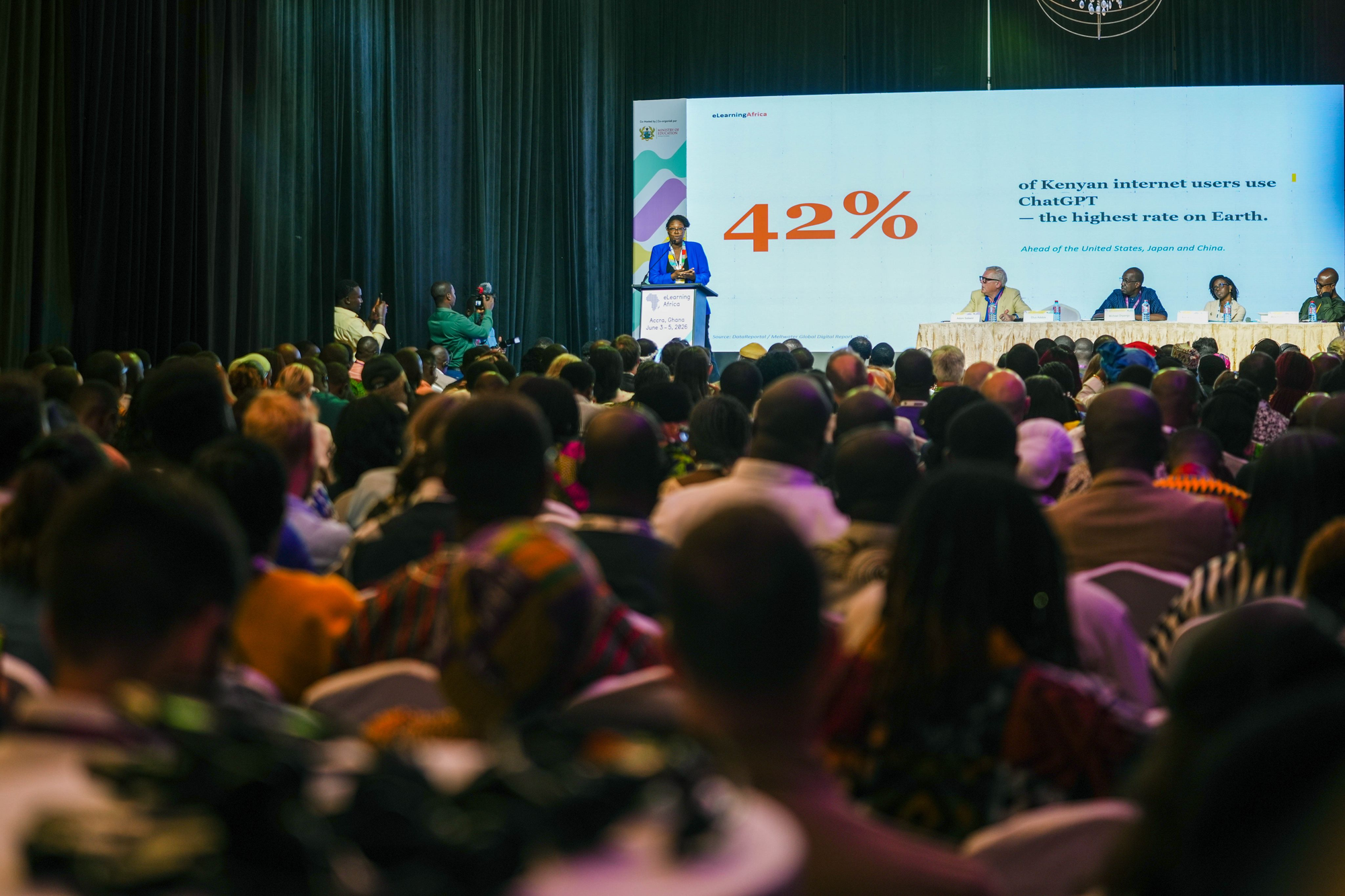
The Collective Accountability Framework
Real-time success can no longer be measured by the hollow metrics of corporate public relations, such as the number of laptops distributed to rural classrooms or superficial spikes in application downloads. True success must be verified through hard structural outcomes: the retention of local engineering talent within continental borders, the drastic reduction in underemployment, the emergence of profitable local enterprises, and the expansion of locally owned digital infrastructure. Achieving this requires specific, coordinated execution across the entire societal matrix, moving away from passive observation toward a model of absolute collective accountability:
Governments & Policymakers; Strengthen data sovereignty through robust legislative frameworks that protect national digital assets. Invest in secure national and regional data infrastructures while reducing barriers to access by eliminating or lowering tariffs on essential educational technologies. Expand rural connectivity through targeted subsidies and public–private partnerships to ensure inclusive digital access.
EdTech Founders & Investors: Move beyond replication of external technology models and prioritise innovation grounded in African realities. Develop solutions that are offline-first, low-bandwidth optimised, and scalable within resource-constrained environments. Focus on building sustainable ecosystems that prioritise long-term value creation, local capacity building, and infrastructure development over short-term exit-driven investment strategies.
Institutional Educators & Teachers: Evolve pedagogical approaches from knowledge transmission to knowledge facilitation. Emphasise the development of critical digital competencies, including critical thinking, data literacy, ethical awareness, and analytical reasoning. Prepare learners to engage meaningfully with technology as creators and evaluators rather than passive recipients.
Parents & Students: Adopt a broader understanding of education that extends beyond credential acquisition. Encourage the development of practical skills, technical proficiency, and adaptive thinking abilities that align with the demands of a rapidly evolving digital economy. Prioritise lifelong learning, innovation, and real-world problem-solving alongside formal academic achievement.
The timeline, depth, and ultimate survival of the African e-learning ecosystem depend entirely on whether the continent chooses to build its own digital tables or merely rent from foreign gatekeepers.
The conclusions of the 2026 Accra conference made one reality undeniable: while Africa's bold educational terms have been set on paper, the true test lies in moving past the usual cycle of high-level talk and passive adoption.
Historically, such summits produce ambitious declarations that ultimately gather dust due to weak structural execution and political inertia. Whether these newly outlined strategies will actually transform African classrooms or simply remain a collection of well-phrased promises is a question only the coming years can answer. Action, not rhetoric, will prove if this time is truly different.