Ghana’s Mining Lease Review Sparks Debate on Resource Control and Economic Value
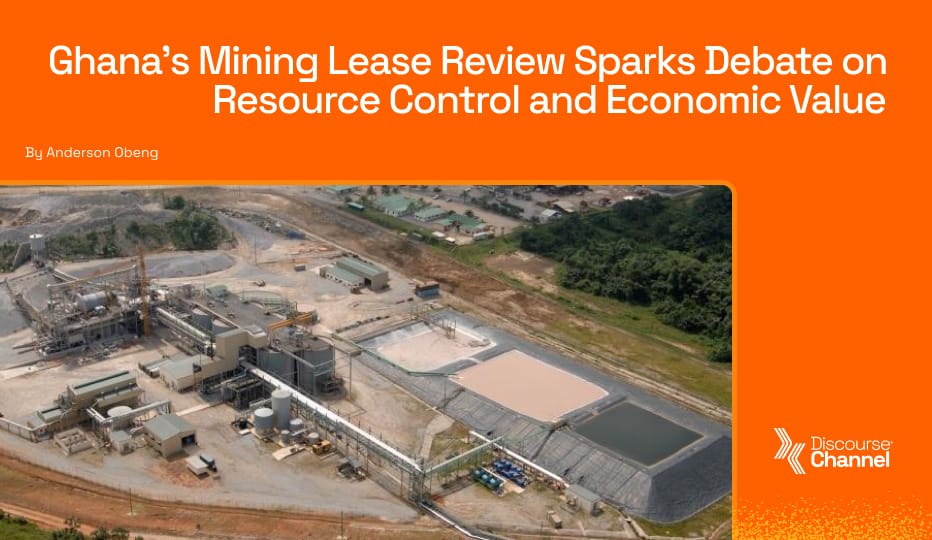
The government of Ghana announced that the renewal of the Tarkwa mining lease held by Gold Fields would not be automatic and would instead be subjected to a stricter review process.
For decades, the debate around Africa’s natural resources has followed a familiar pattern: who extracts them, who profits from them, and how much value remains in the countries where they are found. This week, that conversation gained renewed momentum as Ghana signaled a tougher approach to one of its most significant mining assets.
The decision immediately drew attention across the mining and investment community because Tarkwa is one of the country’s most significant gold-producing operations. By signaling that lease renewals will face closer scrutiny, authorities have indicated a willingness to reassess how strategic natural resources are managed and what conditions should govern their continued development.
The development has fueled broader discussions around resource nationalism, a policy approach in which governments seek greater oversight, control, or economic participation in the extraction of national resources. Across Africa, similar debates have emerged in recent years as governments evaluate whether existing mining arrangements deliver sufficient benefits in areas such as local employment, revenue generation, technology transfer, and community development.
Supporters of stronger reviews argue that strategic resources should generate greater domestic value and contribute more directly to national development goals. They contend that governments have a responsibility to ensure that resource agreements remain aligned with changing economic priorities and public expectations.
Others point to the need for policy consistency and regulatory predictability, particularly in sectors that require long-term investment commitments. Mining projects often involve significant capital expenditure and multi-decade planning horizons, making stability an important consideration for investors and operators.
Beyond the immediate implications for Tarkwa, the announcement reflects a wider continental conversation about ownership, participation, and control of strategic assets. As African economies seek to strengthen domestic industries and capture more value from their natural resources, questions surrounding licensing, royalties, local participation, and resource governance are becoming increasingly central to economic policy discussions.
What we are watching:
- African policymakers renewed calls for stronger African-controlled financing systems that reduce reliance on external lenders and international financial institutions.
- The African Development Bank and the Africa Social Security Association announced a strategic partnership aimed at mobilizing long-term domestic capital from pension and social security funds.
Taken together, these developments point to a broader shift in Africa’s economic thinking. Whether through mining policy, development finance, or capital market reforms, governments and institutions are increasingly focused on how more value can be retained, financed, and managed within the continent.
Ghana’s stance on the Tarkwa lease fits within that larger trend. The conversation is no longer limited to resource extraction alone; it is increasingly about ownership, participation, financing, and the long-term governance of strategic assets. As African countries seek greater control over their economic futures, these debates are likely to play an increasingly important role in shaping investment, policy, and development strategies across the continent.