The Coordination Imperative: Why Africa's Next Economic Revolution Won't Be Built on Apps
Africa’s ambition to build a fully integrated digital economy is gaining renewed momentum as governments, regulators and industry leaders intensify efforts to harmonise systems, reduce cross-border transaction costs and strengthen digital infrastructure to unlock continental trade.
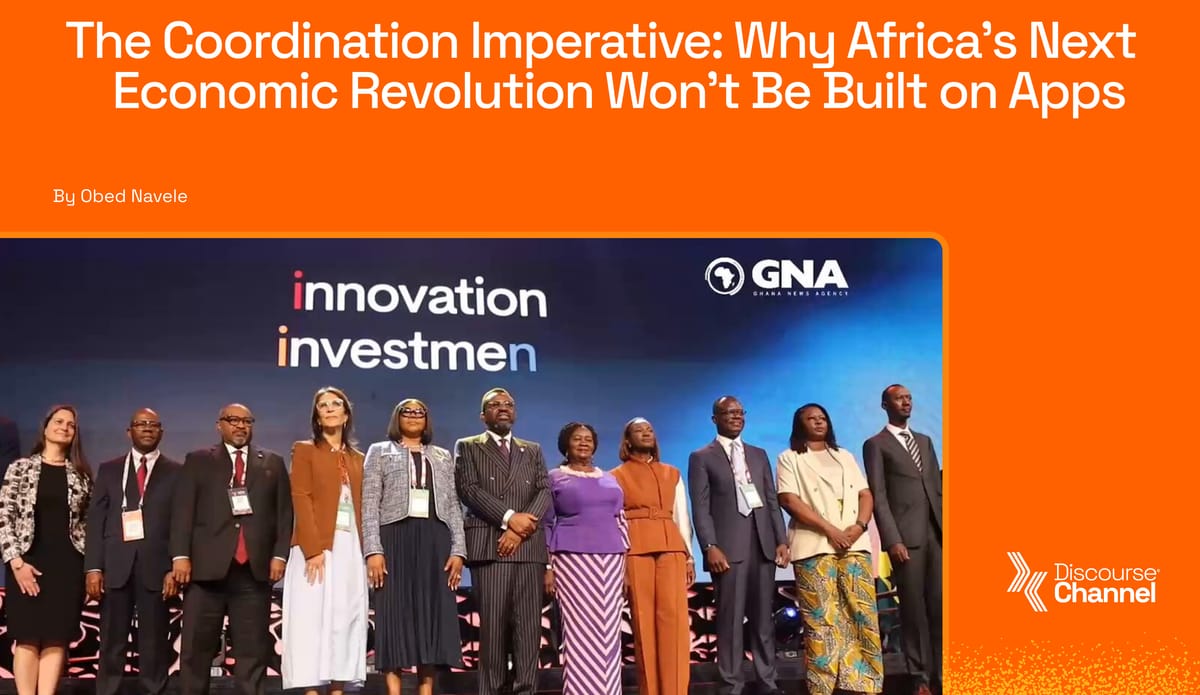
The conversation Africa needs to have now is no longer about who has a mobile money account. But who controls the systems that make those accounts matter.
Africa’s ambition to build a fully integrated digital economy is gaining renewed momentum as governments, regulators and industry leaders intensify efforts to harmonise systems, reduce cross-border transaction costs and strengthen digital infrastructure to unlock continental trade.
There is a woman in Makola Market in Accra who does not care which bank you use, which mobile network carries your signal, or which fintech processed your transaction. She cares about one thing: that the money arrives. Quickly. Without delay. Without friction.
Clara B. Arthur, CEO of the Ghana Interbank Payment and Settlement Systems, told this story at the opening of the 3i Africa Summit 2026 and it was deceptively simple. Because that woman's expectation is more than a decade of deliberate infrastructure-building, regulatory alignment, and inter-institutional coordination that most people never see and rarely discuss. The seamlessness she takes for granted is the product of extraordinary effort. And that gap between what works quietly and what still needs to be built loudly is exactly what this summit was convened to confront.
Africa has passed the access milestone. The numbers confirm it. Approximately 49% of adults in sub-Saharan Africa now have access to digital financial accounts, according to the World Bank Global Findex Database and Africa accounts for 66% of global mobile money transaction value. These are not marginal achievements. They represent a structural transformation that many developed economies are only now beginning to study. The continent leapfrogged. It built financial infrastructure not by following a template but by abandoning one.
Dr. Johnson Pandit Asiama, Governor of the Bank of Ghana, was precise about this in his keynote. The challenge is no longer access, It is fragmentation and expensive. It is regulatory unevenness. "The challenge is no longer building systems," he said. "It is connecting them." That sentence deserves to sit with us. Because it reframes the entire development agenda. Africa has built dozens of functioning national financial ecosystems. What it has not yet built is the connective tissue that turns those ecosystems into a continental economy.
The Vice President, Prof. Jane Naana Opoku-Agyemang spoke about sovereignty. She drew a direct line from Kwame Nkrumah's insistence that Ghana's independence must be linked to the total liberation of Africa, to the present moment, where economic sovereignty now depends on digital integration. "If our data is stored and processed elsewhere," she said, "then even when we participate, we lack control." That is a geopolitical statement dressed in the language of infrastructure and it should be read as such.
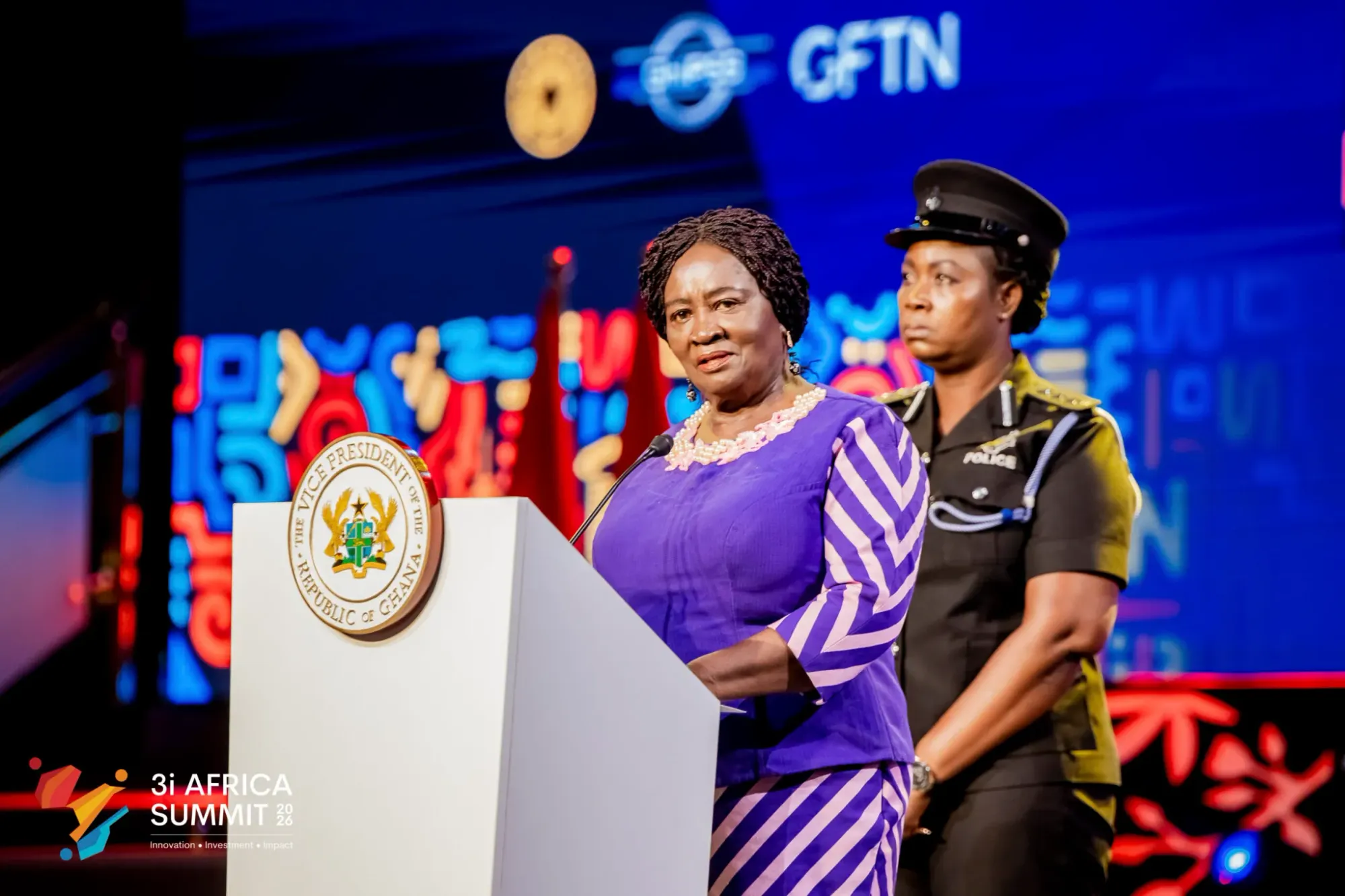
Africa currently represents a small fraction of global data center capacity. Intra-African transactions are frequently routed through financial systems outside the continent, denominated in third currencies dollars, euros currencies that carry costs, introduce delays, and anchor African commerce to external systems. A Ghanaian enterprise invoicing a Guinean client should not have to travel through New York to get paid. But in many cases, it still does.
The Vice President announced a concrete response: Ghana will pilot a continental digital trade corridor with Rwanda, Zambia, and other partners, focused on mobile money interoperability, mutual recognition of digital identity for cross-border KYC, and harmonized electronic invoicing. It is an important signal. Pilot programs, when properly measured and honestly evaluated, are how systems get built. What matters is whether this one is genuinely implemented or quietly buried beneath the next summit's announcements.
That question of implementation of turning intent into infrastructure became the intellectual thread of the day.
Maha Al-Damaki, CEO of the Global Finance and Technology Network, a subsidiary of the Monetary Authority of Singapore, offered the summit a fourth "I" to add to its three: Implementation. Innovation, investment, impact have become the grammar of African development forums. But Al-Damaki was direct: the continent already knows how to talk about the future. The harder task is building it. "Africa is no stranger to innovation," she acknowledged. But innovation without implementation is a recurring continental story that ends in unrealized potential.
She was equally direct about artificial intelligence. The African Development Bank projects that responsible AI deployment could add up to $1 trillion to Africa's GDP by 2035 and create 40 million jobs. Even conservative estimates suggest a $250 billion GDP increase. These numbers are not aspirational. They are structural projections about what happens when young, digitally-connected populations gain access to AI-enhanced financial tools, better credit scoring using alternative data, fraud detection systems that build trust, robo-advice that reaches people traditional wealth management never touched.
But Al-Damaki did not present AI as a cure. She raised the harder question: What happens when the technology advances faster than the governance frameworks meant to contain it? Sub-Saharan Africa currently has the lowest average digital skills score on the Oxford AI Readiness Index. Infrastructure gaps, skills shortages, and regulatory immaturity are not small inconveniences. They are the variables that determine whether AI accelerates African development or deepens its dependency on external systems.
Ralph Mupita, Group CEO of MTN, joined the summit virtually for a fireside chat that offered perhaps the most grounded perspective of the day. He described a transition that is already underway: Africa's mobile money ecosystem, built on USSD technology and 2G handsets, is being superseded. The next phase will be smartphone-based, app-driven, and integrated with digital credit, remittance, and eventually stable coins and digital currencies. "We're at a point of transitioning from mobile money systems to true digital finance," he said. The distinction matters. Mobile money moved value. Digital finance will build wealth or at least, it has that potential if the regulatory and infrastructure conditions are right.
What Mupita asked regulators for was not deregulation. It was clarity, Forward-looking regulation that protects consumers without strangling innovation. Trust in the system, he argued, must survive both human and AI-driven processes. That is a sophisticated task that places enormous responsibility on central banks that are already stretched, governing systems that are evolving faster than their institutional frameworks.
The regulatory panel that followed governors from Ghana, Tanzania, Rwanda, and Zambia made visible what is rarely discussed publicly: the enormous divergence that exists between African nations in their capacity, readiness, and appetite for digital finance governance. Some have built agile regulatory sandboxes. Others are still debating foundational frameworks. None of them can fully integrate into a continental digital economy while that divergence persists.
Dr. Asiama made a point that should be underlined. Regulation and growth are not opposing forces. They must reinforce each other. But that reinforcement requires a level of institutional coordination across central banks, across finance ministries, across technology standards bodies that does not yet exist at continental scale. The AfCFTA Digital Trade Protocol adopted in 2024 provides a framework. Frameworks, however, are not systems. They are commitments to build systems. The work that follows and whether it happens with the urgency it demands is the real story.
What emerged from Day 1 of the 3i Africa Summit was not a set of solutions. It was a more honest articulation of the problem. Africa has proven it can innovate, It has proven it can achieve financial inclusion at scale. What it has not yet proven is that it can coordinate itself institutionally, technically, politically into a coherent digital economy before the window closes.
That window is not infinite. The global architecture of digital finance is being built right now, by actors with their own interests, their own standards, and their own infrastructure. Africa can participate on terms defined elsewhere, or it can insist on shaping the terms itself.
This is Part One of a three-part series covering the 3i Africa Summit 2026. Parts Two and Three drawing from the summit's subsequent days will follow in the coming days. Together, the three pieces will form a complete critical analysis of what was said, what was left unsaid, and what it all means for the trajectory of Africa's digital economy.
What Day 1 made clear is that the continent's most urgent challenge is no longer vision, it is institutional will. The speeches were sophisticated. The data was sharp. The frameworks exist. But frameworks do not build systems. People do. Governments do. And the hard test of everything discussed in Accra will not be measured in summit declarations. It will be measured in whether a trader in Dakar can pay a supplier in Mali next year with the same ease the Makola market woman expects today. That gap between what was said and what gets built is precisely what this series will follow.