Tanzania’s 10-Year Climate Plan Faces a $37 Billion Funding Challenge
According to the United Nations Framework Convention on Climate Change (UNFCCC), Tanzania’s plan was submitted in January 2026. It covers mainland Tanzania and Zanzibar and sets out 36 programmes across 18 sectors ...

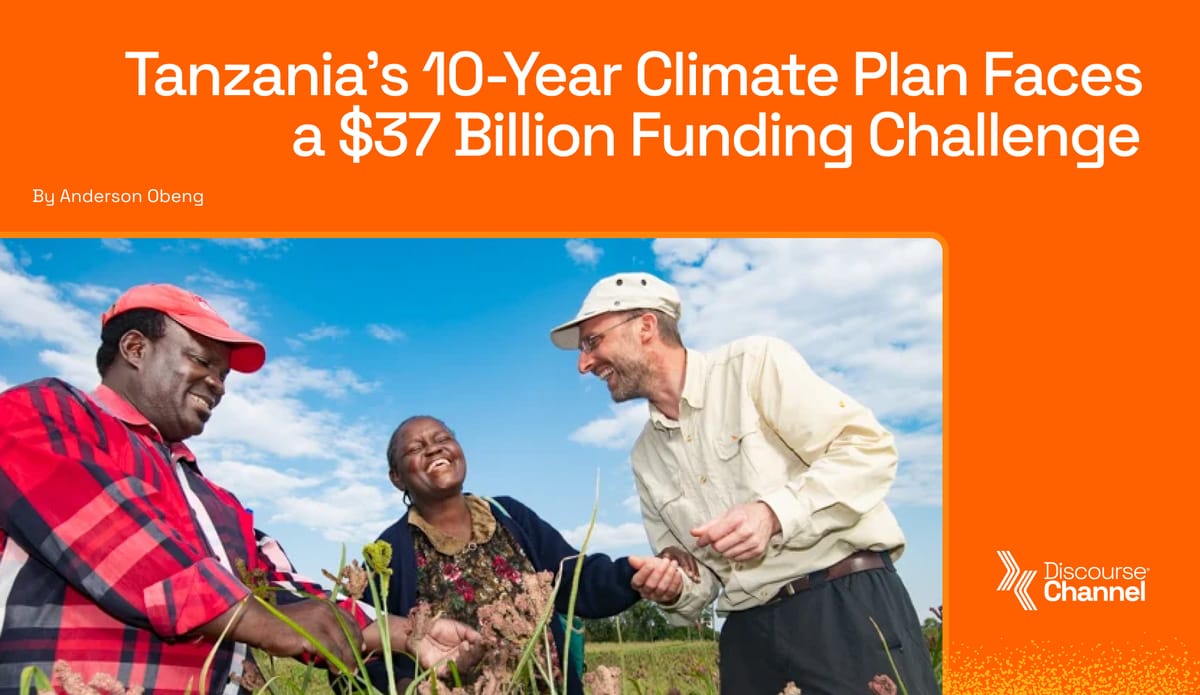
For a farmer, a season of poor rainfall can mean losing months of work. For a livestock keeper, drought can mean losing animals. For fishing communities, changing weather can threaten both their catch and their income.
These are not only environmental problems. They affect food supplies, jobs and the ability of families to earn a living. Tanzania is seeking to address these risks through a 10-year National Adaptation Plan, but putting the strategy into action will require substantial funding.
According to the United Nations Framework Convention on Climate Change (UNFCCC), Tanzania’s plan was submitted in January 2026. It covers mainland Tanzania and Zanzibar and sets out 36 programmes across 18 sectors. The challenge now is to secure the resources needed to move from planning to practical action.
Climate Risks Come at a Cost
The financial impact of climate change is already visible in Tanzania’s agricultural sector. The UNFCCC reports that weather-related risks cost the sector at least $200 million each year in lost harvests.
For farmers, this can mean lower incomes and fewer crops to sell. It can also affect food availability and put pressure on households that depend on agriculture for their livelihoods.
The risks extend beyond farming. Floods, droughts and rising sea levels also threaten livestock, fisheries and coastal communities. This makes climate adaptation an issue that reaches across several parts of the economy.
Tanzania’s plan aims to help the country prepare for these threats rather than rely only on emergency responses after damage has occurred.
What the National Plan Covers
The 10-year strategy sets out 36 programmes intended to strengthen the country’s ability to manage climate risks across 18 sectors. Its wider focus includes areas such as agriculture, livestock, fisheries, water, health and coastal and marine environments. The aim is to make climate risks part of how these sectors plan and deliver services.
Some of the work is already moving forward. According to the UNFCCC, sector ministries are developing more detailed vulnerability assessments and adaptation plans for coastal and marine areas, health and water. Local governments have also begun community-level vulnerability assessments with support from development partners.
These steps matter because climate risks are not the same everywhere. Farmers facing unreliable rainfall may need different support from fishing communities exposed to coastal hazards. Adaptation measures must reflect the conditions people face in their own areas.
The Funding Challenge
The plan estimates that implementation will cost about $37 billion. Finding that level of funding will be one of the biggest tests of whether its goals can be achieved.
Tanzania has established a permanent climate finance mechanism within its Ministry of Finance to help track and mobilise funding for adaptation. The government is also preparing to seek support from the Green Climate Fund.
International backing could help finance projects and strengthen the country’s ability to respond to climate risks. However, securing funding is only part of the task. Money must reach the programmes and communities that need it, and progress must be monitored to determine whether the measures are working.
Without that follow-through, even a well-developed national strategy risks remaining a plan on paper.
Why This Matters Beyond Tanzania
Tanzania’s experience reflects a wider challenge for African countries. Many rely heavily on climate-sensitive activities such as farming, livestock production and fishing, while facing pressure to finance development alongside climate protection.
A national adaptation plan can help governments identify risks and coordinate their responses. But its value depends on what changes on the ground: whether farmers can better manage unreliable rainfall, whether communities are better prepared for floods, and whether livelihoods become less vulnerable to extreme weather.
For Tanzania, the next stage will be measured not simply by the number of programmes in its plan, but by how effectively they are funded and delivered.
The country has set out a 10-year strategy. The harder work is making sure it protects the people whose livelihoods are already exposed to climate shocks.