Next-Gen Submarine Fiber Expansion
As companies invest heavily in artificial intelligence and cloud computing, the pressure on global internet infrastructure is growing. AI tools need large amounts of data and processing capacity, while cloud services depend on fast...
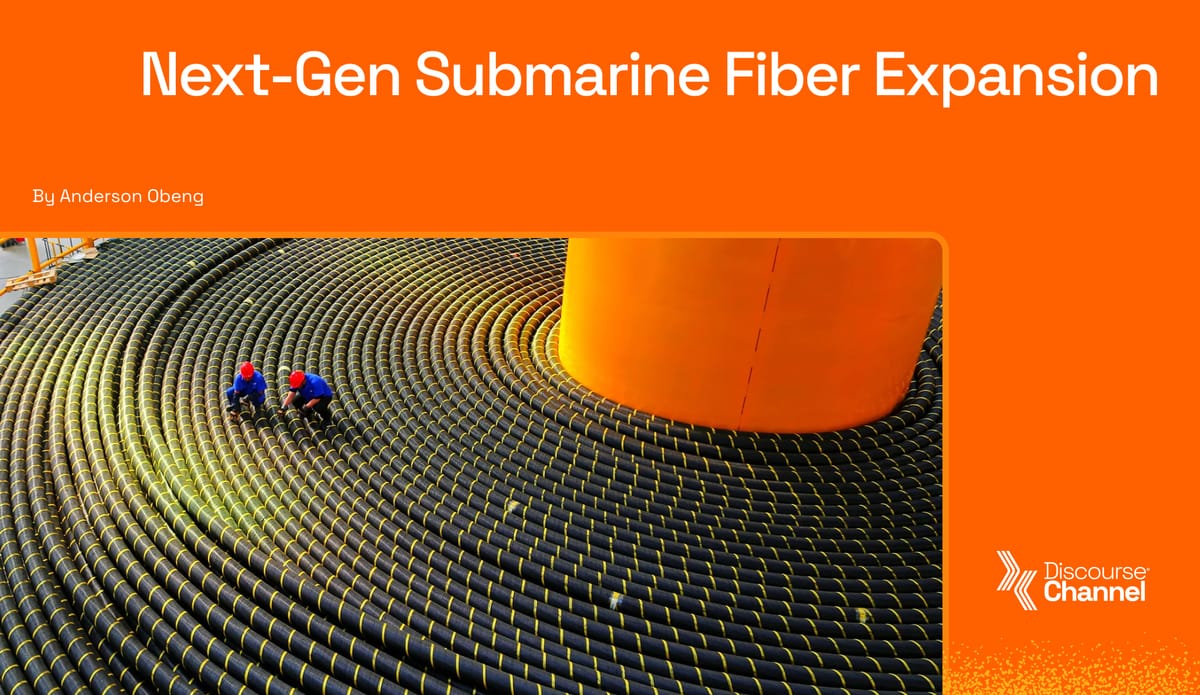
The next phase of the AI race may depend on something most people never see, the deep sea internet cable infrastructure.
As companies invest heavily in artificial intelligence and cloud computing, the pressure on global internet infrastructure is growing. AI tools need large amounts of data and processing capacity, while cloud services depend on fast, reliable connections between data centres across different parts of the world. Much of that international traffic travels through submarine cables laid on the seabed.
This is why Lightera’s latest investment is crucial . The optical fibre manufacturer announced plans to nearly triple its submarine optical fibre production capacity by 2029, expanding its manufacturing operations in Denmark and the United States. The company announced the investment on September 21, 2026, although it did not disclose the amount.
Why Submarine Cables Matter
When people speak about AI infrastructure, the focus is often on powerful computer chips, data centres and the companies developing new AI models. But these systems also depend on the networks that move information between countries and continents.
Submarine cables carry much of the world’s international internet traffic. They support everything from video calls and online banking to cloud platforms and the movement of data between large technology companies.
As AI use expands, these networks face growing demands for capacity and reliability. Companies need to move more information between data centres, sometimes across thousands of kilometres. That makes the fibre inside these cables an important part of the digital economy.
Lightera’s planned expansion reflects this growing need. By increasing production capacity, the company aims to supply more fibre for existing customer commitments and future submarine cable projects.
The Investment Behind the Expansion
The company says the decision is driven by rising demand linked to AI infrastructure, large-scale data centres, cloud computing and the expansion of global communications networks.
The timing also matters. Optical fibre is typically purchased well before submarine cables are installed. According to Lightera, orders are generally placed about a year before deployment, meaning manufacturers need to prepare for future demand rather than wait until new cables are ready to be laid.
The company is also preparing for the next generation of fibre technology, including multicore fibre. This technology allows multiple optical channels to operate within a single fibre, potentially increasing how much information a network can carry. Lightera expects initial submarine deployments of multicore fibre around 2029–2030.
What This Means for Global Connectivity
The expansion highlights a wider change in the technology industry. As AI companies compete to build more powerful systems, demand is also growing for the less visible infrastructure that allows those systems to work at scale.
More fibre production alone will not guarantee faster internet or eliminate network outages. New cables still require investment, installation, maintenance and cooperation between network operators and governments. However, expanding manufacturing capacity can help meet the demand for future cable projects.
It also shows that the AI boom is creating opportunities beyond software development. Manufacturers of fibre, networking equipment and other infrastructure are becoming increasingly important to the industry’s growth.
Why Africa Should Pay Attention
For Africa, the submarine cable industry is especially relevant because international connectivity affects the cost, speed and reliability of digital services.
African countries rely on submarine cable systems to connect with global markets, cloud platforms and online services. These connections support businesses, financial services, education, media and an expanding range of digital activities.
As demand for AI services grows, reliable international connectivity will become even more important. But access to global networks is only part of the challenge. Countries also need dependable electricity, local data centres, affordable internet and the skills required to use these technologies productively.
Lightera’s investment is taking place in the United States and Europe, so it does not directly promise new cable capacity for Africa. Still, the wider expansion of the submarine fibre industry is worth watching as countries compete to build stronger digital infrastructure.
For African policymakers and businesses, the question is how to ensure that the continent benefits from these developments rather than remaining dependent on infrastructure decisions made elsewhere.
The Bigger Picture
Lightera’s plan to nearly triple submarine optical fibre production by 2029 is a reminder that the AI race extends far beyond the technology people use on their screens. Behind every AI service is a network of physical systems that must carry, store and process information. As demand grows, investment in those systems is becoming just as important as investment in the applications themselves.
AI may be changing what the internet can do, but the cables beneath the ocean will remain central to how far that change can reach.