South Africa Considers Role in Gaza Genocide Case at ICJ
South Africa announced that it is reviewing Israel’s response to the International Court of Justice (ICJ) regarding allegations of genocide in Gaza. Pretoria stated it will decide whether to request permission for further written submissions or proceed directly to the oral phase of proceeding.
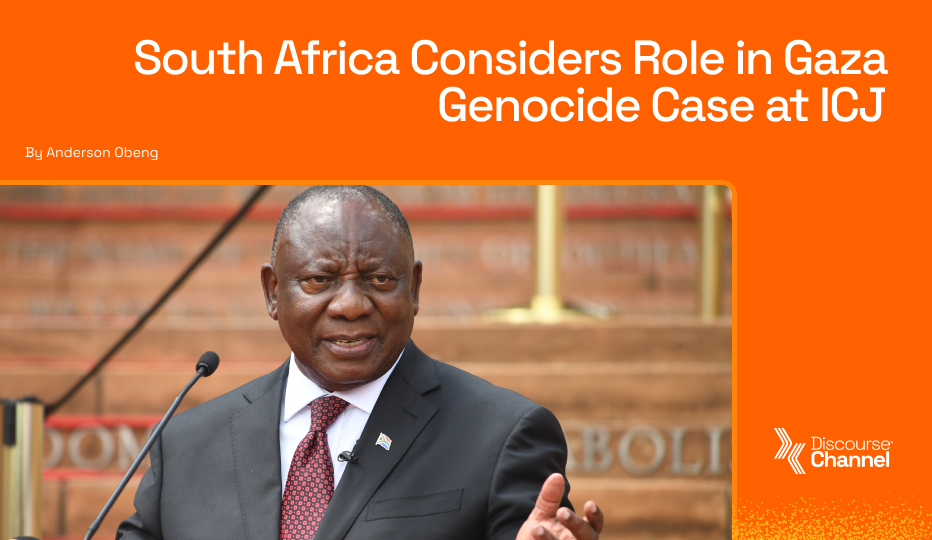
South Africa announced that it is reviewing Israel’s response to the International Court of Justice (ICJ) regarding allegations of genocide in Gaza. Pretoria stated it will decide whether to request permission for further written submissions or proceed directly to the oral phase of proceeding. The move underscores South Africa’s careful diplomatic approach to an issue with profound international legal and political implications.
Observers note that South Africa’s decision could influence other African states’ engagement with the ICJ case, signaling the continent’s emerging voice in global human rights jurisprudence. The review process also reflects the delicate balance countries must maintain between legal obligations, international relations, and domestic public opinion.
What we are watching:
- The International Trade Union Confederation Afr ica (ITUC-Africa) has urged African labor leaders not to adopt Western democratic standards uncritically. At a pre-International Labour Organization conference in Lomé, General Secretary Akhator Joel Odigie highlighted that Western notions of democracy are increasingly being leveraged as tools of economic and political influence over the continent.
- According to the Henley Passport Index updated on March 9th, Seychelles remains Africa’s most powerful passport, granting visa-free or visa-on-arrival access to 154 destinations worldwide. Mauritius ranks 25th globally with access to 147 countries, while South Africa sits at 46th with access to 100 destinations.
South Africa’s measured approach to the ICJ proceedings highlights the responsibility of African states to assert their role in global justice while navigating complex diplomatic landscapes. At the same time, debates around democratic standards and labor policy, as raised by ITUC-Africa, signal a broader push for homegrown frameworks that reflect African priorities rather than imported templates.
Even seemingly distant developments like passport rankings have practical significance. Mobility affects trade, investment, and international collaboration, giving countries like Seychelles and Mauritius a strategic advantage. South Africa’s mid-tier ranking, by contrast, underscores the need for policies that strengthen economic and diplomatic connectivity.
Together, these developments illustrate a central theme: Africa’s engagement with international institutions, labor norms, and global mobility is increasingly strategic, selective, and self-determined.