South Africa announced troop withdrawal from the UN peacekeeping mission in DRC
South Africa has announced plans to withdraw its troops from the United Nations peacekeeping mission in the Democratic Republic of Congo (DRC), marking a notable shift in Pretoria’s regional security posture.
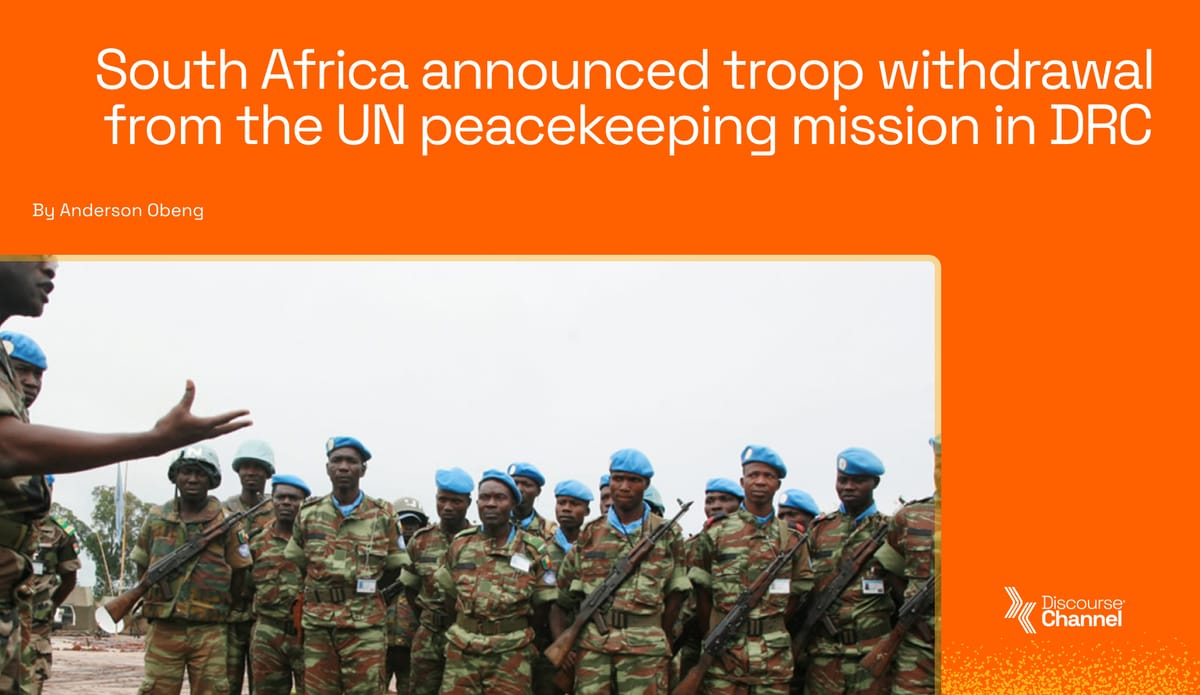
South Africa has announced plans to withdraw its troops from the United Nations peacekeeping mission in the Democratic Republic of Congo (DRC), marking a notable shift in Pretoria’s regional security posture. The move comes at a sensitive time for eastern Congo, where instability persists, and regional security cooperation remains under pressure. For South Africa, a long-standing contributor to peacekeeping operations, the decision signals recalibration, balancing fiscal realities, domestic priorities, and continental responsibilities.
The withdrawal carries implications beyond military strategy. South Africa has historically positioned itself as a stabilizing force within Southern Africa and the broader continent. Adjusting its presence in the DRC prompts renewed debate about burden-sharing within SADC, the future of UN peace operations in Africa, and how regional powers define leadership in an era of tighter budgets and competing domestic demands.
Security and economics are not separate conversations. Stability underpins trade corridors, mining supply chains, and cross-border investment flows. As Africa pushes for deeper integration, security commitments and economic ambitions increasingly intersect. A shift in one inevitably shapes the other.
What we are watching:
- South Africa’s 2026 State of the Nation Address (SONA). After the culmination for the 2026 SONA, foreign policy direction, defense commitments, and fiscal priorities were tipped to feature prominently. The troop withdrawal will inevitably form part of a broader national conversation: how should South Africa balance continental leadership with domestic economic reform, energy stability, and job creation? The address will serve as a signal to both regional partners and global investors about Pretoria’s strategic focus for the year ahead.
- Regional integration talks continued (AfCFTA & economic integration).At the same time, discussions around the African Continental Free Trade Area (AfCFTA) and wider economic integration have continued across the region. Policymakers are advancing conversations on customs harmonization, digital trade infrastructure, and strengthening regional value chains. The juxtaposition is telling: while security commitments are being reassessed, economic integration efforts remain active. The continent’s long-term strategy appears increasingly anchored in trade, infrastructure, and coordinated policy reform as tools for shared prosperity.
South Africa’s evolving posture reflects a broader continental shift. Governments are reassessing how to allocate limited resources between security operations and economic transformation. Whether through peacekeeping missions or trade frameworks, the underlying objective remains the same: building a stable, interconnected Africa capable of competing globally while delivering tangible benefits at home.
The coming months will reveal how these recalibrations translate into policy. But one thing is clear leadership in Africa today is being defined not only by presence on the ground, but by strategy at the table.