SHEP Model Gains Traction as Africa Rethinks Smallholder Farming
South Africa’s experience with the Smallholder Horticulture Empowerment and Promotion (SHEP) programme is increasingly being viewed as a model for transforming smallholder agriculture across the continent.
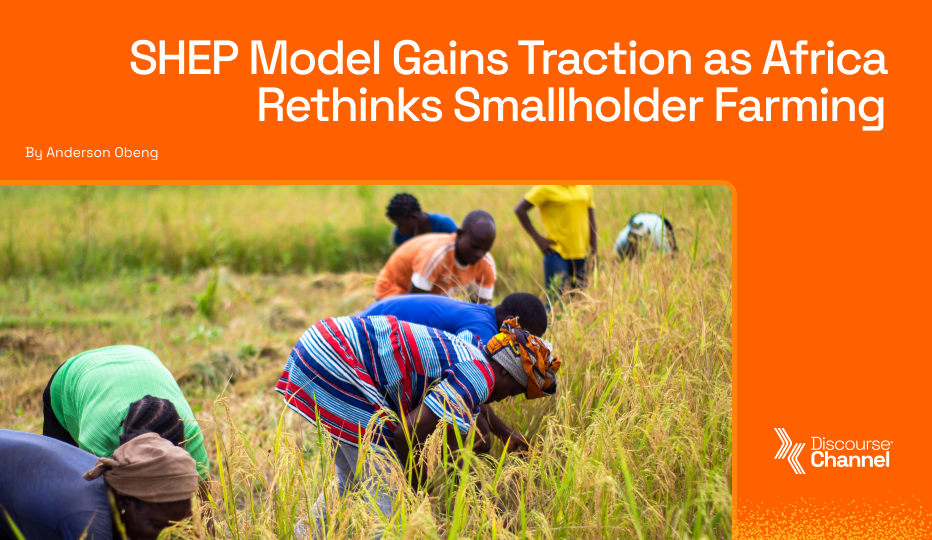
South Africa’s experience with the Smallholder Horticulture Empowerment and Promotion (SHEP) programme is increasingly being viewed as a model for transforming smallholder agriculture across the continent. Since its pilot phase between 2013 and 2018, the programme has already benefited more than 700 farmers across Limpopo, Mpumalanga, and KwaZulu-Natal, demonstrating how targeted support can shift farming practices toward more market-oriented outcomes.
Building on this early success, the Department of Agriculture expanded the programme nationwide in 2019, rolling it out across all nine provinces. A key feature of this expansion has been a Train-the-Trainer strategy, designed to equip extension officers with the skills needed to guide farmers in adopting more commercially viable approaches. By strengthening the capacity of frontline agricultural advisors, the programme aims to ensure that knowledge transfer is scalable and sustainable.
At the core of SHEP is a shift in mindset, moving farmers away from a traditional “grow and sell” approach toward a more strategic “grow to sell” model, where production decisions are driven by market demand rather than surplus output.
This approach is now gaining attention beyond South Africa. During a recent visit to Letlhakeng, Hiroyasu Tonokawa, representing the Japan International Cooperation Agency, encouraged Botswana to adopt the SHEP framework as a way to strengthen its agricultural sector. He noted that aligning production with market needs could significantly improve farmer incomes and reduce inefficiencies in the value chain.
JICA has also indicated plans to expand its agricultural support in Botswana from the next financial year, with intentions to broaden the SHEP model beyond horticulture to include livestock. This signals a growing recognition that the principles underpinning SHEP market alignment, capacity building, and farmer empowerment can be adapted across different agricultural subsectors.
The spread of the SHEP approach highlights a broader shift in African agriculture: from subsistence-driven production to market-oriented systems. For many smallholder farmers, the challenge is not just how to produce more, but how to produce what can be sold profitably.
By focusing on demand-led production and strengthening extension services, programmes like SHEP address both sides of the equation improving productivity while also enhancing market access. The involvement of institutions like JICA further underscores the role of international partnerships in scaling proven models across borders.
As more countries explore similar frameworks, the emphasis is increasingly on practical, scalable solutions that can raise incomes, reduce waste, and integrate smallholder farmers into broader value chains.
If successfully implemented, this model could help redefine agricultural development across the continent, positioning smallholder farmers not just as producers, but as active participants in commercial food systems.