Renewed Xenophobic Tensions in South Africa
Renewed xenophobic incidents in South Africa have once again drawn attention to the country’s complex migration dynamics and underlying economic pressures.
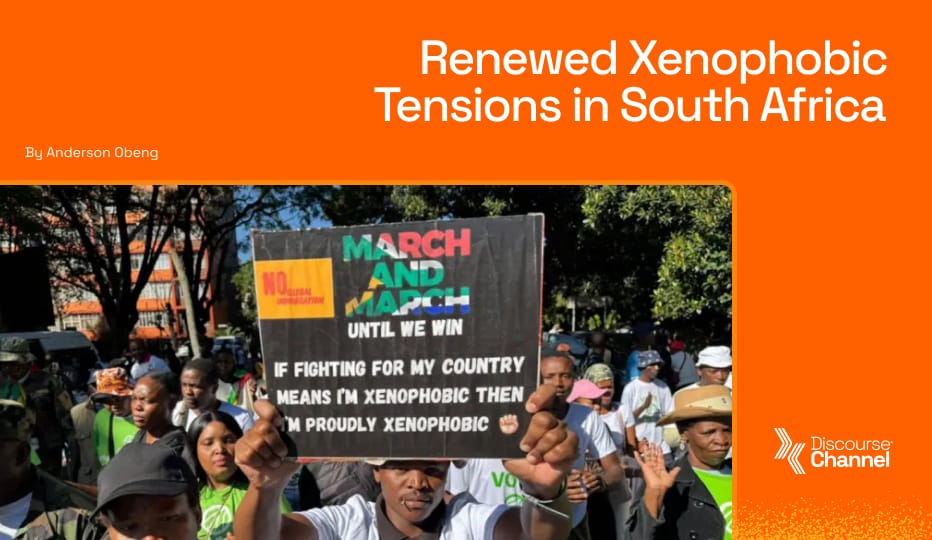
Renewed xenophobic incidents in South Africa have once again drawn attention to the country’s complex migration dynamics and underlying economic pressures. Foreign nationals, particularly migrants operating small businesses in areas such as Durban, have reported harassment, intimidation, and disruptions affecting their livelihoods. The situation has prompted concern from other African countries, including Ghana, reflecting the broader regional implications of such tensions. Authorities in South Africa have condemned the incidents and pledged to take action, though the recurrence of these episodes points to deeper structural challenges.
The tensions are frequently associated with high unemployment and economic strain, particularly among young people, which can fuel resentment toward migrants perceived as competitors for limited opportunities. While these dynamics do not fully explain the outbreaks of violence, they form part of a recurring pattern in which economic frustration intersects with social and political narratives around migration.
South Africa’s immigration system adds further complexity. The country has established legal frameworks to regulate migration, but long-standing challenges remain around implementation, including administrative backlogs, enforcement gaps, and public perceptions of ineffective management. Efforts to reform visa processes and strengthen border controls have been ongoing, yet these measures have not fully resolved concerns around undocumented migration or public confidence in the system. At the same time, migrants continue to play a visible role in the informal economy, particularly in retail and service sectors, making their economic contribution and impact a subject of ongoing debate.
This disconnect between policy intent and lived experience continues to shape the environment in which tensions arise. Addressing xenophobic incidents therefore requires more than immediate law enforcement responses; it also calls for clearer migration governance, improved economic inclusion, and stronger public communication around the role of migration in the economy.
What we are watching:
- In South Africa, Police Commissioner Fannie Masemola has been suspended over allegations linked to a $21 million health services contract awarded to a controversial businessman.
- The Pan-African Parliament is holding an extraordinary session to elect new leadership. The institution has faced persistent internal disputes, and the session represents part of ongoing efforts to stabilize and strengthen its role within the African Union framework.
- In Nigeria, a military court-martial involving 36 officers accused of plotting a coup against President Bola Ahmed Tinubu is underway. The public nature of the proceedings reflects a strong stance against internal security threats while underscoring the seriousness with which such risks are being treated.
The resurgence of xenophobic incidents in South Africa highlights the intersection of economic pressure, migration governance, and social stability. Beyond the immediate human impact, such developments carry broader implications for regional relations, investor confidence, and continental integration efforts.
More broadly, these events reflect a recurring challenge across parts of Africa: the gap between policy frameworks and on-the-ground realities. Whether in migration management, institutional governance, or security, outcomes depend not only on policy design but on effective implementation and public trust. Addressing these issues will require coordinated, long-term approaches that combine economic opportunity, institutional accountability, and inclusive policymaking.