Reinventing the Future: How Portable Hardware and Mindset Shifts Are Building Africa's Engineering Pipeline
From a 2018 school visit to four new kits deployed across seven African countries, STEMAIDE Africa turned an under-resourced training program into an offline-first STEM pipeline, proving Africa's talent gap closes with homegrown tools built for its own African realities.


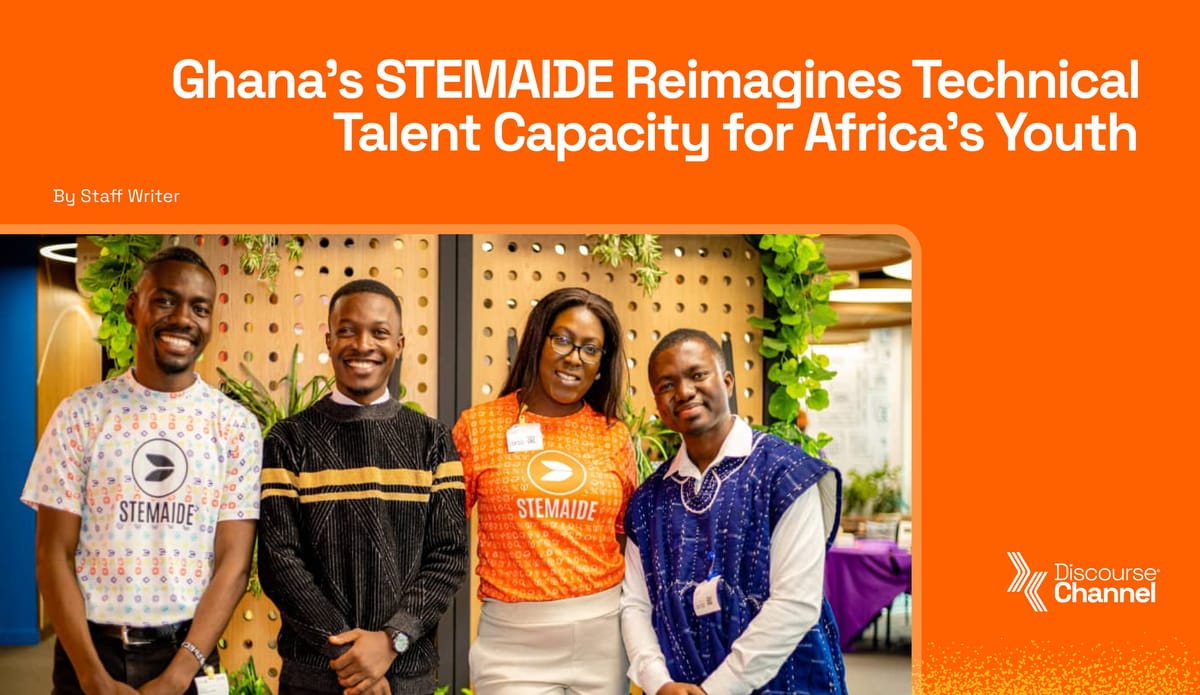
ACCRA, Ghana – Across the West African nation of Ghana, a silent shift is taking root in classroom learning, aimed at turning the continent's vast demographic growth into an engine of technical talent. While Africa has historically fueled global industry through the export of raw minerals and natural resources, its long-term economic independence hinges on cultivating human cognitive potential and indigenous engineering capacity.
For decades, international development initiatives and local governments have tried to tackle digital illiteracy by constructing static computer laboratories. Yet field researchers and educators across West Africa report that these brick-and-mortar facilities frequently run into operational bottlenecks: persistent power outages, absent internet connectivity, inadequate teacher preparation, and restricted access hours for students.
Now, a homegrown Ghanaian social enterprise known as STEMAIDE is spearheading a different approach to technical training. By replacing centralised computer labs with portable, self-contained "lab in a box" hardware kits, the organisation is enabling young Africans to master computer programming, robotics, aerospace dynamics, and artificial intelligence without relying on constant electricity or internet connections.
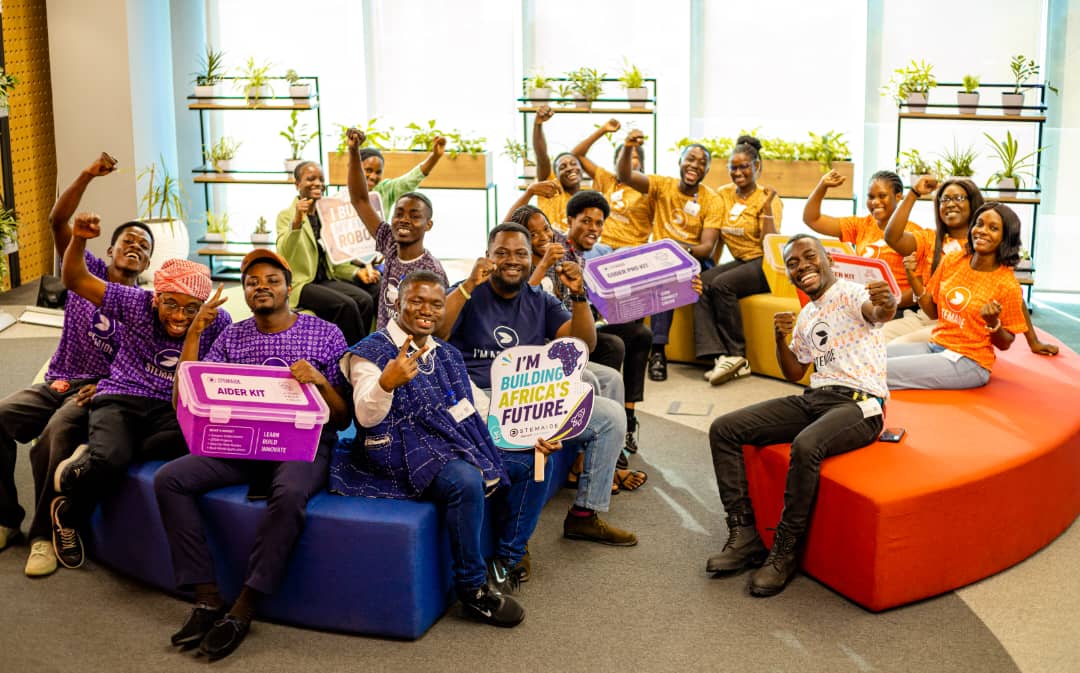
The Tertiary Deficit: Africa's Engineering Capacity Bottleneck
The demographic urgency behind these grassroots educational efforts is backed by stark figures. According to metrics cited by STEMAIDE's leadership from UNESCO, the World Bank, and the World Economic Forum, less than 25% of African tertiary students are enrolled in STEM-related programs.
This gap in technical training exists alongside a massive demographic expansion. By 2050, the African continent will host the world's largest youth population, with a majority of its inhabitants under 25 years of age.
"In past decades, Africa's natural resources fueled the world's future," said Joshua Opoku Agyemang, co-founder and Chief Evangelist Officer of STEMAIDE, during an interview in Accra. "As we look toward 2050, we will host the largest human youth population. If we empower them to become creative problem solvers and innovators, we can bring back the future of African prosperity."
Opoku Agyemang stressed that addressing this continental challenge requires changing how education prepares students for real-world problem-solving.
"There is nothing wrong with the African mindset, but what needs changing are the settings in our mind," Opoku Agyemang noted. "The world is full of challenges. Turning local resources into high-value products that empower economies requires a different level of critical thinking, rooted in how our minds are set from early schooling."
Evolution of a Solution: From Static Labs to 'Lab in a Box'
The origins of STEMAIDE trace back to 2018, when Opoku Agyemang and co-founder Prince Boateng Asare were operating the IoT Network Hub, a community-based technology group. Following a training request at Tema SOS in Ghana from an educational organisation, 'Coderina Ghana', the founders partnered with local engineer Gideon Mensah to construct basic robotics prototypes using locally sourced plywood, rubber tyres, and small motors.
Their training success led to a lasting partnership with an organisation that operates computer labs for young learners. The founders were brought in to run training programs there. As that network has grown to 19 labs across Ghana, Gambia, and Liberia, they have continued to deliver training for it nationwide. However, as the team travelled the country to run these programs, they discovered severe operational limitations. Students could practise in a lab only during limited hours, not every student had access to one, and many communities, even within the same district, were too far from any lab to benefit.
"You sit in your corner and design a theoretical solution, but when you step into the field, you face reality," explained Prince Boateng Asare, CEO of STEMAIDE. "Most remote schools lacked complete infrastructure. The teachers did not have the required skills to teach coding, AI, or robotics, and fundamental electricity and connectivity were simply unavailable."
Building STEM Education in Ghana's Fragmented Tech Ecosystem
Recognising that static centres reached only a fraction of students, the founders set out to design portable learning tools that students could take home. In 2021, they piloted unbranded hardware sets through an ICT centre partnership, finding that every participating student requested a kit of their own.
In 2022, after securing a three-year soft loan at a 5% interest rate through the Government of Ghana's YouStart Program, jointly managed by the Ghana Enterprise Agency (GEA) and the National Entrepreneurship and Innovation Programme (NEIP), the enterprise formally commercialised as STEMAIDE. The name was formulated from an acronym encompassing Science, Technology, Engineering, Mathematics, Art, Innovation, Design, and Entrepreneurship, paired with the mission of "aiding" African youth into technology careers.
"Our tool encompasses all these solutions into what we call a 'lab in a box,'" Asare said. "You do not need a fully formed computer lab, constant connectivity, or grid power to learn hands-on technical skills."
A Modular Hardware Ecosystem: From Basic Coding to Drones and AI
To systematically build technical capacity across age groups, STEMAIDE developed a progressive suite of hardware tools tailored to distinct educational tiers. The flagship entry-level product is the STEMAIDE Coder Kit, designed for basic schools from Grades 4 to 9, which introduces fundamental coding and electronic circuit design. To date, STEMAIDE has deployed over 6,000 Coder Kits across seven African countries, directly impacting 25,000 young learners.
Once learners finish their Coder projects, the next step is the STEMAIDE CoderPro Kit, built for senior high school students in Years 1 to 3. The Pro version incorporates environmental motion sensors and automation components, allowing students to engineer automated lighting and smart systems aligned with the practical, hands-on curriculum of senior high schools.
For younger learners who want to move from screens to machines, the STEMAIDE Rover Kit is a modular robotics platform engineered from locally extracted bamboo components. Students assemble autonomous ground vehicles from raw pieces, learning mechanics, line-following sensor logic, and obstacle-avoidance algorithms. Taking robotics into the air, the STEMAIDE Pilot Kit is aimed at senior high STEM and technical and vocational education and training (TVET) schools, where students construct operational drones from individual parts rather than calculating flight dynamics purely on blackboards.
At the top of the ladder sits the STEMAIDE Aider Kit, designed for university students in computer science and embedded systems engineering. It replaces paper circuit diagrams and software simulations with physical microcontrollers, enabling students to program artificial intelligence and automated decision systems.
Asare emphasised that this progression shifts student behaviour from passive consumption to active creation. "Children move from asking 'does this work?' to asking 'what else can I build with this?'" he observed.
Overcoming Psychological Barriers, Tech Intimidation, and Gender Gaps
Field trainers at STEMAIDE report that expanding Africa's innovation pipeline requires addressing deep-seated psychological hurdles alongside infrastructure shortages. Irene Nyamekye Klu, a lead trainer at STEMAIDE who first entered the field as a high school student during an IoT Network Hub outreach program, noted that many entry-level trainees suffer from acute technology intimidation. "Many young students lack basic ICT skills and are terrified when given a laptop. They are afraid to touch the keys or press buttons because they fear they will break the computer, instead of being curious to explore," Klu stated.
Klu also highlighted the persistent isolation of female participants in technical subjects. "Female students often isolate themselves during trainings because they hold the cultural perception that tech is strictly for males. My message to young women is to keep an open, curious mind. Having an open mind despite demanding topics is what enabled me to transition from a trainee into a trainer."
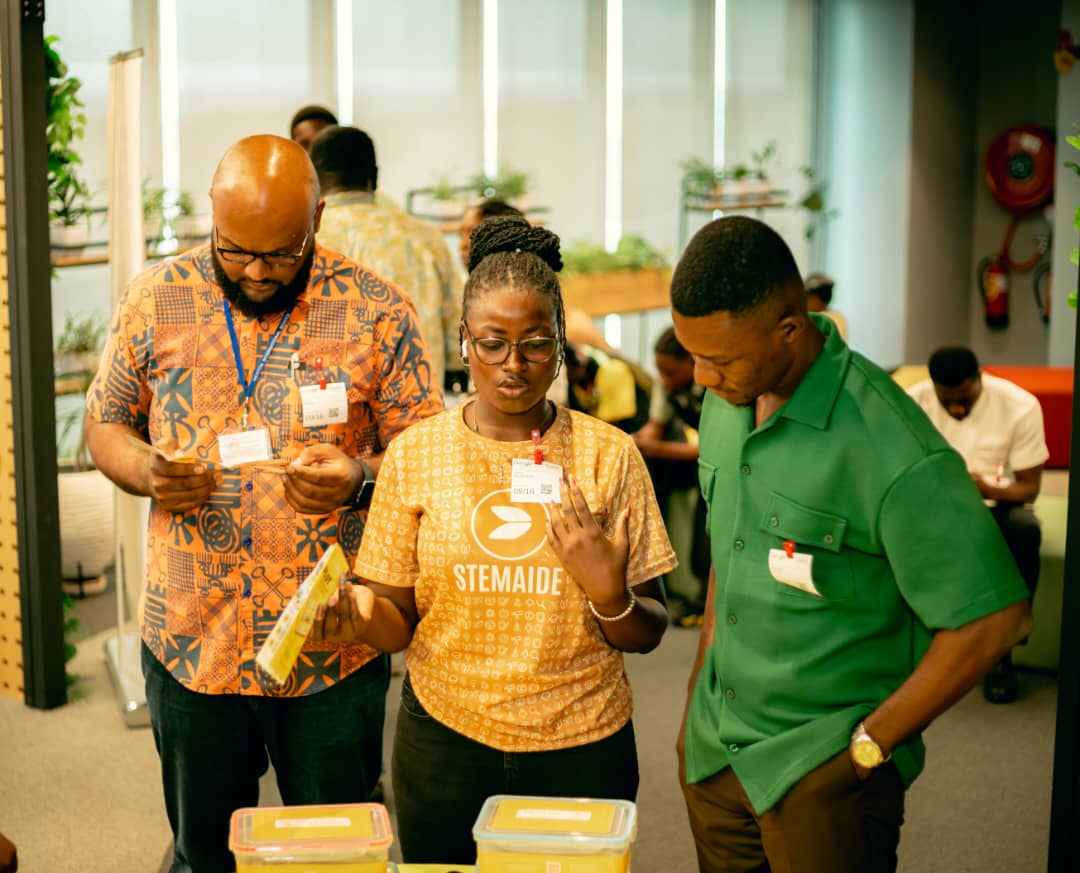
This call for practical, open-ended experimentation is shared across the organization's engineering staff. Benedicta Ayornu, a software engineer at STEMAIDE who develops educational software for rural learners, criticised the heavy reliance on abstract rote memorisation in traditional science education. "In my secondary science classes, we memorised formulas that made no practical sense at the time," Ayornu reflected. "If schools introduced hands-on practicals instead of pure theory, students would grasp the concepts faster and accomplish far more. For young women entering computing, my advice is to join impact-driven communities and persist through technical frustration."
For others on the team, technical proficiency was forged through self-directed persistence. STEMAIDE trainer Godfred Sam recalled how limited access to hardware components forced him to rely on self-taught methods. Interested in game development and home automation, Sam used free online video tutorials on YouTube to learn programming, Unity, and Unreal Engine. When hardware components ordered online took months to arrive, he taught himself to program microcontrollers and sensors to automate his living space. "My journey was driven by asking myself, 'what should I do next?'" Sam said. "African youth should explore free digital tools and continuously ask what they can create with the resources around them."
First-Principles Engineering and Economic Sovereignty
For the leadership of STEMAIDE, training young Africans in coding and robotics is directly linked to addressing the continent's structural deficits. Asare pointed out that challenges such as severe housing shortages, bridge construction, and industrial manufacturing cannot be solved by importing external expertise indefinitely. "If Africa is going to host the world's largest youth population, we must prepare them so we can build our own bridges, factories, and housing," he said. "In problem-solving, you must use first-principles thinking to get to the root cause of why things are the way they are. Once young people realise that everything around them is the result of someone else's thinking, they understand that they can build solutions too."
Opoku Agyemang concluded that sustaining this talent pipeline requires a foundation of national pride and self-determination. "Love for your nation means protecting it, being proud of it, and building systems that help everyone grow," he said. "When you touch the minds of people, you have power; but when you touch their hearts through purpose, you unlock limitless capability."