Kenya’s Mega Investment Focuses on Agriculture and Value Chains
Kenya’s government and private sector have continued to attract significant investment interest in agriculture, underscoring the sector’s central role in the country’s economic growth strategy.
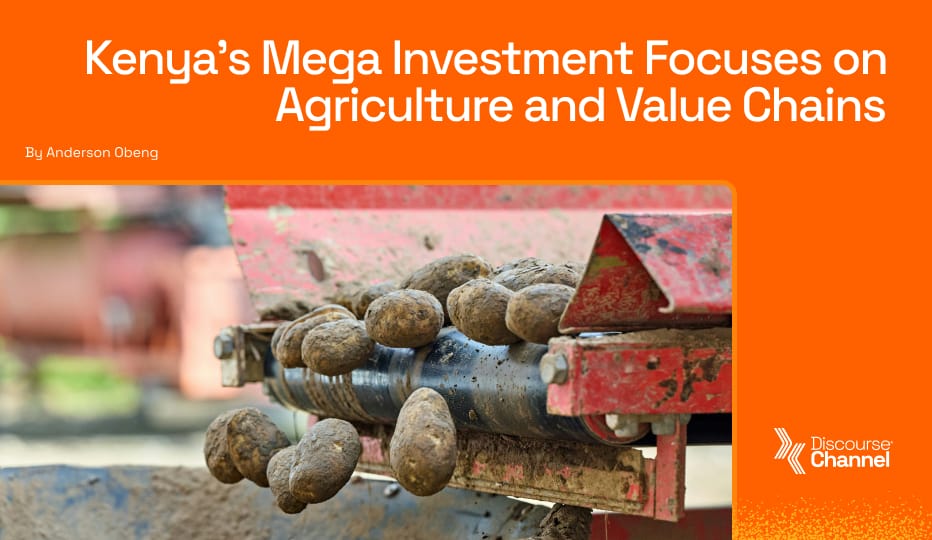
Kenya’s government and private sector have continued to attract significant investment interest in agriculture, underscoring the sector’s central role in the country’s economic growth strategy. Recent investment engagements and public–private dialogues have seen agribusiness and related value chains emerge as major targets for funding and partnership, reflecting a broader push to transform farming from a largely subsistence activity into a more commercial, market‑oriented industry.
Agriculture remains one of Kenya’s largest employers and a key contributor to GDP, but challenges such as fragmented supply chains, limited processing capacity, and gaps in access to capital have long constrained the sector’s potential. The latest investment focus seeks not only to expand production but also to strengthen value‑added activities such as input provision, logistics, storage, and agro‑processing areas investors increasingly see as essential to boosting competitiveness and job creation.
Government initiatives have underscored agriculture as a priority for economic diversification. Public officials routinely highlight the sector’s role in catalyzing rural development, increasing export earnings, and supporting food security. At the same time, Kenya’s agri‑investment narrative has been amplified by interest from local and foreign companies keen to participate in emerging value chains, from seed and fertiliser supply to processing and distribution platforms that link producers with markets more effectively.
What we are watching:
- Recent investment agreements involve both local and international agribusiness players, reflecting Kenya’s role as a regional centre for agricultural commerce and innovation. The country’s relatively diversified economy, established value chains, and developed logistics markets help attract deals that extend beyond primary production into services, finance, and technology solutions for farming.
- Significant flows of funding and partnership activity are now being directed toward key segments of the agricultural value chain, including:
• inputs (seeds, fertilisers)
• processing facilities
• cold‑chain and storage infrastructure
• market linkages and export platforms
This shift toward value‑added activities signals a maturation of the sector, with an emphasis on moving beyond raw commodity production toward integrated systems that can retain more economic value domestically and support higher incomes for farmers.
Kenya’s evolving investment landscape highlights a broader transition in African Agriculture: from traditional production models toward commercial, integrated value chains that can compete in both domestic and international markets.
For policymakers, the focus on investment including strategic partnerships with private companies is part of a broader economic agenda aimed at boosting productivity, creating jobs, and reducing reliance on imports. For farmers and agripreneurs, increased capital flows and partnerships mean better access to technologies, inputs, and market opportunities.
As Kenya positions itself as an agricultural investment hub in East Africa, the success of this strategy will hinge on the country’s ability to scale value‑chain infrastructure, streamline regulations, and develop finance models that can support smallholder farmers as well as larger commercial enterprises.
The result could be a more resilient and competitive agricultural economy, one where production is only the starting point for value creation, employment growth, and inclusive prosperity.