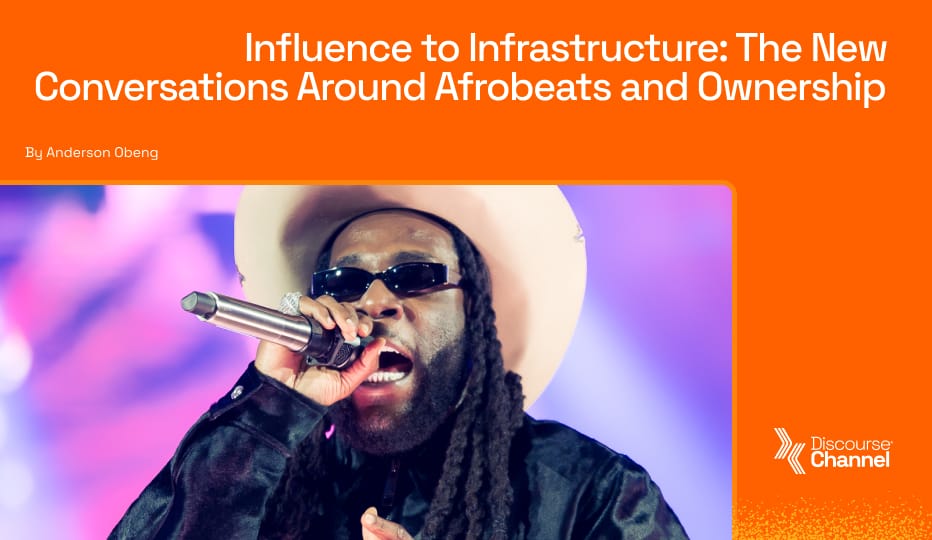
Influence to Infrastructure: The New Conversations Around Afrobeats and Ownership
Africa’s biggest cultural export is generating global value at an unprecedented scale, but a growing number of industry stakeholders are questioning how much of that value actually stays on the continent.
Africa’s biggest cultural export is generating global value at an unprecedented scale, but a growing number of industry stakeholders are questioning how much of that value actually stays on the continent.
During the BusinessDay Creative Entertainment Summit in Lagos, industry leaders, music executives, investors, legal experts, and global media representatives gathered to discuss the future of Afrobeats beyond popularity and streaming success. Central to the discussions was ownership, who owns African music, who controls distribution, and who profits from the global expansion of the genre.
As Afrobeats continues to dominate international charts, festivals, brand campaigns, and streaming platforms, speakers at the summit examined the structural gaps within the industry, particularly around publishing rights, royalty systems, catalog acquisition, licensing agreements, and artist contracts.
Several conversations reportedly focused on how African creatives often drive global cultural moments while foreign labels, distributors, and investors retain significant control over monetization channels and intellectual property structures. The summit positioned ownership not simply as a financial issue, but as a long-term strategy tied to cultural preservation, economic sustainability, and bargaining power within the global entertainment industry.
Discussions also explored the need for stronger African-owned record labels, publishing companies, distribution platforms, touring systems, and legal frameworks capable of supporting artists at an international level without requiring them to relinquish ownership rights abroad.
The conversations reflected a wider shift currently happening across the African creative economy, where stakeholders are increasingly moving attention away from visibility alone and toward infrastructure, policy, and long-term wealth retention.
What we are watching:
- The Goethe-Institut launched the “Dreaming New Worlds 2026” open call, inviting multidisciplinary African creatives to develop prototypes that combine art, technology, and governance.
- At the Africa-Caribbean Investment Summit, policymakers, investors, and creative industry leaders explored opportunities to strengthen cultural and economic ties between Africa and the Caribbean through music, film, fashion, and entertainment partnerships.
Across recent industry gatherings, one theme continues to emerge consistently: influence without ownership limits long-term growth.
As African creatives continue to shape global music, fashion, and visual culture, industry conversations are becoming increasingly focused on who controls the systems behind production, distribution, monetization, and legacy ownership. The growing emphasis on ownership signals a broader attempt to ensure that the commercial value generated from African creativity remains more closely tied to African institutions, businesses, and creators themselves.