Ghana's AI Gamble: Can the Black Star Build the Continent's Intelligence Future?
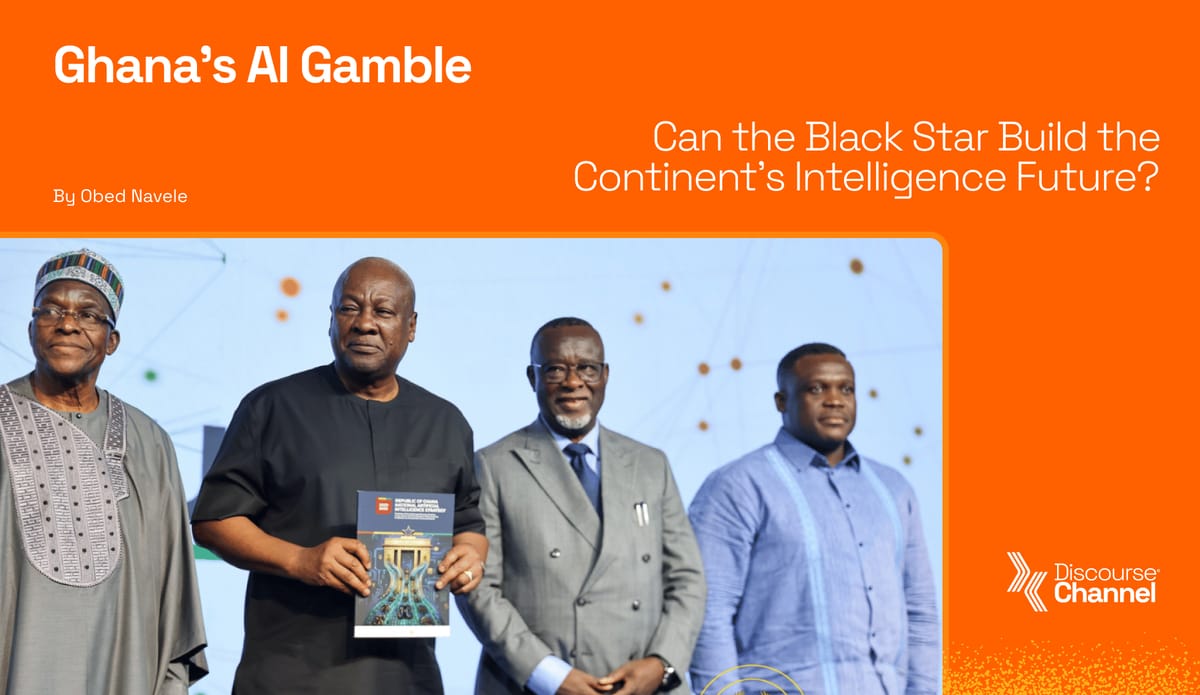
At the launch of Ghana's National Artificial Intelligence Strategy in Accra, President John Dramani Mahama announced the $250 million investment to establish a world-class AI computing center, alongside a $20 million commitment for a short-to-medium term implementation.
Africa contributes less than 0.5% of global AI research output. The continent holds more than 17% of the world's population. That gap between demographic weight and technological presence is the exact problem Ghana is now trying to close, with a $250 million bet and a 10-year blueprint that carries ambitions larger than any single country.
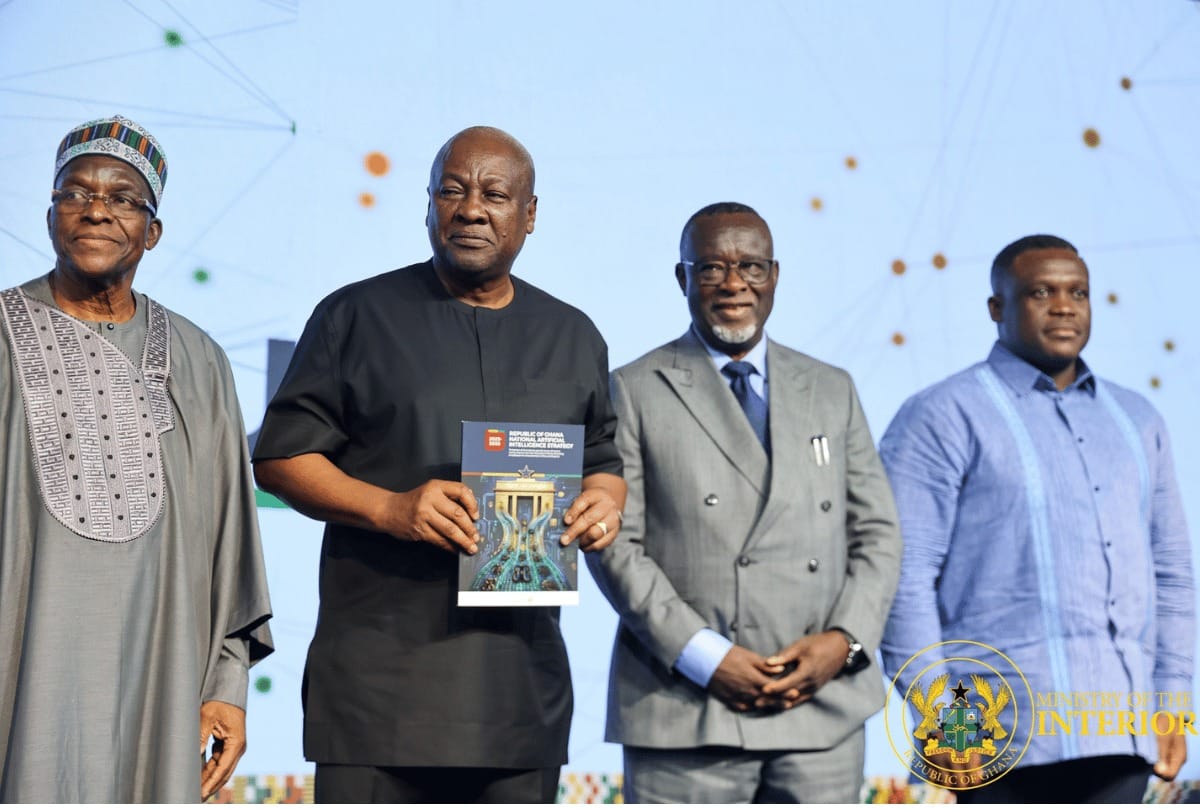
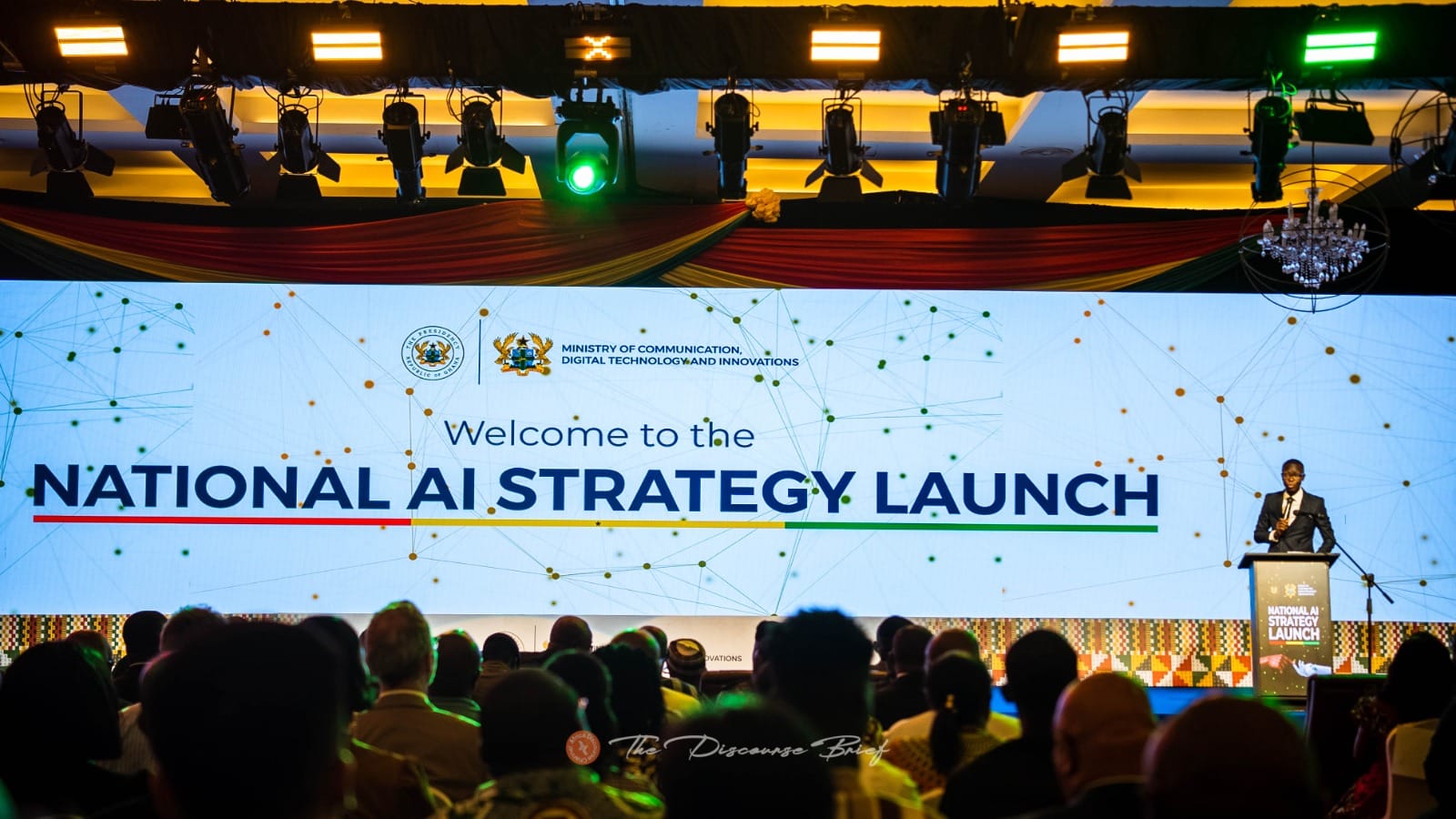
At the launch of Ghana's National Artificial Intelligence Strategy in Accra, President John Dramani Mahama announced the $250 million investment to establish a world-class AI computing center, alongside a $20 million commitment for a short-to-medium term implementation. The strategy targets training 1 million youth and 10,000 AI researchers by 2035, the creation of 10 Ghanaian AI unicorns, and a Natural Language Processing center designed to build AI tools in local Ghanaian languages with a goal of generating 1 trillion tokens of Ghanaian datasets. The ambition, stated plainly: Ghana wants to become Africa's primary AI hub. This is not small and it should not be dismissed. This warrants intrigue and exploration.
From Consumer to Architect
The most significant shift buried inside Ghana's AI strategy is not financial, it is a philosophical one. For decades, Africa's relationship with technology has been defined by consumption. Silicon Valley builds, Africa adopts. The Global North invents, the Global South adapts. This new strategy, if it holds, represents a deliberate effort to rewrite that logic.
Speaker of Parliament Alban Sumana Kingsford Bagbin captured the weight of this shift when he described the strategy not as a policy document, but as a "social contract." His framing was careful, almost cautionary: technology progress must never come at the expense of human progress. Innovation must not widen existing socioeconomic inequalities. The language was not that of a technocrat; it was the language of someone who understands that in Ghana, as in most of Africa, the distance between a policy launch in Accra and a farmer in the Northern Region is not just geographic, it is systemic.
Minister of Communications Samuel Nartey George, who has been one of the driving forces behind this agenda, was more direct in his assertion. He put it simply: AI in Ghana must reflect Ghanaian values. That principle sounds obvious until you sit with what it actually demands. It means that any tool developed, the data being collected, the systems being deployed, cannot simply be imported wholesale from ecosystems built on entirely different realities, languages, and social structures. It means building something that actually knows who Ghanaians are.
The Infrastructure Question
AI is not software floating in the cloud. It is physical. It requires power, connectivity, data centers, computing capacity, and stable energy grids. Ghana's strategy acknowledges this honestly; the SWOT analysis embedded in the strategy, notes that many communities still face limited access to reliable power and high-speed internet. The strategy targets computing capacity up to 10²⁵ floating-point operations per second by 2035. That is an extraordinary target for a country still working to close its energy gaps.
The $250 million compute center is therefore either infrastructure or inventory, depending on what surrounds it. A data center without a strong ecosystem of developers, researchers, and data governance frameworks is a building, not a movement. The strategy appears to understand that it is built on eight pillars, including data governance, talent development, and ecosystem coordination. But the history of African development is filled with strategies that were architecturally sound and executionally hollow.
The governance aspect may be the most underappreciated part. Professor Jerry John Bono, who led the technical development of the strategy, outlined plans for a Responsible AI Authority to be established within the first year. This body would oversee ethical AI deployment, monitor implementation, and coordinate across sectors. Chief Justice Paul Baffoe-Bonnie made the stakes clear from the judiciary's perspective. He said it plainly: technology must serve justice, and justice must never be made to serve technology. No AI system, however efficient, should operate outside the bounds of law, accountability, and human dignity. The judiciary, he noted, had already begun structured engagements with AI for justices of the Supreme Court preparedness, he argued, must precede adoption.
These are not decorative commitments. They are the architecture that determines whether the strategy survives political transitions, budget pressures, and the inevitable gap between vision and delivery.
The Inclusion Problem
President Mahama told a story at the launch that deserves more attention than it received. His daughter used an AI app to diagnose a wilting cactus plant. The app worked. But then he paused: what about the rural farmer who cannot read English? What about the person who receives a diagnosis they cannot understand, in a language not their own, about crops their livelihood depends on?
This is the inclusion problem at its most concrete. Scaling AI to impact 1 million young people sounds transformative. But scale without depth is noise. The question is not just how many people are trained, but whether the training is designed for the realities. A lot of these people actually live as informal workers, subsistence farmers, people with disabilities, women in communities where digital access is still a negotiation.
UNESCO's Edmond Moukala pushed this point hard. AI must be culturally grounded, he argued. It must speak the languages of the people. Culture is not an ornament; it is the very soul of development. The strategy's plan to establish a Natural Language Processing center of excellence to build AI tools in local Ghanaian languages is one of its most genuinely promising elements. An AI that speaks Twi, Dagbani, Ewe, or Ga is not just a technical achievement, it is a political one. It implies the people who built this country are not afterthoughts in its digital future.
UNDP Resident Representative Niloy Banerjee distilled the core tension plainly: AI must not create a new digital divide. The technology capable of compressing decades of development into years is the same technology capable of sharpening the edge between those with access and those without.
Ghana and the Continental Bet
Can Ghana pull Africa forward?
It is a large question, but not an unfair one. British High Commissioner Christian Rogue offered a useful frame. Drawing on an insight sourced, appropriately enough, from an AI chatbot: Ghana asks how AI can help people today; the UK asks what AI can become tomorrow. The sweet spot, he suggested, is combining both. This is not just a diplomatic nicety. It points to a real opportunity: a country that grounds its AI agenda in immediate human need, rather than speculative technological ambition, may actually be better positioned to lead than those racing for frontier labs.
West Africa needs a coordinating force in AI. The infrastructure Ghana is building, if properply positioned as continental infrastructure rather than national inventory, could serve researchers, startups, and public institutions across the region. The strategy's vision of 10 Ghanaian AI unicorns and a globally competitive AGI lab by 2035 may be aspirational, but the infrastructure of aspiration matters. Countries that stop imagining themselves as leaders rarely become them.
The Real Test
The question Ghana now faces is not whether it has the right ideas. The strategy is serious, consultative, and grounded. The question is whether the systems required to execute its political continuity, institutional capacity, private sector investment, and genuine inclusion can be assembled and sustained over a decade.
No single institution can carry this alone. That was the one point every speaker agreed on. The strategy calls on parliament for legislation, the judiciary for ethical guardrails, academia for research, the private sector for investment, and civil society for accountability. That is a coalition that must be built and maintained across elections, budget cycles, and inevitable setbacks.
Ghana has chosen its ambition. The harder work is choosing it again, every year, until it becomes a reality.