From Aid to Influence: Africa Forward Summit Pushes Governance Reform Agenda
African and European leaders gathered in Nairobi under the Africa Forward framework to discuss a reset of cooperation models between both regions, with governance reform emerging as a central theme throughout the summit.
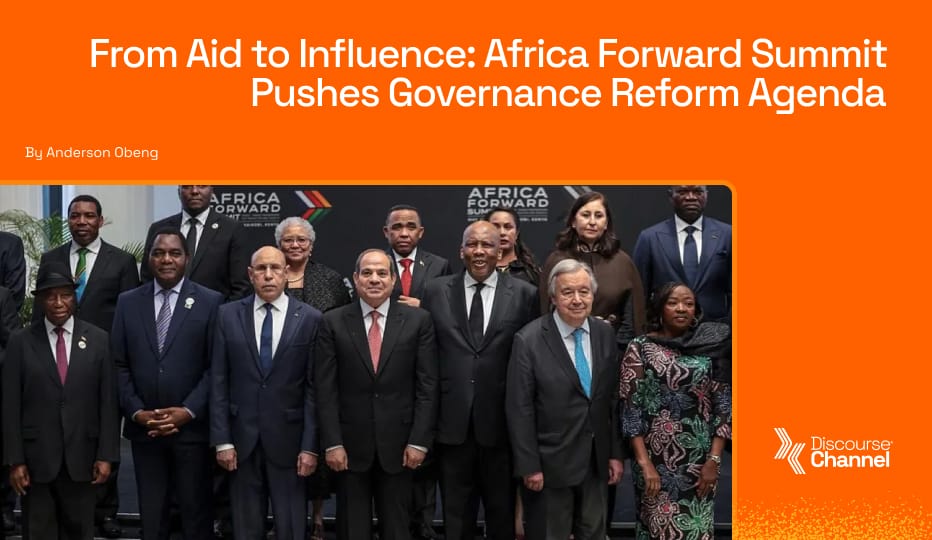
Global governance conversations are increasingly changing in tone when Africa is involved. The discussion is no longer centered only on aid, development support, or diplomatic alignment, it is increasingly about representation, institutional power, and who gets to shape the systems that govern international politics and finance.
Rather than focusing primarily on traditional development partnerships, discussions concentrated on structural issues within global governance systems, including financial architecture, institutional representation, and the balance of influence between African states and established global powers.
A major point of discussion was the growing dissatisfaction among African leaders with donor–recipient dynamics that have historically defined many Africa–Europe engagements. Leaders at the summit pushed for more balanced partnerships built around shared interests, economic cooperation, and political representation rather than dependency-driven frameworks.
The summit also reflected a broader diplomatic shift currently taking place across the continent, where African governments and regional institutions are increasingly positioning themselves as active participants in shaping global governance structures rather than passive recipients of policy decisions made elsewhere.
Finance systems were another major focus area, particularly around how international lending structures, development financing, and multilateral institutions interact with African economies. Several discussions reportedly centered on the need for reforms that allow African states greater flexibility, stronger negotiating power, and fairer participation within global economic systems.
The Nairobi discussions also reinforced a growing continental consensus around representation within international institutions, especially bodies such as the United Nations Security Council and other multilateral decision-making platforms where African influence remains disproportionately limited relative to the continent’s population, geopolitical relevance, and economic significance.
What we are watching:
- Preparations have been announced for the 2026 ECOSOCC Citizens’ Forum, scheduled to take place in Egypt.
- During his diplomatic engagements across Africa, France’s President Emmanuel Macron called for urgent reforms to global governance institutions, including stronger African representation at the United Nations Security Council.
Across these developments, a broader geopolitical shift is becoming increasingly visible: African states are moving from advocating primarily for inclusion toward actively demanding structural influence within global governance systems.
Whether through summit diplomacy, institutional reform discussions, or continental policy forums, conversations are increasingly centered on representation, negotiating power, and institutional equity. The underlying message across these engagements is consistent, Africa’s growing demographic, economic, and geopolitical weight is strengthening calls for governance systems that reflect contemporary global realities rather than post-war power structures.