Food systems linked to infrastructure investment
Food security in Africa is increasingly being shaped less by farm output alone and more by the infrastructure that moves, stores, and finances it. Transport bottlenecks and weak storage capacity continue to limit how efficiently food moves from farms to markets.
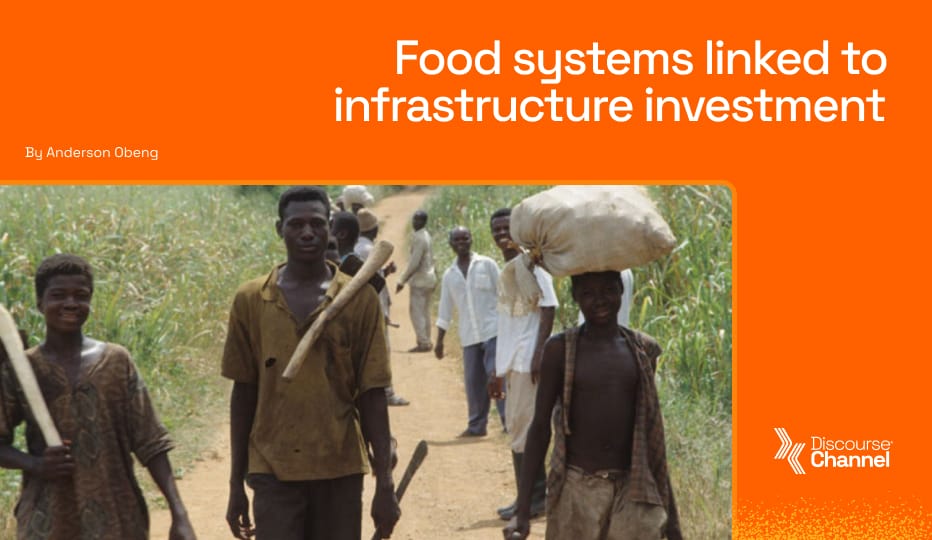
Food security in Africa is increasingly being shaped less by farm output alone and more by the infrastructure that moves, stores, and finances it. Across recent development and policy discussions, agriculture is being reframed as a systems challenge where roads, logistics, storage, and financing are as important as production itself.
Transport bottlenecks and weak storage capacity continue to limit how efficiently food moves from farms to markets. As a result, investment attention is gradually shifting away from isolated agricultural support toward broader value-chain strengthening.
What we are watching:
- A new supply-chain finance initiative led by the International Finance Corporation and Standard Chartered is targeting agricultural ecosystems and small suppliers across Africa.
- Recent trade data from South Africa points to a stronger agricultural export performance, contributing to overall economic growth and regional trade expansion.
Rather than being treated as a standalone sector, agriculture is now being integrated into broader infrastructure and financial system planning, where logistics networks, capital access, and regional trade systems determine outcomes as much as production levels.
Africa’s food systems are entering a phase where infrastructure and finance are as critical as farming itself.
The direction of policy and investment is shifting toward strengthening entire value chains from production to transport to financing as the foundation for long-term food security and agricultural competitiveness.