European Union Expands Climate Finance Engagement with Africa
The European Union has expanded its climate finance engagement with Africa through a package of commitments and ongoing programmes valued at more than $1.1 billion.
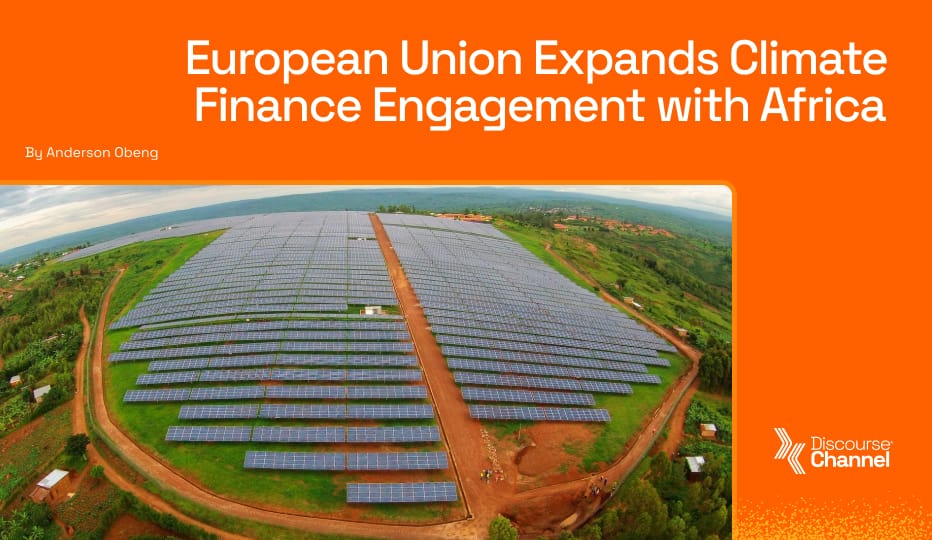
The European Union has expanded its climate finance engagement with Africa through a package of commitments and ongoing programmes valued at more than $1.1 billion. The financing forms part of broader external investment and development cooperation instruments aimed at supporting climate adaptation and resilience across partner countries.
The announcement comes as African governments continue to press for more predictable and accessible climate finance, particularly for adaptation projects. While climate funding to the continent has grown in recent years, policymakers and development institutions have repeatedly highlighted challenges around access, speed of disbursement, and the balance between loans and grants. These concerns have become more pronounced as droughts, flooding, and food insecurity intensify climate-related pressures across multiple regions.
Climate finance has become a central pillar of Africa–Europe cooperation, reflecting both the continent’s high vulnerability to climate change and its relatively low contribution to global emissions. As a result, European funding frameworks are increasingly being aligned with adaptation priorities, including agriculture, infrastructure resilience, and ecosystem protection.
At the same time, global climate negotiations continue to place emphasis on scaling up financing mechanisms that are accessible to developing economies. For Africa, the focus is increasingly shifting from pledge volumes to implementation, how quickly and effectively funds translate into on-the-ground resilience.
What we are watching:
- Kenya has launched the Biodiversity Finance Initiative (BIOFIN) under the Biodiversity Finance Initiative. The initiative aims to identify and mobilise innovative financing sources for biodiversity conservation, supporting national efforts linked to the global “30x30” target to protect 30% of land and ocean areas by 2030.
- The World Health Summit Regional Meeting in Nairobi highlighted climate change as a growing public health concern across Africa. Discussions focused on how climate-related pressures are contributing to the spread of vector-borne diseases, food insecurity, and displacement, reinforcing the need for integrated approaches linking climate resilience and health system preparedness.
The EU’s expanded climate finance engagement reflects the increasing centrality of adaptation funding in Africa–Europe relations. However, the effectiveness of these commitments will depend not only on total volumes, but also on how efficiently resources are delivered and accessed by national institutions and local communities.
At the same time, initiatives such as Kenya’s biodiversity finance programme and growing attention to climate-health linkages show how climate considerations are being integrated across multiple policy areas.
Together, these developments underscore a broader shift: climate change is no longer treated as a standalone environmental issue, but as a cross-sector challenge shaping economic stability, public health, and long-term development planning across the continent.