Dangote Refinery and Africa’s Industrial Ownership Question
Recent discussions around the refinery have centred on the possibility of expanding its investor base through capital markets participation. While no formal cross-listing across African stock exchanges has been confirmed.
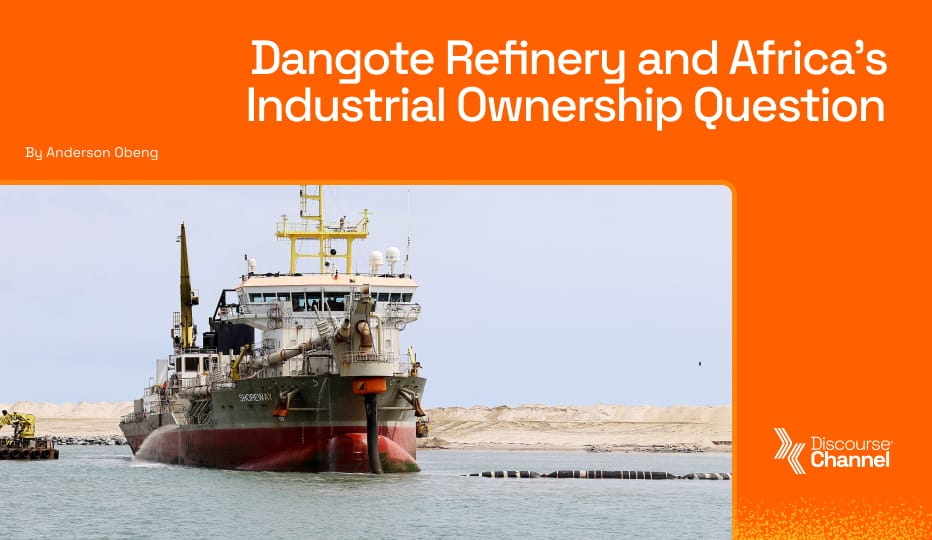
The Dangote Refinery in Lagos stands as Africa’s largest single refining facility and one of the continent’s most significant industrial investments. Built to reduce reliance on imported refined petroleum products, it has already begun reshaping fuel supply dynamics within West Africa’s energy market.
Recent discussions around the refinery have centred on the possibility of expanding its investor base through capital markets participation. While no formal cross-listing across African stock exchanges has been confirmed, the broader idea reflects a growing policy and market conversation: how to widen ownership of large-scale industrial assets beyond institutional investors and into domestic retail participation.
At stake is a larger structural question for African capital markets whether flagship infrastructure and industrial projects can become vehicles for broader public wealth creation, or remain concentrated within a narrow investor base.
Africa’s infrastructure gap continues to represent one of the continent’s most persistent economic constraints, affecting transport efficiency, energy access, and trade competitiveness. Addressing this gap requires sustained capital mobilisation at a scale that exceeds domestic public budgets, placing greater emphasis on international partnerships and blended financing models.
The Africa Finance Corporation continues to play a central role in structuring and financing large-scale infrastructure projects across the continent. Through investment forums and deal pipelines, it works with governments and private investors to channel capital into priority sectors such as transport corridors, power generation, and logistics infrastructure. These platforms collectively represent multi-billion-dollar investment opportunities rather than a single quantified summit value.
What we are watching:
- The British International Investment has outlined a strategy targeting approximately £9 billion in deployment across emerging markets, including Africa. The approach reflects a broader shift in UK policy away from traditional aid toward development finance focused on energy, infrastructure, and private-sector growth.
The conversation around Dangote Refinery reflects a wider shift in how Africa is approaching industrial ownership and infrastructure finance. Even without confirmed public listing structures, the idea signals rising interest in broadening participation in large-scale assets that underpin economic growth.
At the same time, evolving infrastructure financing models driven by institutions like the AFC and BII highlight a continent increasingly positioned as a major destination for blended capital. The direction of travel is clear: Africa’s growth story is moving from project-by-project financing toward system-wide capital mobilisation, where ownership, investment, and infrastructure are becoming more interconnected.