Create Your Way Out: Using Human Creativity to Overcome Depression
If you're reading this right now, congratulations! You've survived another period of life's "am I really doing this again, or '' I don't even know what is wrong with me.''
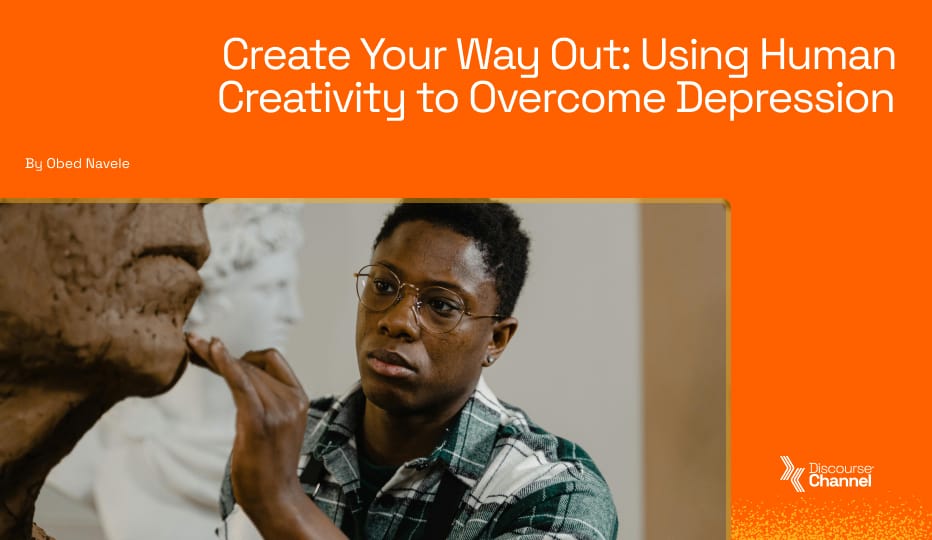
If you're reading this right now, congratulations! You've survived another period of life's "am I really doing this again, or '' I don't even know what is wrong with me.''. Most often, we don’t even know we have the remedies to our own distress, however, we go through the pain when we could just have helped ourselves out with the innate creative skills we have inside of us.
In a world that is constantly changing, one challenge remains consistent; Depression and anxiety. Whether you are a child , a young person, or an adult, we all have a chance of becoming a victim. Now understanding the expressions of depression is no longer just an advantage, it has become a necessity. While many find this subject overwhelming, mastering it is the key to having a sound mind to work as a creative being.
In this article, we will break down the essential strategies, common pitfalls, and actionable steps you need to navigate using human creativity to overcome depression with confidence.
Depression, often described as “the silent pandemic” affects over 280 million people globally, according to the World Health Organization. And while the symptoms can show up quietly, the impact is anything but subtle. Do not imagine this to be the dramatic breakdowns you often experience. Depression could feel a bit weird sometimes, perhaps these common instances should provide a clearer picture; sitting in a room full of family yet feeling entirely disconnected, or simply not having the energy to return a message. And for many students, professionals, and parents alike, it looks like going through one's normal daily routine while feeling completely drained on the inside.
And oh, the worst of depression’s service may even be the social tension people feel when visiting relatives after a long job search. Except here, the uncomfortable questions are internal.
“Why can’t you just snap out of it?” “Why do you always seem tired?” “Shouldn’t you be happy? You have everything.” For how have you been asking yourself these questions? and have you gotten any answers?
Never mind the reality: Depression isn’t a mood swing, and it isn’t a lack of gratitude or lack of internal satisfaction of who you are or who you have become. And it certainly isn’t a sign of weakness. But yes, it is a clinical mental health condition that can be caused by a combination of biological factors, chronic stress, past trauma, social isolation, or even prolonged burnout. NHS. Clinical Depression.

For many, the struggle with low moods or feelings of emptiness can feel isolating, like a shadow that follows even through the brightest celebrations. Yet, within the human experience lies a powerful, often underused tool: creativity. It is more than just painting, writing, or music, it is the ability to take what we have, what we feel, and what we imagine, and turn it into something meaningful.
Healing Through Action
Engaging in creative activity is not just emotional, it is physiological. Studies have shown that creating art, writing, or music stimulates dopamine, the brain’s “feel-good” chemical, fostering a sense of accomplishment and motivation. PubMed. Creativity, dopamine, and well-being. Every stroke of a brush, every written word, every note played, becomes a small victory against the inertia depression can impose.
Interestingly, creativity functions as a fundamental human problem-solving mechanism that counteracts the cognitive stagnation associated with depression by enabling the imagination of future possibilities. As you should know, engaging in creative activities can trigger the release of dopamine and induce a "flow state" that helps quiet self-critical thoughts. Practical strategies for utilizing creativity for mental well-being involve externalizing internal feelings through tangible expression, undertaking small creative projects to rebuild competence, and applying creative problem-solving to daily routines to build self-efficacy.
Creativity allows us to externalize what lives inside us. That disconnected feeling at a family gathering? Channel it into a poem, a short story, or even a song. That exhaustion from a long day of work or study? Try movement, dance, or crafting to release tension and reclaim energy. By creating, we do more than occupy our minds, we reshape our internal world, giving form to emotions that are otherwise hard to understand.
The beauty of creativity is that it meets us where we are. You don’t need a canvas, a stage, or a studio; your tools are already within reach. Writing in a journal, doodling on a notepad, rearranging your workspace, or experimenting with cooking a new recipe are all acts of creative expression. Each small act reminds you that you can influence your mood and environment, that even when life feels heavy, you still hold the power to shape it
Perhaps most importantly, creativity is not just a distraction; it is a pathway to joy, purpose, and fulfilment. Engaging in the creative process stimulates the mind, provides moments of flow, and allows you to celebrate small victories every time you complete a piece of work. The act of creating even when small becomes a form of self-care, a way to take back agency over your thoughts, emotions, and experiences.
In a world where depression and stress can feel overwhelming, creativity offers a way forward. It is a tool to transform what we have into what we need, to turn invisible emotions into visible expressions, and to take the first steps toward happiness and self-understanding.
So, whether it’s through painting, writing, music, dance, or everyday creative problem-solving, remember: you have the power to create your way out. Every stroke, word, note, or movement is a step toward reclaiming joy and reshaping your internal landscape. Creativity is not just an art it is a lifeline.
Creativity Builds Connection
Isolation is a common companion of depression. Creative expression can bridge that gap, connecting us to others who share or resonate with our work. The things we create, the art we make, the words we write, and the solutions we craft are extensions of ourselves. Others see a piece of your world and recognize their own struggles in it,. and in that recognition, a sense of solidarity emerges. Sharing a poem, a painting, or a song invites empathy, understanding, and support. In this way, creativity becomes both a personal tool and a social lifeline.
There is a profound truth in doing what you love and doing it well. When we pour energy into what resonates with us, when we honour our talents and instincts, depression begins to lose its grip. The act of creating becomes a daily dialogue with life itself a way to assert, “I am here, I matter, and I can shape my world.” Every brushstroke, every written word, every note, or every step of a dance becomes a bond with our purpose, our passions, and our emotions.
Pathways to anyone on the hot seat of depression. And that is:
Create without judgment: Pick up a pen, a brush, an instrument, or even your voice, and let your emotions flow freely. The act of creating is more important than the product.
Do what you love, love what you do: Engage in activities that resonate with your heart. When your actions align with your passions and purpose, even small moments become sparks of joy.
Connect through your creations: Share your work, your stories, or your expressions with someone you trust. Creativity builds bridges both inward, to your own feelings, and outward, to the people around you.
Embrace small victories: Every step, every creation, every expression is progress. Celebrating these moments are the building blocks of healing.
Stay consistent: Creativity works best as a habit. Dedicate even a few minutes each day to creating, reflecting, or exploring your imagination. Over time, these moments accumulate into meaningful change.
Real-Life Inspiration
One real-life example comes from Angela, who shared her journey with depression and creativity on Mind.org.uk a reputable mental health organisation’s platform. Angela explains that she struggled with depression and anxiety for many years, experiencing symptoms such as insomnia, low mood, and lack of motivation from as early as age 13. What helped her begin healing was creativity, creativity through music, dance, and other expressive activities. How creativity played a role in my recovery.
She described creativity as a place of refuge: a “retreat” that allowed her to redirect her energy toward something positive and gave her a way to express and make sense of her pain. Angela said that having creative outlets like singing, song writing, poetry, and playing the guitar gave her a space where her emotions could be expressed in ways that words alone sometimes couldn’t capture, and helped her feel good about herself again.
This story shows how creative activities didn’t just distract her from her struggles, but provided meaning, expression, and a path toward healing, demonstrating the real therapeutic power of creativity in navigating depression.
The goal isn’t to “fix everything overnight.” It’s to create small, consistent moments of care that make everyday life more manageable.
While I emphasize that creativity can be a powerful way to cope with and ease the weight of depression, I am not claiming it to be the ultimate cure. Recovery often involves a combination of approaches, and creativity works best as a supportive companion along the journey.
But Psyche Empowerment Network (PEN) is here to share the truth today: Depression is treatable, and people recover every day, every single day.
we recommend three core pathways for anyone facing depression, especially during this festive season:
Therapeutic support – such as Cognitive Behavioural Therapy (CBT), which helps reframe unhelpful thought patterns.
Lifestyle interventions – including consistent sleep, stress management, structured routines, and mindful breaks.
Medical support – when symptoms persist beyond two weeks or interfere with daily functioning.
So for anyone navigating depression right now: You’re not alone. Your experiences are valid.
Take comfort in the fact that healing does not have to be dramatic or sudden. It grows in small, steady steps: picking up a pen, strumming a chord, dancing in your room, or trying something new just for yourself. These moments are your allies. They remind you that your feelings matter, your voice matters, and that joy and connection can still be cultivated, even when life feels heavy.
So, go ahead and create, Express, Share. Even in silence, your creativity speaks volumes. And in that expression, you may find relief, hope, and a companion in yourself. Every act of creation is a step toward reclaiming your joy, your purpose, and your life.