Climate Action, and Energy Futures: Inside Africa’s Environmental Shift
Fihima Mohamed, an environmental activist in Djibouti, has been recognized by urban champions for her grassroots environmental work, which has resulted in the restoration of 30 hectares of degraded land.
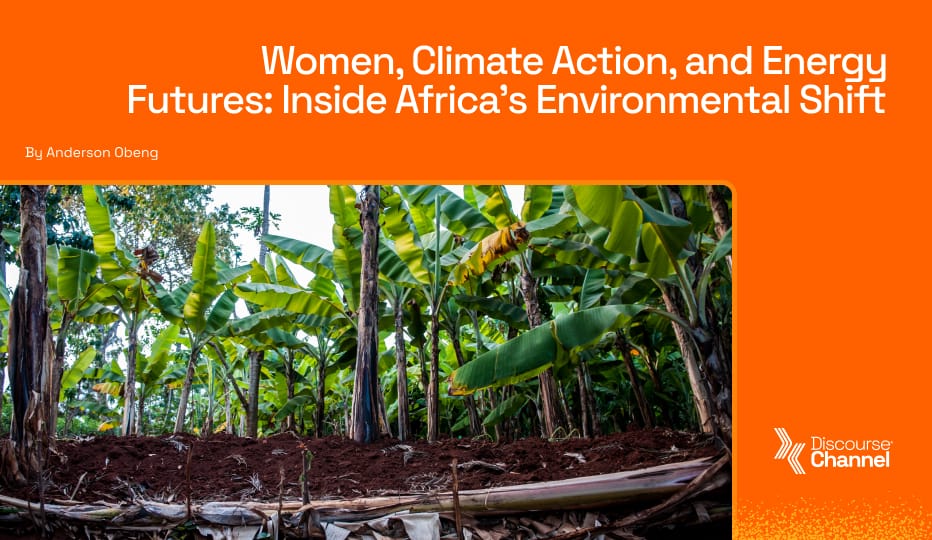
Climate action in Africa is increasingly being shaped by two parallel realities: on one side, community-led restoration work that responds directly to land degradation and environmental stress; on the other, large-scale energy and infrastructure planning aimed at powering long-term industrial and technological growth. What connects both is a growing urgency around resilience, ecological, economic, and social.
Fihima Mohamed, an environmental activist in Djibouti, has been recognized by urban champions for her grassroots environmental work, which has resulted in the restoration of 30 hectares of degraded land.
Her work is rooted in community-level land rehabilitation efforts, focusing on areas affected by desertification, soil degradation, and reduced vegetation cover. Through local mobilisation, awareness campaigns, and hands-on restoration activities such as replanting and soil recovery, the initiative has contributed to gradual ecological recovery in targeted zones.
The scale of 30 hectares reflects more than just land recovery; it points to sustained community participation over time, where environmental restoration is driven by local knowledge and continuous engagement rather than short-term external interventions.
The recognition of her work also highlights a broader shift across climate-vulnerable regions in Africa, where women are increasingly playing central roles in environmental leadership. In many communities, women are directly affected by environmental decline through its impact on agriculture, water access, and household livelihoods, making their involvement in restoration efforts both practical and structural.
What we are watching:
Across these developments, Africa’s climate and energy landscape is increasingly defined by two complementary movements. At the grassroots level, environmental restoration is being driven by community actors who are directly responding to land degradation and climate vulnerability. At the institutional level, governments and energy stakeholders are investing in large-scale, technology-enabled infrastructure designed to meet future demand and support industrial growth.
Together, these trends point to a dual transition: rebuilding ecological systems from the ground up while simultaneously scaling energy capacity and digital intelligence to support long-term development.