Central Bank Digital Currencies and Africa's Financial Inclusion - DASA 2025
A few weeks ago, Ghana’s digital community converged at the Kofi Annan ICT Centre as innovators, policymakers, and fintech leaders gathered for the first edition of the Digital Asset Summit Africa (DASA 2025). The event marked a defining moment in the continent’s digital finance story.

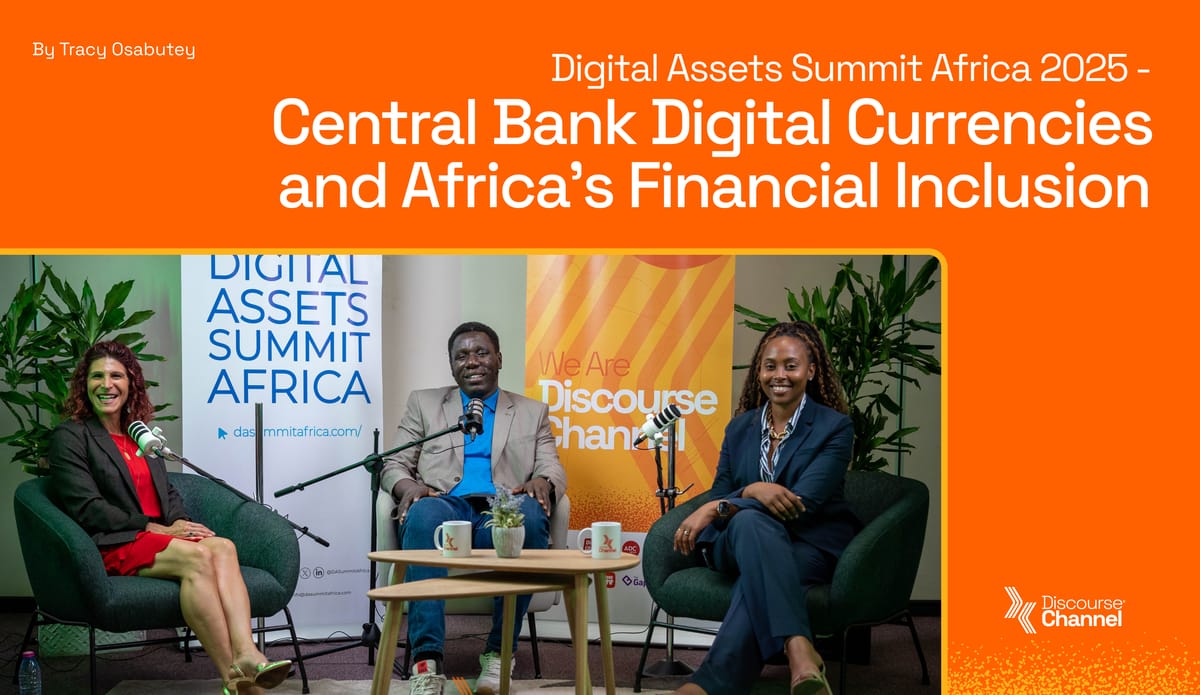
A few weeks ago, Ghana’s digital community converged at the Kofi Annan ICT Centre as innovators, policymakers, and fintech leaders gathered for the first edition of the Digital Asset Summit Africa (DASA 2025). The event marked a defining moment in the continent’s digital finance story where ideas met ambition, and Africa declared its readiness to lead its own digital financial future.
Africa Takes Its First Bold Step into Digital Finance History
DASA 2025 was not just a conference, it’s a statement of intent. The summit brought together key voices from across the financial and tech ecosystem: Peter Frimpong Manso, Founder and CEO of ProMark Elite Ltd and convener of DASA, Carmelle Cadet, CEO of EMTECH and former IBM executive, Larry Cooke, Head of Legal at Binance Africa, Central bank representatives from Ghana, Nigeria, Kenya, and Ethiopia, and executives from key development banks and fintech associations.
The event’s agenda was clear — to explore how Africa can build inclusive and resilient digital financial systems using emerging technologies like Central Bank Digital Currencies (CBDCs), block-chain, and tokenization.
Peter Frimpong Manso, the driving force behind DASA, emphasized the importance of collaboration and scaling.
“Africa has the brains and the ideas. What we need now is the collaboration to make these ideas thrive,” he said.
A Ghanaian entrepreneur with years of experience bridging innovation and enterprise, Manso founded ProMark Elite Ltd to champion events and partnerships that advance Africa’s digital transformation. His leadership made DASA’s first edition not just a gathering, but the beginning of a continental movement.
From IBM to Digital Inclusion for Africa: The Carmelle Cadet Story
One of the event’s most anticipated speakers, Carmelle Cadet, enlightend the audience with her message on CBDCs as tools for financial inclusion.
As a former IBM blockchain executive, Cadet left the corporate world to found EMTECH, a company now working with central banks across Africa and the Caribbean to modernize their financial infrastructures.
Cadet’s firm belief is that digital currencies must be designed for people, not just systems.
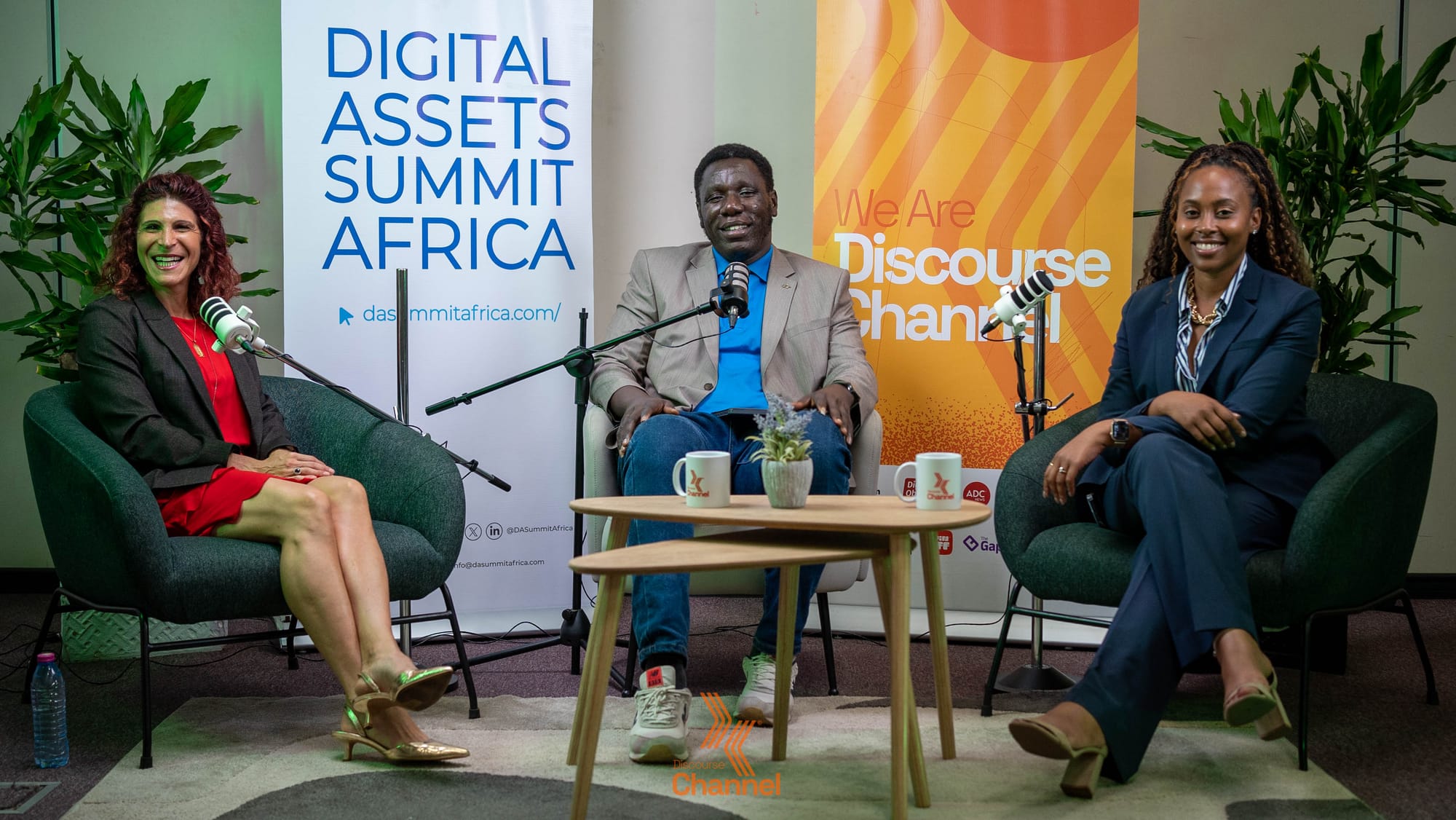
“It’s not about technology for technology’s sake,” she said. “CBDCs must address inclusion, efficiency, and trust. People need to see it working.”
Her leadership has seen EMTECH collaborate with the Central Bank of Ghana, the Central Bank of the Bahamas, and several African regulators to design sandbox environments that test safe and inclusive digital financial models.
As Cadet explained, CBDCs have the potential to digitize informal economies, reduce transaction costs, and connect millions of un-banked Africans to the formal financial system.
The Crypto Urgency: Why Africa Needs Its Own Rules for a Digital Future
Following Cadet’s keynote, Larry Cooke of Binance Africa brought a fresh energy to the hall with a simple but powerful message: “Africa cannot afford to miss the crypto moment.”
He urged policymakers to seize the current wave of digital innovation by creating Africa-first regulatory frameworks that encourage innovation while safeguarding consumers.
Cooke explained how Binance has worked with regulators in Ghana, Nigeria, Kenya, and Ethiopia to tailor global digital asset practices to local realities.
“Sometimes opportunity makes us complacent,” he said. “We must act now, or risk being too late.”
Across panel discussions, central bankers echoed the call for evidence-based and context-specific regulation. Representatives from the Bank of Ghana and the Central Bank of Nigeria stressed that regulation must be practical, not theoretical — balancing risk with innovation to serve African citizens effectively.
M-Pesa: The Revolution That Made Money Mobile
No conversation on Africa’s financial innovation is complete without mentioning M-Pesa, Kenya’s mobile money platform that revolutionized access to finance.
Launched in 2007, M-Pesa enables users to send and receive money, pay bills, and save all through basic mobile phones, even without internet access.
Its success shows how mobile-driven finance can leapfrog traditional banking systems, with over 50 million users across Kenya, Tanzania, and other African countries.
Digital banking experts and regulators agreed that CBDCs could integrate seamlessly with existing mobile money systems like M-Pesa — offering a secure, government-backed digital currency while maintaining the convenience and accessibility that mobile money users enjoy.
For instance, the eNaira in Nigeria and the eCedi pilot and mobile money in Ghana are early examples of such innovation. Both aim to expand access to secure, affordable, and transparent financial services for citizens previously left out of traditional banking.
Unlocking Inclusion Through Innovation
Speakers at DASA repeatedly emphasized that the success of digital currencies in Africa depends on inclusivity.
CBDCs could provide:
→ Lower-cost digital payments for small traders and consumers
→ Cross-border transaction ease, boosting intra-African trade under the AfCFTA
→ Greater financial transparency to combat corruption and illicit flows
→ Access to government benefits via digital wallets for citizens in remote regions
According to the IMF, CBDCs can reduce the cost of cash management, promote trust in national currencies, and expand access to financial services, provided they are implemented with security and interoperability in mind.
What Africa Discourse Is Watching
Whether Ghana—and other African nations—will shift from rhetoric to radical accountability.
Whether agricultural policy will track every allocated cedi to actual soil.
Whether monitoring and evaluation becomes sacred responsibility rather than bureaucratic performance.
Whether we'll stop accepting "pilot projects" that vanish after photo opportunities.
Whether we'll treat agriculture as profitable business reality instead of charity narrative.
The Hurdles Ahead
Despite the optimism, Africa’s digital finance journey still faces hurdles from regulatory gaps to connectivity issues.
The Overseas Development Institute (ODI) warns of digital literacy gaps that could marginalize rural populations.
The UNDP highlights the need for offline functionality and USSD integration to make CBDCs usable without constant internet access.
Meanwhile, the IMF cautions that CBDCs could cause bank disintermediation, while EconStor notes the privacy and cybersecurity risks associated with large-scale digital currency systems.
Another growing challenge discussed at DASA was cybersecurity risks. As digital systems expand, the threat of data breaches, identity theft, and cross-border financial fraud rises. Experts called for strong regional collaboration to establish secure, trusted CBDC ecosystems across Africa.
In Contrast: Lessons from Other Regions
While Africa’s journey is still unfolding, other regions are moving ahead with varying goals.
In China, the digital yuan is already being used in pilot cities to improve payment efficiency and control cash circulation.
In Europe, the European Central Bank is developing the digital euro, focusing on regulatory stability and consumer protection.
In contrast, Africa’s approach is centered on financial inclusion, trust, and accessibility making it a model for other developing regions.
Where other continents focus on efficiency, Africa’s digital revolution is human-centered: built to bring the marginalized into the fold of the formal economy.
The Road Ahead: Collaboration, Trust, and Local Innovation
As the summit drew to a close, Peter Frimpong Manso took the stage for the closing remarks, expressing gratitude and celebrated an important milestone:
“DASA will become an annual platform for Africa’s digital finance ecosystem,” he declared.
The takeaway was clear — Africa’s digital finance future will be shaped not by imported models but by African innovation, collaboration, and resilience.

A Defining Digital Decade for Africa
The first edition of DASA 2025 may have ended, but it has ignited a continental conversation.
If implemented thoughtfully, CBDCs could be a transformative force bridging gaps between the informal and formal sectors, empowering small traders, and reshaping Africa’s financial identity.
As one Ghanaian policymaker put it during the summit, “Digital transformation is no longer optional. It’s Africa’s next frontier.”
The momentum from DASA 2025 shows that Africa is not waiting for the world to define its future — it is designing it.