Cameroon Signals Private Capital Push as Africa Balances Debt, Infrastructure, and Reform
A Cameroon-hosted finance and investment forum in Yaoundé is placing renewed emphasis on private capital as a central driver of economic transformation in Central Africa, reflecting a broader regional shift toward investment-led development strategies.
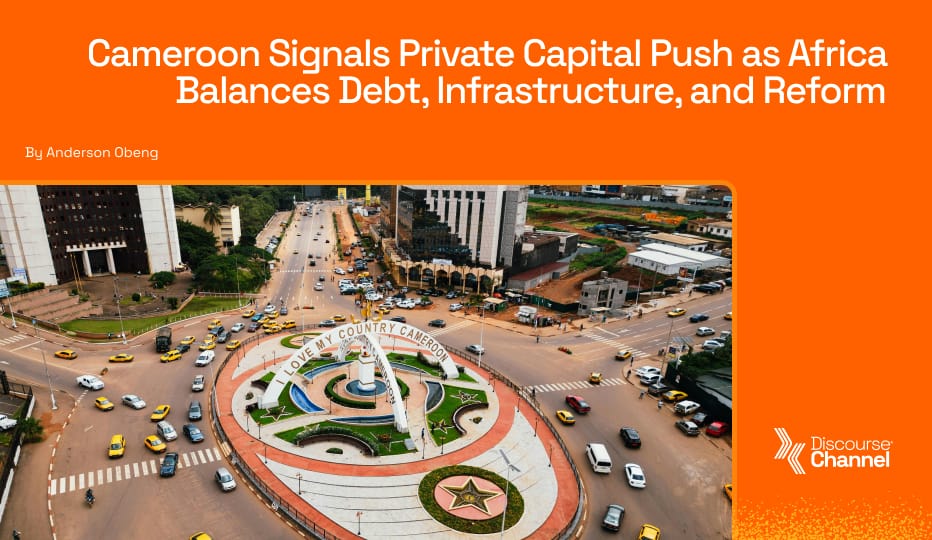
A Cameroon-hosted finance and investment forum in Yaoundé is placing renewed emphasis on private capital as a central driver of economic transformation in Central Africa, reflecting a broader regional shift toward investment-led development strategies.
Under the theme “Private Investment: Building the New Economic Power of CEMAC,” the forum brings together policymakers, regulators, investors, and private sector stakeholders to discuss financing gaps, economic diversification, and capital mobilization across the CEMAC region.
While the specific scale and edition details of the gathering vary across reports, the direction is clear: Central African economies are increasingly seeking to reduce reliance on public financing by strengthening private investment pipelines and expanding public–private partnerships.
The conversation reflects a wider continental trend where governments are positioning investment attraction and financial reform as core pillars of long-term growth strategies.
What we are watching:
- Nigeria’s legislature has approved a federal request for an external loan of approximately $516 million to support construction works linked to the Sokoto–Badagry highway corridor project. The proposed infrastructure aims to improve road connectivity across multiple states, including Sokoto, Kebbi, Niger, Kwara, Oyo, Ogun, and Lagos.
- The International Monetary Fund has disbursed additional funding to Liberia following a review of its Extended Credit Facility program. The disbursement is part of a broader multi-year arrangement designed to support macroeconomic stability, governance reforms, and resilience-building efforts, including responses to climate-related risks.
Taken together, these developments reflect a continent navigating multiple financing realities at once. On one side, infrastructure expansion continues to depend heavily on sovereign borrowing and external loans, particularly for large-scale transport and connectivity projects.
On another, multilateral institutions such as the IMF remain central in providing stabilization funding and reform support for lower-income economies. At the same time, forums like the one in Cameroon reflect a growing policy emphasis on attracting private investment, improving financial ecosystems, and strengthening the role of capital markets in development financing. Rather than a single shift, Africa’s development financing landscape is increasingly defined by overlap where public debt, concessional funding, and private capital operate in parallel. Africa’s infrastructure and development agenda is not moving in one direction but it is clearly becoming more diversified.
Governments are still relying on external borrowing for critical infrastructure. Multilateral institutions remain key stabilizers. And private capital is being actively courted as a longer-term growth engine. The emerging question is not whether capital is available, but how effectively it can be structured, governed, and deployed to close Africa’s infrastructure and development gaps. In that context, Cameroon’s investment-focused forum reflects a broader continental effort: repositioning private investment from a complementary role to a central pillar of economic strategy.