Burkina Faso’s Measles Surge Signals Fragile Health Systems Under Strain
Burkina Faso is facing a significant measles outbreak in its eastern regions, underscoring the vulnerabilities of health systems operating under pressure.
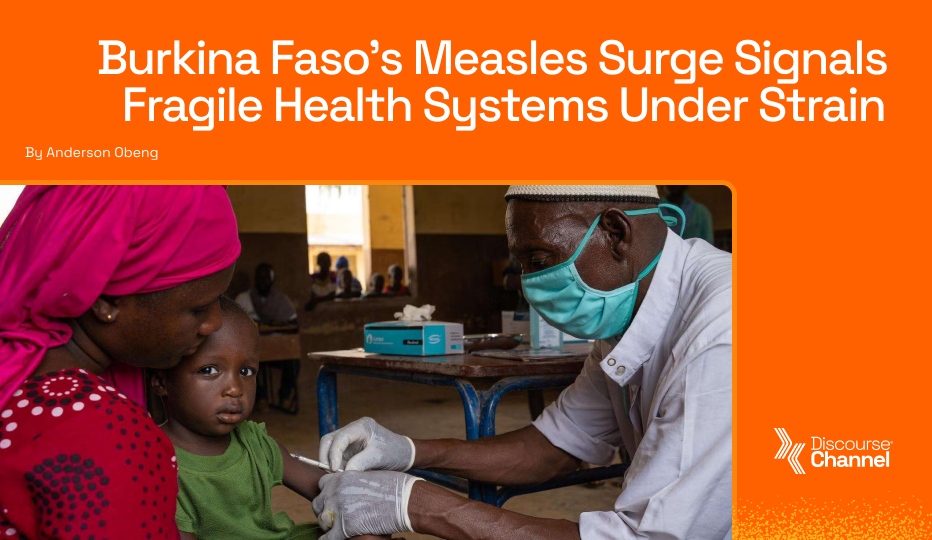
Burkina Faso is facing a significant measles outbreak in its eastern regions, underscoring the vulnerabilities of health systems operating under pressure. According to a recent situation update from the United Nations Office for the Coordination of Humanitarian Affairs, more than 3,000 measles cases and at least one death were recorded between January and early March 2026, a sharp increase compared to the same period last year and already surpassing total reported cases for 2025.
The outbreak is particularly severe among young children. Over 80% of reported cases involve children under five, highlighting both the rapid transmission of the disease and the risks faced by the most vulnerable populations. The eastern regions, including areas such as Matiacoali, have been identified as major hotspots driving the surge in infections.
Efforts to contain the outbreak are underway, with tens of thousands of children vaccinated so far. However, response measures continue to face significant constraints. Shortages of vaccines and essential medicines persist, limiting the scale and speed of intervention. At the same time, humanitarian access challenges are slowing distribution efforts, with critical medical supplies still awaiting transport to affected areas.
The situation reflects a broader pattern seen across fragile and conflict-affected regions, where health emergencies are often compounded by logistical and security challenges. Even when vaccines and supplies are available, the inability to reach high-risk populations quickly can allow outbreaks to escalate.
What we are watching:
- In the Ituri Province, renewed clashes have intensified an already fragile humanitarian situation. Violence around Bule locality in mid-March resulted in dozens of civilian deaths, with reports indicating at least 20 fatalities in a single incident and rising totals across the month.The impact of the violence is visible in rapidly growing displacement. The Plaine Savo site now hosts over 130,000 displaced people, roughly double the number recorded just weeks earlier. However, humanitarian operations have been significantly disrupted, with access to affected populations severely restricted in recent weeks, limiting the delivery of aid and protection services.
The measles outbreak in Burkina Faso and the escalating violence in eastern DRC point to a shared challenge: the intersection of health crises and humanitarian access constraints.
In both contexts, the issue is not only the presence of risk whether disease or conflict but the limited capacity to respond effectively. Health systems, humanitarian agencies, and local authorities are often forced to operate under conditions where resources are scarce, logistics are constrained, and populations are difficult to reach.
For policymakers and development partners, these situations highlight the importance of resilient health infrastructure, early intervention systems, and secure humanitarian access corridors. Without these, even preventable diseases like measles can escalate into large-scale outbreaks, and displacement crises can deepen without adequate support.
As these dynamics continue to unfold, they reinforce a broader reality across parts of the continent: public health and security are deeply interconnected, and addressing one without the other may limit the effectiveness of both.