BRICS-Plus Naval Exercises Began in South African Waters
This week, naval forces from BRICS countries and their partners began joint naval exercises in South African waters.

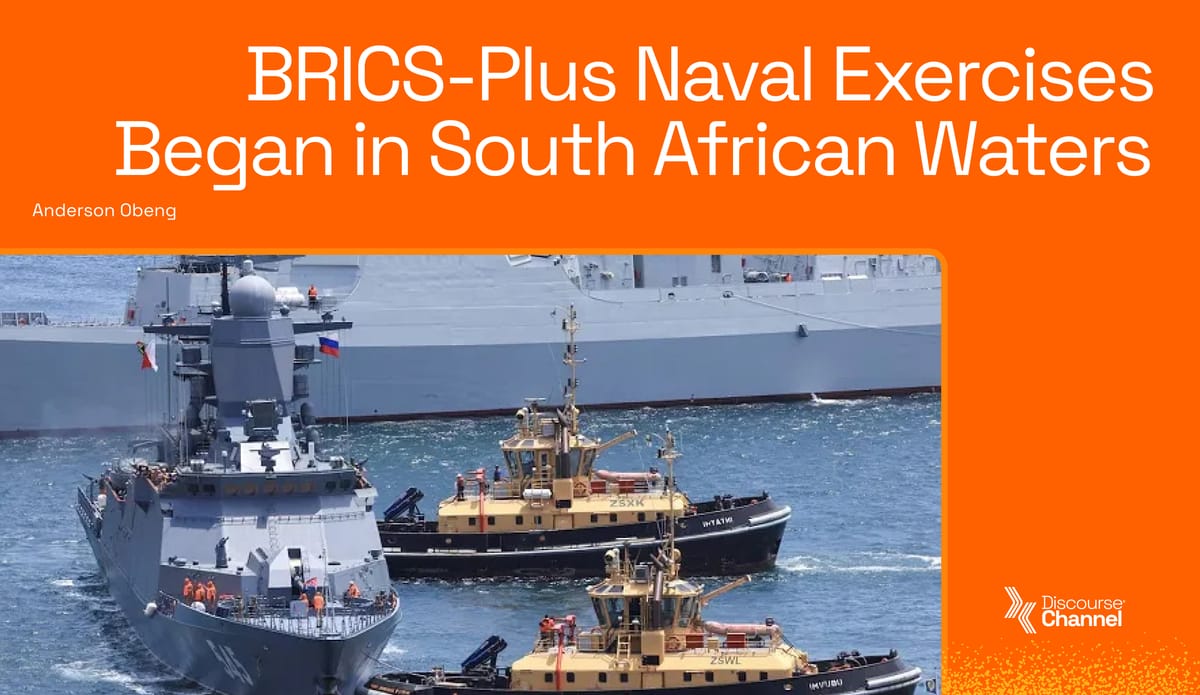
This week, naval forces from BRICS countries and their partners began joint naval exercises in South African waters. While military drills happen often, this one stands out because it shows how emerging global powers are working more closely together on security matters.
The exercises involve ships and crews from Brazil, Russia, India, China, South Africa, and other partner countries. They are focused on basic naval training such as communication, coordination, and safety at sea. But beyond training, the drills also send a message: these countries want to strengthen cooperation and show they can work together on shared security concerns.
For South Africa, hosting the exercises highlights its role as an important player in African and global diplomacy. It also shows how the country balances relationships with different global partners while keeping its own strategic interests in mind.
What we are watching:
- Ghana’s cultural governance debate has intensified. Conversations around how culture, arts, and heritage are managed by the state have grown louder. Artists and policy experts are calling for clearer rules, better funding systems, and stronger public institutions to support the cultural sector. 2025 Budget: Tourism & Creative Arts Sector Expects 6 Things
- Regional security coordination discussions continue. Across Africa, governments and regional groups are holding more talks about security cooperation. These discussions focus on shared challenges like piracy, trafficking, and cross-border crime, and on how countries can work together more effectively to respond. ECOWAS Naval Chiefs call for enhanced cooperation to tackle ...
On the surface, naval exercises are about training and teamwork. But they also have a bigger meaning. They show that countries outside traditional Western alliances are building their own ways to cooperate on security, especially around important sea routes.
For African countries, this creates both opportunity and responsibility. Working with different partners can bring training, knowledge, and resources. But it also means carefully choosing partnerships that support long-term regional stability and independence.
The BRICS-Plus naval exercises are part of a wider global shift toward a world with many power centers, not just one. Countries are forming new partnerships and looking for cooperation models that suit their own needs.
At the same time, debates in Ghana about cultural governance and regional security talks show that African countries are thinking more deeply about how they manage their affairs from culture to safety to global relations.
Together, these developments show a continent that is becoming more active in shaping its future. The naval exercises are not just about ships at sea. They reflect how Africa is positioning itself in a changing world making it careful, strategic, and increasingly confident.