Benin Secures €500 Million Financing for Key Development Sectors
Benin has secured €500 million in international bank financing, with backing from the African Development Fund, to support development priorities across the country.
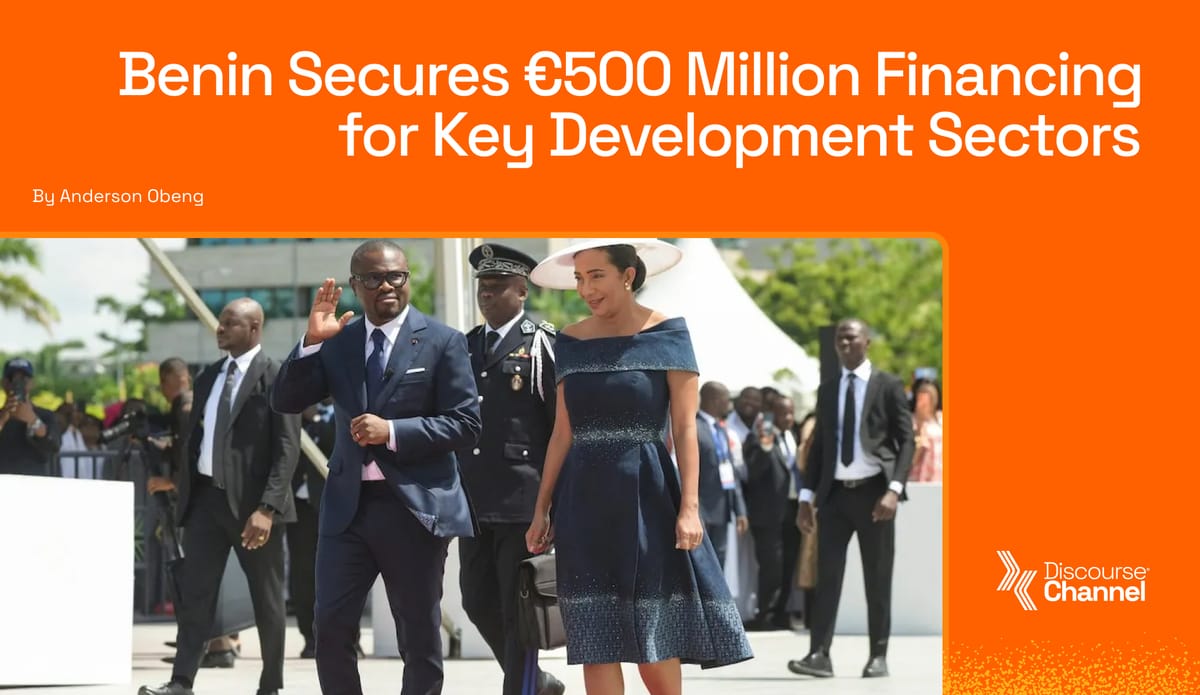
Securing €500 million is one thing. Turning that money into better schools, reliable electricity and improved healthcare is another. For Benin, that is now the bigger question.
Benin has secured €500 million in international bank financing, with backing from the African Development Fund, to support development priorities across the country.
The transaction, completed on September 18, 2026, is worth about CFAF 328 billion. It is designed to help Benin access long-term financing on competitive terms, using a partial credit guarantee from the African Development Fund and second-loss insurance from the insurance subsidiary of the Islamic Development Bank Group.
The funding is expected to support several areas, including education, healthcare, water access, infrastructure, renewable energy and agriculture. It also includes a focus on creating jobs for young people and women.
For Benin, the deal provides an opportunity to fund projects that could improve public services and support economic growth. But the size of the financing is only part of the story. How the money is used, which projects receive priority, and what results follow will matter just as much.
Where the Money Could Make a Difference
The sectors identified in the financing deal touch on some of the basic needs that shape people’s daily lives.
In education, investment could help improve learning facilities and access to services. In healthcare, funding could support efforts to strengthen medical facilities and make treatment more accessible. Water access and infrastructure are also important, particularly for communities where gaps in basic services affect health, livelihoods and business activity.
Renewable energy is another priority. Reliable electricity is essential for businesses, hospitals, schools and households. Investment in energy can help support economic activity, although the actual benefits will depend on the projects funded and how effectively they are delivered.
Agriculture also features in the plan. The sector supports livelihoods and food production, but farmers often face challenges involving access to finance, equipment, infrastructure and markets. Investment that addresses these problems could help improve production and create opportunities across the agricultural value chain.
The financing also identifies job creation for young people and women as a priority. This matters in a region where creating sustainable employment remains a major concern.
However, identifying these sectors is only the starting point. The real impact will depend on the projects selected, the way the money is distributed, and whether the expected improvements reach communities.
How the Financing Works
The role of the African Development Fund is particularly important in this transaction.
The €500 million is international bank financing, not a grant of the same amount from the Fund. The Fund’s partial credit guarantee helps support the transaction by reducing some of the risks faced by lenders. Additional insurance support comes from the Islamic Development Bank Group’s insurance subsidiary.
This type of arrangement can help a country access financing that might otherwise be more difficult or expensive to secure.
For governments, access to long-term funding can make it easier to plan and carry out development projects. But financing still comes with responsibilities. The terms of the deal, repayment obligations, and the quality of the investments all matter.
Benin will need to ensure that the funds support projects with clear public benefits and that the financing is managed responsibly.
The Wider Challenge for African Countries
Benin’s deal reflects a wider challenge facing African governments: how to raise the money needed for development without placing unnecessary pressure on public finances.
Countries need investment in roads, electricity, water systems, schools and hospitals. Yet the cost of financing these projects can be high, especially when lenders consider the risks associated with lending to emerging economies.
Guarantees and other forms of development finance support can help governments access funding. But securing the money is not the same as solving the problems it is meant to address.
A large financing package can produce limited results if projects are poorly planned, delayed, or inadequately monitored. On the other hand, well-managed investment can improve public services, support businesses and create jobs over time.
This is why transparency matters. Citizens should be able to understand how the financing will be used, which projects will benefit, and how progress will be measured. For Benin, the next stage will be to translate the financing into projects that deliver visible results.
What Happens Next?
The €500 million facility gives Benin access to significant financing for several development priorities. Its success, however, should not be measured by the amount secured alone.
The more important questions are whether communities gain better access to water and healthcare, whether schools improve, whether energy infrastructure becomes more reliable, and whether new economic opportunities emerge.
It will also be important to track how the financing affects the country’s public finances over time. Benin has secured the funding. Now comes the harder task of ensuring that it delivers value.
For the people expected to benefit, the real measure of this deal will not be the €500 million announced, but the improvements they can see in their daily lives.