Airtel Africa Delays Airtel Money IPO as Global Market Volatility Pressures Fintech Valuations
Africa’s fintech momentum may still be strong, but global market conditions are beginning to slow how aggressively companies move toward public listings. Airtel Africa this week confirmed it is postponing the planned IPO of Airtel Money
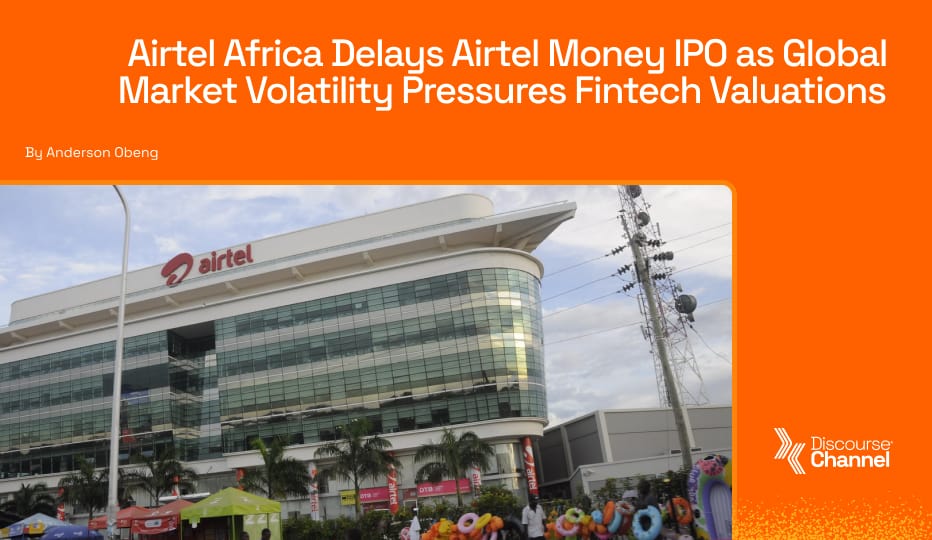
Africa’s fintech momentum may still be strong, but global market conditions are beginning to slow how aggressively companies move toward public listings. Airtel Africa this week confirmed it is postponing the planned IPO of Airtel Money, citing global market uncertainty and broader macroeconomic volatility.
The delay reflects growing caution across international capital markets, where investor appetite for emerging-market technology listings has become more selective amid inflation concerns, currency pressures, and slower global growth expectations.
The development highlights a broader reality shaping Africa’s digital finance sector: while mobile money continues to expand rapidly across the continent, fintech valuations remain closely tied to global financial conditions.
What we are watching:
- Recent PMI data from South Africa pointed to the country’s strongest private-sector expansion in nearly four years.
- Investment competition has also intensified around a minority stake in South Africa’s Natref refinery, with bids submitted by global commodity trader Trafigura alongside local Black-owned firms.
Fintech, infrastructure, and industrial investment continue to attract attention, but capital allocation is becoming more cautious as investors weigh inflation, energy costs, and market volatility.
The result is a business environment where growth remains possible, but increasingly tied to resilience, policy stability, and long-term investor confidence.
Africa’s digital finance sector continues to show strong structural growth, particularly through mobile money adoption and financial inclusion.
But Airtel Africa’s IPO delay is a reminder that even fast-growing African sectors remain connected to broader global market sentiment where timing, volatility, and investor confidence still shape access to capital.