Africa’s Strongest Renewable Energy Expansion on Record
Africa continues in 2026 to experience strong growth in renewable energy capacity, particularly in solar, wind, and hydro power. The growth has been driven largely by Ethiopia, South Africa, and Egypt, as governments accelerate efforts to strengthen domestic energy supply.
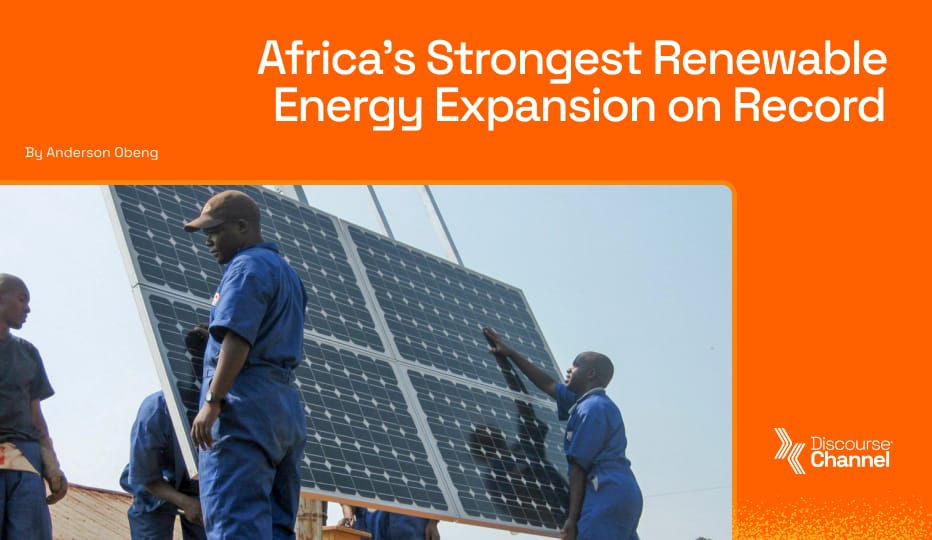
Africa continues in 2026 to experience strong growth in renewable energy capacity, particularly in solar, wind, and hydro power. The growth has been driven largely by Ethiopia, South Africa, and Egypt, as governments accelerate efforts to strengthen domestic energy supply amid global energy insecurity and volatile fossil fuel prices. The broader trend reflects a shift toward building more resilient, locally anchored power systems across the continent.
Africa’s renewable expansion is being shaped by both necessity and long-term planning. Persistent electricity shortages in several countries, combined with rising demand and exposure to global energy price fluctuations, have pushed governments to prioritise diversification of energy sources.
Recent growth reflects increasing investment in utility-scale solar, wind, and hybrid systems that integrate battery storage to improve reliability. These technologies are becoming central to energy planning, particularly in regions where grid instability and weather-dependent hydropower have historically created supply gaps.
What we are watching:
- Zambia is advancing major renewable energy investments, including a large-scale solar project paired with battery storage. The development is aimed at addressing long-standing electricity shortages that have affected households and industrial activity, while improving grid stability through stored renewable power.
- The African Development Bank is supporting early-stage green hydrogen initiatives across Africa. Green hydrogen is produced using renewable electricity to split water into hydrogen and oxygen, resulting in zero carbon emissions at the production stage.
Africa’s renewable energy growth is increasingly moving from isolated projects toward system-level transformation. The combination of solar expansion, battery storage, and emerging technologies such as green hydrogen signals a shift toward more resilient and flexible energy systems.
While challenges remain around financing, grid infrastructure, and implementation capacity, the direction of travel is clear: African countries are increasingly prioritising domestic energy security as a foundation for economic growth. The transition is no longer only about climate goals, it is becoming a structural shift toward energy independence and industrial competitiveness.