Africa's push for Digital Sovereignty
Africa is pushing to control its own data, through shared frameworks, local AI models, education programs, and tighter regulation, to stop feeding foreign AI and start building its own.
The global technological landscape is undergoing a structural transformation that is rapidly outpacing traditional institutional adaptation. Artificial intelligence, digital platforms, and data-driven systems are fundamentally reshaping how societies learn, how economies generate value, and how people interact. Yet, as these technologies advance at exponential rates, a critical question emerges at the heart of the Global South’s development: Who shapes this digital transformation, and in whose interest is technology shaped?
At a high-level policy forum convened in Accra, African leaders, digital architects, and policymakers gathered to confront this reality. The consensus was clear: Africa must move away from the passive adoption of external agendas and aggressively claim its digital sovereignty. Achieving this requires a profound shift in how the continent approaches data ownership, regulatory environments, local workforce development, and institutional trust.
The Geopolitics of Data and Health Information
Historically, technological and health-related interventions from the Global North have often bypassed the strategic interests of the recipient nations. In some cases, health data and critical biological information have been treated with geopolitical undertones rather than mutual cooperation. The selective handling of critical health crises such as the containment of Ebola patients within specific geographical boundaries while denying repatriation to the West highlights a transactional approach to crisis management. When analyzed alongside historical precedents, such as the declassified strategic frameworks of the late 20th century, these dynamics indicate that health and technology data are frequently leveraged as instruments of geopolitical influence.
Within this context, the digital ecosystem cannot be viewed as a neutral space. The technologies currently being presented for rapid adoption are inherently pre-designed with specific structures of control. If African states do not actively curate, design, and govern their own domestic infrastructure, they risk entrenching new forms of systemic vulnerability under the guise of modernization. Digital acceleration is a hollow endeavor if it does not protect human dignity and reduce systemic inequalities.
The Paradigm of Sovereign Data Frameworks
To establish true agency, Africa must prioritize the construction of robust, sovereign data frameworks. In the digital economy, data acts as the fundamental natural resource, the topsoil upon which artificial intelligence models are trained. Under current paradigms, African behavioral, economic, and agricultural data is routinely extracted to train systems developed abroad, which are subsequently sold back to the continent as proprietary products.
Sovereign data policies must mandate that local data remains on African soil. This localized data can then be securely pooled to train indigenous, culturally contextualized Large Language Models (LLMs) that accurately understand regional markets, languages, and social nuances. Protecting domestic data is no longer merely a privacy concern; it is a core pillar of national security and economic self-determination.
1. Moving Beyond Western Models: The RICE Framework
Traditional data policies, heavily modeled after Europe’s General Data Protection Regulation (GDPR), treat data as an isolated asset belonging strictly to an individual. Digital policy researchers argue this individualistic lens fundamentally fails African societies where data holds collective and communal value. Instead, experts champion the RICE Framework (Reformation, Integration, Cooperation, and Enforcement) to operationalize data governance effectively across regional blocs. This shifts the regulatory objective from individual privacy mitigation to collective asset optimization, ensuring that community-generated data (like local linguistic patterns or shared agricultural methods) remains an indigenous communal resource. By protecting communal assets from foreign corporate exploitation, this model provides a blueprint to build localized, culturally contextualized AI systems without forcing states to adapt to mismatched Western concepts. However, translating "communal ownership" into legal statutes remains highly complex, often clashing with global software architectures that rely on isolated, individual user agreements.
2. Defeating Fragmentation via Pan-African Harmonization
Africa's digital ecosystem is highly fractured, split across 54 nations with wildly divergent national legal systems. This structural fragmentation prevents any single nation from competing with global AI superpowers. Organizations like the African Center for Economic Transformation (ACET) emphasize that a single country's isolated data pool is rarely large enough to train a highly capable, indigenous Large Language Model (LLM) [ACET]. The solution lies in the full implementation of the African Digital Compact (ADC) and the alignment of cross-border data protection architectures. Creating a single, unified African data market allows cross-border data pooling, which generates the massive scale required to feed culturally contextualized AI models that understand regional market nuances. This unlocks immense economies of scale, enabling local tech ecosystems to negotiate with global tech giants from a position of unified geopolitical strength. Nevertheless, structural implementation is severely bottlenecked by uneven regulatory enforcement, conflicting national political priorities, and varying digital readiness across individual member states.
3. Tech-Driven Autonomy: Federated Learning and Local Compute
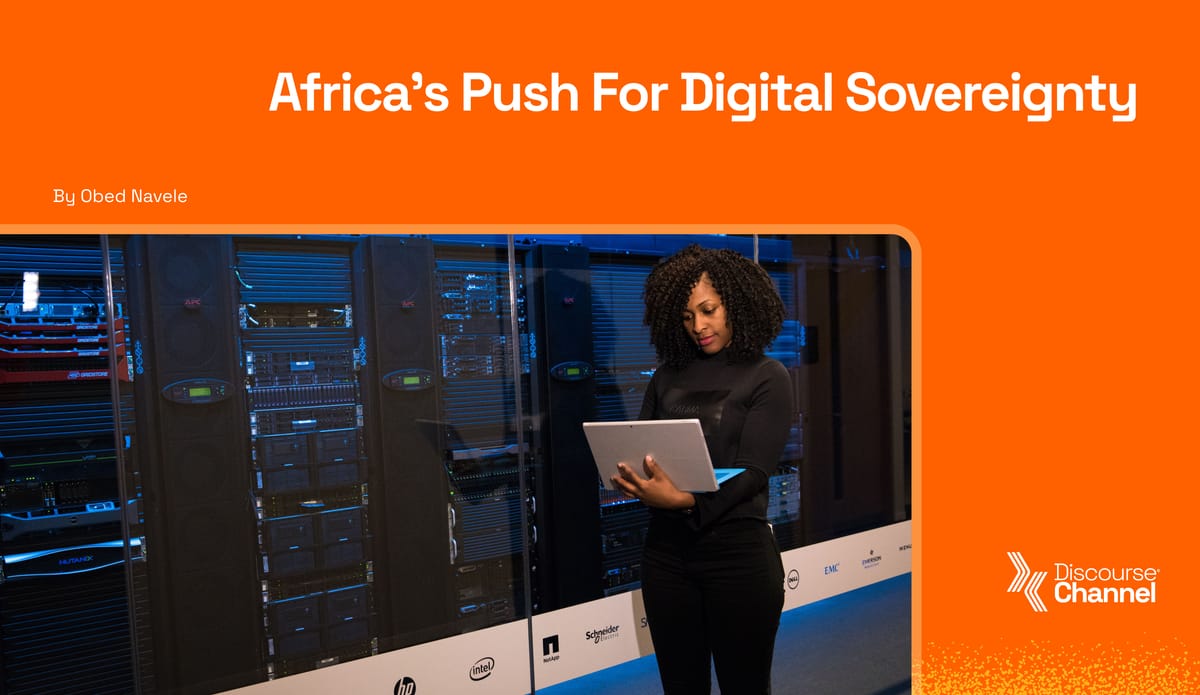
Mandating that raw data physically stay within national borders can inadvertently sever local tech ecosystems from the global developer pipeline, causing economic isolation. To bypass this, researchers at institutions like the Ethical Data Initiative point to Federated Learning (FL) as a vital technical compromise. Federated learning allows global or regional AI algorithms to train on African data locally. The raw data never leaves its secure, domestic server; instead, the AI model "visits" the data, runs localized training loops, and only sends back the mathematical adjustments to improve the master AI model. This approach completely neutralizes the threat of raw data extraction and digital extractivism while keeping African enterprises integrated into global tech networks. It maximizes privacy-preserving data utility without triggering retaliatory tech bans or forcing complete corporate isolation. However, federated architectures cannot run on policy alone; they demand an aggressive, multi-billion-dollar investment in local physical infrastructure specifically, high-performance data centers, reliable regional cloud hosting, and stable electricity grids.
Re-architecting Learning Systems for the Future
Unlocking the potential of this digital revolution requires a radical modernization of the continent's educational systems. Educational programs must be redesigned to match the velocity of modern technological advancements. The traditional paradigm of training youth to be passive digital consumers must be replaced by a commitment to training them as thinkers and builders.
This educational pivot is particularly urgent given Africa’s demographic trajectory. With a median age of approximately 19 years, Africa is the youngest continent on earth, housing nearly 60% of the world's population under the age of 25. By 2050, the continent's population is projected to reach 2.5 billion, representing the largest pool of active talent entering the global workforce. This demographic dividend can only be realized if matched with deliberate, forward-looking investments in digital skills, technical literacy, and adaptive learning systems.
National initiatives, such as Ghana’s 1 Million Coders Programme, illustrate how governments are scaling practical, job-ready digital skills in software engineering, data analytics, cybersecurity, and cloud computing. These programs seek to transform the systemic vulnerability of underemployment into technological self-sufficiency, ensuring that African youth actively drive the digital economy rather than merely consuming its outputs.
Agile Regulation: Dynamic Sandboxes and Proactive Orchestration
For decades, administrative and regulatory structures across the continent have operated on slow, reactive, and bureaucratic models of prohibition. In a fast-moving digital economy, reactionary bans are ineffective and counterproductive. Governments must pivot toward proactive, state-backed orchestration by establishing dynamic regulatory sandboxes across ministries of technology, education, and finance.
A premier example of this cross-sectoral collaboration is Kenya’s regulatory sandbox ecosystem, driven by the Capital Markets Authority (CMA) alongside the tech ministry. This multi-agency framework allows fintech and edtech innovators to securely pool student, financial, and behavioural data within a controlled environment, ensuring that while regulators monitor algorithmic safety and student privacy, they seamlessly govern mobile-money data flows without creating bureaucratic bottlenecks. Ultimately, these agile, cross-ministerial environments provide local developers with the legal flexibility to build, test, and scale culturally contextualized AI solutions. The goal of modern regulation must be to foster a stable, high-trust environment that simultaneously protects citizen welfare and actively accelerates home-grown innovation.
The Pillars of Public Trust and Governance
While the technical dimensions of artificial intelligence and digital infrastructure often dominate public discourse, the success of any technological transition rests entirely on public trust. Trust is not a trivial technical benchmark; it is a deeply political, societal, and institutional reality. Citizens must have confidence that public data systems protect their privacy, that automated algorithms are free from embedded biases, and that digital transformation actively strengthens public accountability.
This trust must be anchored in comprehensive policies, such as the national digital economy strategies and dedicated ethical AI frameworks being implemented in nations like Ghana. These governance structures ensure that artificial intelligence is deployed responsibly, securing public trust and aligning technological tools with national development priorities rather than undermining them. Furthermore, African universities and research hubs must be empowered to produce localized academic insights, moving beyond simple adoption to active knowledge creation.
Leading the Global South
Africa must own and direct its digital progress from within to secure true sovereignty and lead the Global South into an equitable digital age. This shift from text to reality is already happening across three key areas:
- Cultivating Talent (Education): Programs like Ghana's National One Million Coders Program train local youth in cybersecurity and machine learning. Partnering with anchors like the Accra Digital Centre, these initiatives build a domestic workforce so local architects, not foreign firms, design the region's AI algorithms.
- Contextualized Systems (Startups): Homegrown startups are filling the gaps left by global tech giants who ignore regional dialects. Ventures like Lelapa AI have introduced specialized models like InkubaLM to capture underrepresented languages (such as Swahili, Yoruba, and IsiZulu), turning local data into highly accurate regional tools.
- Collective Enforcement (Governments): State actors are shifting from passive data compliance to proactive asset protection. Regulators like Nigeria's Data Protection Commission (NDPC) are tightening rules on transnational tech firms, while the African Union aligns regional digital governance and cybersecurity infrastructure to speak with a single legislative voice.
Data sovereignty is a core pillar of national security and economic survival. Laws that merely lock data behind national borders build a digital dead end. To transition from a playground of extraction to a self-determined creator, Africa must build the physical data centers, decentralized networks, and unified legal alliances needed to wield its own resources.