Africa's Creative Economy Is Being Reframed as the Backbone of Continental Integration
The Africa Prosperity Dialogues 2026 took a sharp turn from diplomatic niceties to uncomfortable truths in the first week of February, particularly around how Africa's creative economy fits into the vision of a borderless continent.
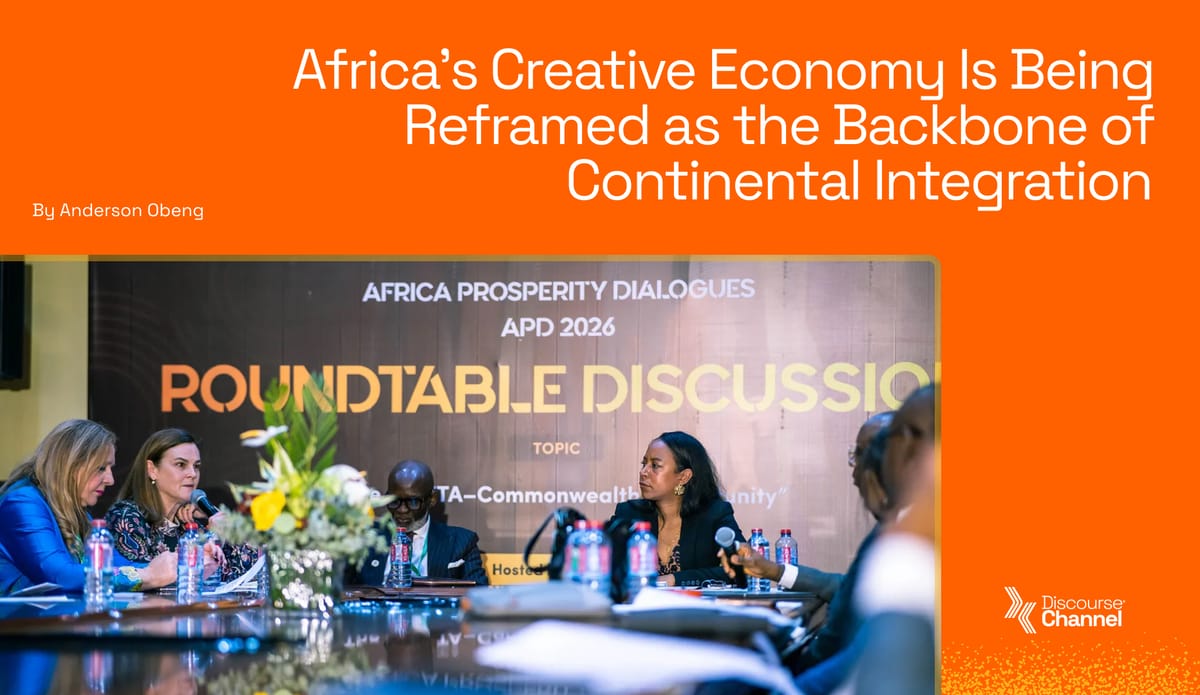
The Africa Prosperity Dialogues 2026 took a sharp turn from diplomatic niceties to uncomfortable truths in the first week of February, particularly around how Africa's creative economy fits into the vision of a borderless continent. The year’s theme, launched in Malabo, Equatorial Guinea, had set the tone for another year of high-level conversations about trade, investment, and integration across the continent. At the centre of this sporadic dialogue shaping Africa’s future is the theme ‘making Africa borderless’.
Professor PLO Lumumba delivered a "reality check" speech that cut through the usual optimism of African organised summits. He centred his expose on how Africa is losing hundreds of billions of dollars annually because it exports raw materials (cocoa, shea butter, minerals, even cultural IP) only to buy them back as finished goods at markup rates that would make any economist wince. Lumumba pointed to a demographic time bomb that the creative economy could either defuse or worsen. Twelve million African youth enter the job market annually. Only three million formal jobs exist. The creative sector (music, fashion, digital content, design) has proven it can absorb talent at scale, but only if cross-border commerce becomes functional. Otherwise, as Lumumba noted, talented creatives continue dying in the Mediterranean rather than building industries at home.
The Making Africa borderless vision aligns closely with the goals of the African Continental Free Trade Area. The United Nations Economic Commission for Africa (UNECA) explains that the AfCFTA was created to eliminate barriers to trade and boost intra-African commerce, to strengthen regional value chains, and make it easier for goods and people to move across borders as part of a larger single market vision.
The AfCFTA remains the backbone of this ambition. But implementation, not intention, now defines progress. Customs processes, transport corridors, port efficiency, digital payment systems, and regulatory alignment determine whether integration works in practice. Without functional infrastructure and coordinated policy, trade agreements remain theoretical.
The Dialogues highlighted that fragmentation continues to cost Africa billions in lost trade opportunities. Small and medium-sized enterprises, in particular, face disproportionate barriers when attempting to scale across borders. Complex paperwork, inconsistent standards, and financing gaps often prevent promising businesses from expanding regionally.
What we are watching:
- African trade and creative entrepreneurs recently gathered to discuss cross-border SME support, focusing on practical solutions such as harmonized regulations, digital trade platforms, and improved access to capital. The conversation reflects a growing recognition that integration must work for small businesses, not just multinational firms. SMEs form the backbone of most African economies; enabling them to operate regionally is central to making the borderless vision real.
- Badminton Championships began in Botswana, bringing together athletes from across the continent. While sporting events may seem distant from trade policy, they reinforce a broader narrative: mobility, exchange, and shared identity are foundational to integration. Every cross-border competition reflects the same principle that policymakers are trying to institutionalize movement without unnecessary barriers.
The case for a borderless Africa is economic, strategic, and demographic. With one of the youngest populations in the world, Africa’s growth will depend on whether markets remain fragmented or become interconnected. Integrated trade corridors can lower food prices, stabilize supply chains, and support industrialization. Cross-border cooperation can reduce duplication of infrastructure and unlock economies of scale.
In a global economy increasingly shaped by shifting alliances and supply chain realignments, deeper intra-African trade offers resilience. Countries that can move goods efficiently across regional corridors will be better positioned to attract manufacturing, logistics hubs, and digital services investment.
The vision of a borderless Africa is maturing from aspiration to strategy. What remains is execution, aligning infrastructure, policy, finance, and political will.