Africa’s Commercial Debt Burden Climbs as Financing Costs Ease
African nations are projected to borrow $155 billion in long‑term commercial debt in 2026, a roughly 10% increase from 2025, according to a March 17 report by S&P Global Ratings.
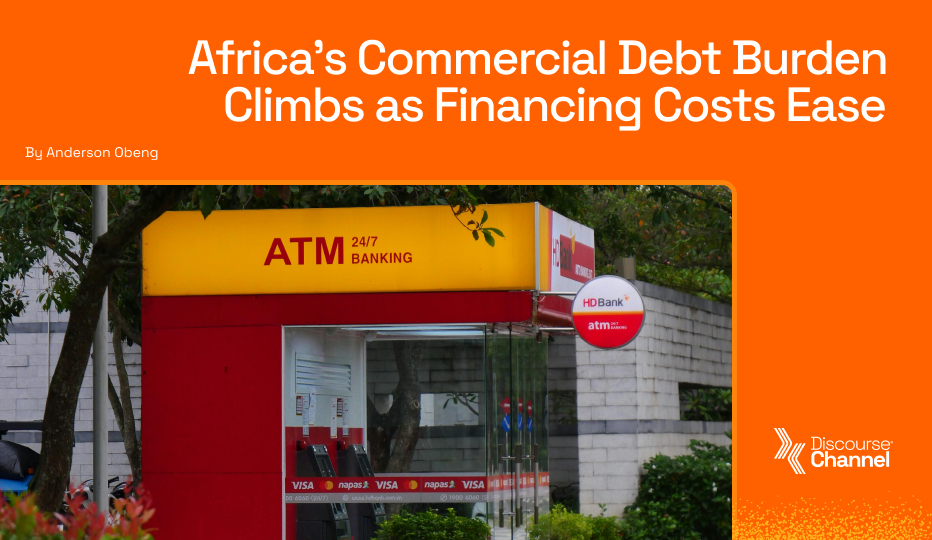
African nations are projected to borrow $155 billion in long‑term commercial debt in 2026, a roughly 10% increase from 2025, according to a March 17 report by S&P Global Ratings. The rise in borrowing is expected to push the total outstanding sovereign commercial debt for the region to just over $1.2 trillion by year‑end, equal to about half of Africa’s combined economic output.
Egypt, South Africa, and Morocco are forecast to be the largest issuers of new commercial debt, reflecting the scale and depth of their financing needs. S&P noted that “favourable external financing costs, which are at multi‑year lows, provide some reprieve, as governments can refinance upcoming foreign currency maturities at lower costs.” Lower financing costs have allowed several African states to extend maturities and manage rollover risk more smoothly than in recent years.
Still, the increase in commercial borrowing underscores a broader tension in African macroeconomics: balancing the need for infrastructure investment and economic support with rising debt levels. As nations secure financing to support growth, they simultaneously expose themselves to shifts in global capital conditions including changes in interest rates, currency volatility, and investor sentiment.
The crowded sovereign debt market also highlights how global investors are engaging with Africa’s credit stories. Appetite for African sovereign paper has grown where yields are attractive and macroeconomic fundamentals show resilience, but the landscape remains sensitive to economic shocks and global risk repricing
What we are watching:
- The South African rand slipped for a third consecutive week, pressured by rising oil prices which increase import bills and fuel inflation concerns and investor caution ahead of an upcoming policy decision by the South African Reserve Bank (SARB). Currency movements often serve as a real‑time barometer of market confidence, and sustained weakness can amplify debt servicing costs for countries with foreign currency obligations.
Investors are watching the SARB’s policy stance closely as central banks globally navigate the trade‑off between supporting economic activity and anchoring inflation expectations. In the South African context, a weaker currency can add upward pressure to domestic prices, complicating monetary policy decisions at a time when external financing conditions are playing a crucial role in sovereign debt dynamics.
Africa’s projected rise in commercial borrowing is a reminder that the continent is deeply integrated into global capital markets for better and worse. Lower external financing costs have provided a window of opportunity, but they also tie African economies to the ebb and flow of global investor sentiment and monetary conditions abroad.
For policymakers, this environment presents a dual imperative:
- Prudent debt management that secures financing at sustainable costs
- Structural reforms and growth strategies that strengthen economic fundamentals and resilience
At the same time, market developments like the rand’s weakness remind governments and investors that macroeconomic stability and monetary policy remain central to confidence in African sovereign finance.
As Africa continues to navigate its post‑pandemic growth trajectory, the interplay between debt markets, currency dynamics, and policy decisions will be key determinants of economic outcomes in 2026 and beyond.