Africa’s Bold Moves The World Should be Watching
Africa's building tomorrow's payment systems today. Ghana registered 100+ crypto providers, Nigeria expands digital banking. While the West debates, Africa merges traditional banking with cryptocurrency innovation—a $100B remittance market demands it.

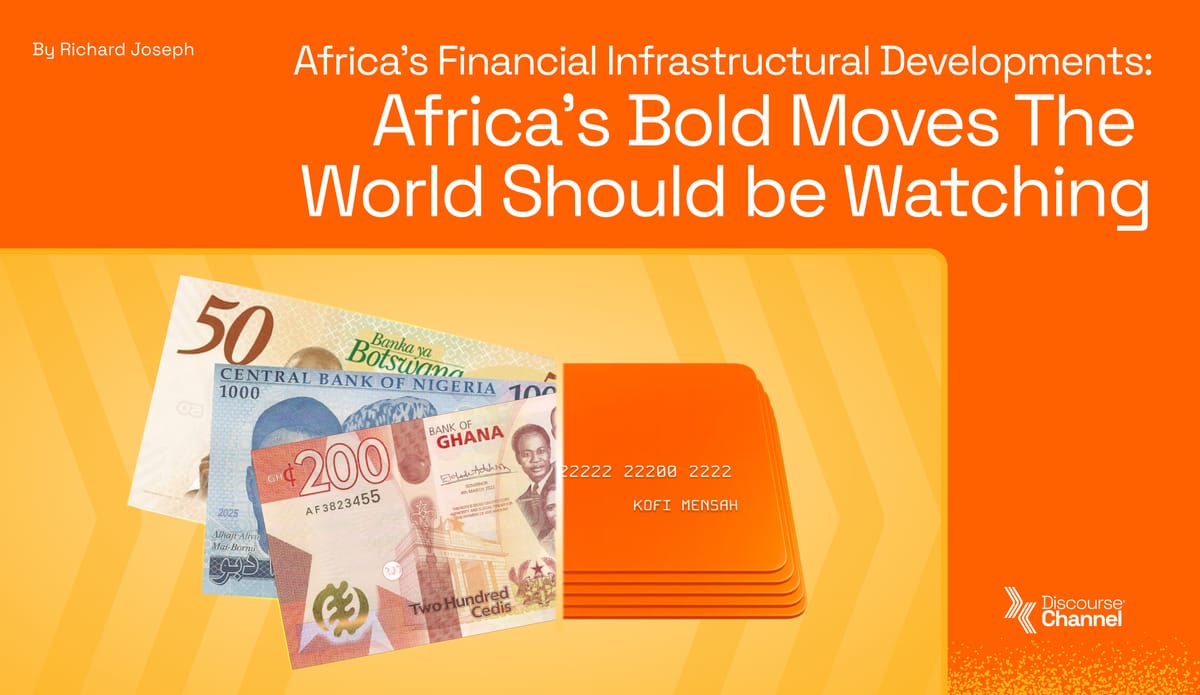
While Western regulators stumble over cryptocurrency policy and banks defend outdated infrastructure, Africa is quietly building the payment systems of tomorrow. And it is doing so by refusing to choose between the old and the new.
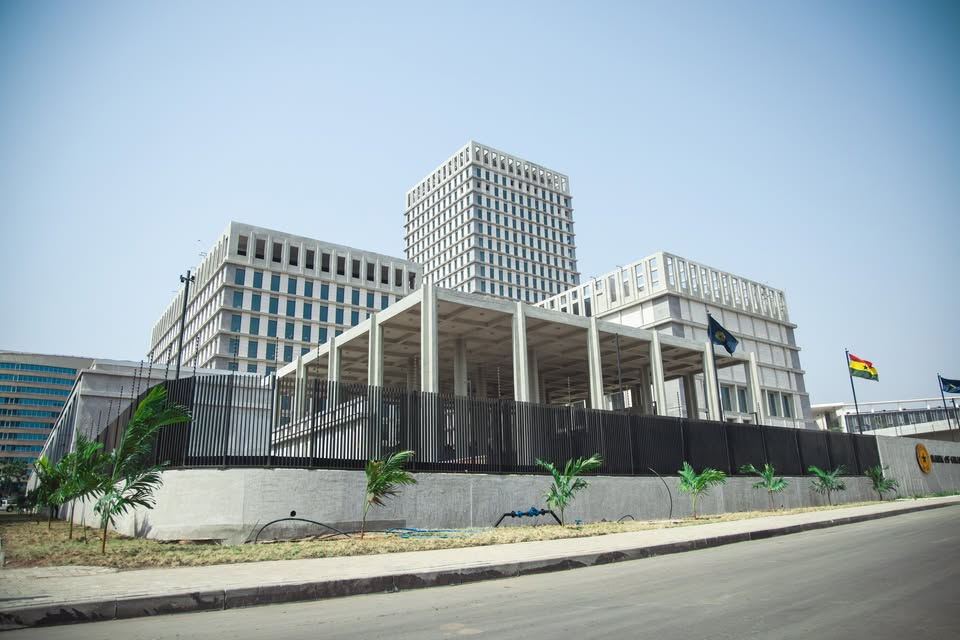
The Bank of Ghana registered more than one hundred virtual asset service providers last week. It also announced the creation of a Virtual Assets Regulatory Office, a dedicated body that will monitor cryptocurrency operations, enforce compliance, and coordinate with other government institutions. Meanwhile, Nigeria's inter-bank settlement system continues expanding its capabilities, strengthening the digital rails that connect banks across West Africa's largest economy.
These developments might seem routine to observers accustomed to regulatory announcements and infrastructure upgrades. But look closer. What is happening in West Africa represents something far more significant than administrative housekeeping.
The Choice That Was Not a Choice
For years, the global conversation about financial technology has been framed as a binary decision. Traditional banking or digital disruption. Regulated institutions or decentralized alternatives. Stability or innovation. Africa has looked at this supposed choice and recognized it for what it is: a false dichotomy invented by systems with too much invested in the status quo.
The dual-track approach emerging across the continent reveals a different logic entirely. Why abandon functional infrastructure when you can enhance it? Why resist regulatory oversight when you can shape it to serve broader goals? Why choose between two imperfect systems when you can build something that incorporates the strengths of both?
This is not incrementalism. This is a structural reimagining.
Africa receives more than one hundred billion dollars ($100B) in remittances annually. Workers in Accra send money home to their families in rural Ghana. Professionals in Lagos support relatives across Nigeria's thirty-six states. Diaspora communities in London, New York, and Dubai maintain financial connections to the continent.
The cost of these transfers is unconscionable. Traditional channels extract fees that would be considered extortionate in developed markets. Settlement takes days when it should take minutes. Families lose significant percentages of already modest sums to intermediaries whose value proposition has not fundamentally changed in decades.
Now consider what regulated digital asset channels could mean for these transactions. Not the speculative promise of cryptocurrency evangelists, but the practical reality of efficient cross-border value transfer operating under clear legal frameworks. The Bank of Ghana is not gambling on an unproven technology. It is creating the regulatory environment for a system that already works, but has operated in legal grey zones that have prevented mainstream adoption.
Fifty-seven per cent of sub-Saharan Africans remain unbanked. This is the statistic that development institutions cite when justifying financial inclusion initiatives. But perhaps the question has been framed incorrectly all along. These individuals are not waiting for traditional banks to reach them. They are waiting for systems designed for the reality of their lives rather than the convenience of incumbent institutions.
The Continental Context Changes Everything
The African Continental Free Trade Area is not a distant aspiration. It is an operational policy that requires functional infrastructure to realize its potential. You cannot build the world's largest free trade zone by population without seamless mechanisms for moving value across borders.
When Ghana and Nigeria, the economic anchors of West Africa, simultaneously advance their payment infrastructure along complementary tracks, they establish patterns that other nations can follow. This is not coordination through formal treaties or multilateral negotiations. This is leadership through demonstration.
The establishment of Ghana's Virtual Assets Regulatory Office sends a clear signal to institutional capital. African markets are developing governance frameworks that are sophisticated enough to protect investors while flexible to accommodate innovation. This matters enormously for a continent that has historically struggled to attract long-term infrastructure investment at scale.
Nigeria's continued investment in inter-bank settlement systems provides the stable foundation upon which more experimental financial technologies can operate. When digital asset transactions need to interface with traditional banking, or when cryptocurrency platforms require fiat currency on-ramps, these systems become essential connective tissue.

The Obstacles Are Real, but So Is the Momentum
Nothing about this transition will be simple. Infrastructure gaps persist across the continent. Internet penetration remains uneven. Electricity supply is unreliable in many regions. Capital controls in numerous countries create friction for cross-border transactions. Regulatory approaches vary significantly between nations, potentially fragmenting rather than unifying African financial markets.
These are not hypothetical concerns. They are concrete challenges that will require sustained effort, significant investment, and genuine cooperation between governments, private sector actors, and international partners.
However, what the sceptic consistently misses is that Africa has spent decades working around inadequate infrastructure. The continent leapfrogged fixed-line telecommunications and built mobile networks that now reach remote villages. It developed mobile money systems that process more transactions than many Western payment networks. It created informal value transfer mechanisms that operate efficiently despite operating outside formal financial systems.
The question is not whether Africa can overcome infrastructure constraints. The continent has already demonstrated that capacity repeatedly. The question is whether the rest of the world will recognize what is being built before it becomes the global standard.
What This Means Beyond Africa
Payment infrastructure may seem like technical minutiae, the domain of central bankers and fintech entrepreneurs rather than the stuff of geopolitical consequence. But consider what functional, efficient, cross-border payment systems actually enable.
They reduce dependence on dollar-denominated correspondent banking, which has given Western financial institutions and governments enormous influence over global commerce. They create alternatives to SWIFT and similar systems that have been weaponized through sanctions and exclusions. They establish African institutions as essential nodes in global financial networks rather than peripheral participants dependent on external infrastructure.
This is not anti-Western positioning. This is Africa building the capabilities that any serious economic bloc requires to operate with genuine sovereignty. The fact that this threatens certain vested interests does not make it aggressive. It makes it necessary.
The establishment of robust payment infrastructure also addresses one of the most persistent criticisms levelled at African economies: that fragmentation prevents the continent from realizing its collective potential. When individual nations can transact efficiently with neighbours, when regulatory frameworks create predictability across borders, when businesses can operate at a continental scale without confronting forty-plus different payment systems, the economic possibilities expand dramatically.

The Frontier Demands Bold Action
There is a particular variety of caution that masquerades as prudence while actually serving the interests of entrenched power. It counsels patience and warns against moving too quickly. It suggests that new approaches should be adopted only after they have been thoroughly tested elsewhere, which conveniently ensures that those who move first will always maintain their advantage.
Africa has spent too long being counselled toward caution. The continent has been told to wait for the right conditions, to learn from developed markets, and to avoid the mistakes that others have made. Meanwhile, those same advisors have extracted resources, imposed structural adjustment programs, and maintained financial systems that systematically disadvantage African economies.
The developments in Ghana and Nigeria represent a different approach. They reflect a willingness to experiment with institutional forms that may not have perfect precedents. They demonstrate confidence that African regulators and financial institutions can develop solutions appropriate to African contexts rather than simply importing frameworks designed for different circumstances.
This is not recklessness. The Bank of Ghana is not abandoning oversight. Nigeria is not dismantling its banking system. Both nations are building new capabilities alongside existing infrastructure, creating optionality and resilience rather than replacing one fragile system with another.
But it is boldness. And boldness is precisely what frontier development requires.
The World Should Be Watching
When historians examine the early twenty-first century, they will note the period when global economic power began shifting in ways that previous generations would have considered impossible. China's rise is well-documented. India's trajectory is increasingly clear. However, Africa's emergence is being treated as speculative, a possibility rather than a probability.
The payment infrastructure being built across the continent will not, by itself, determine Africa's economic future. But it is the kind of foundational capability upon which everything else depends. You cannot have sophisticated capital markets without efficient settlement systems. You cannot have continental trade without mechanisms for cross-border payments. Financial inclusion cannot be achieved without infrastructure that reaches beyond traditional banking networks.
What Ghana and Nigeria are demonstrating is that African nations can lead in developing this infrastructure rather than waiting for external actors to provide it. They can set regulatory standards rather than adopting frameworks designed elsewhere. They can create systems that serve African needs rather than adapting foreign models that may not fit local realities.
The question for the rest of the world is whether it will engage with this transformation as it unfolds, or wait until African payment systems are so deeply embedded that engagement must happen on African terms.
That choice will determine far more than the future of financial technology. It will help determine the shape of the global economic order for the remainder of this century.
Africa is currently building the infrastructure for that future. The bold moves being made in Accra and Lagos are just the beginning.