Africa's AI Economy: Data, Infrastructure, and the Enterprise Strategy Will Determine Who Controls the Continent's Next Decade of Productivity
Less than 30% of SMEs across the continent maintain digital financial records, not because the information does not exist, but because it remains scattered, unstructured, and largely invisible to machines.
Less than 30% of SMEs across the continent maintain digital financial records, not because the information does not exist, but because it remains scattered, unstructured, and largely invisible to machines. At the same time, Africa is home to the fastest-growing mobile internet population in the world, yet many businesses still record customer interactions on paper, a contradiction that defines the continent’s current technological moment.
The Data Organisation Problem: Africa's AI Constraint Is Not What Most People Think
The conversation about AI in Africa tends to default quickly to infrastructure, the cost of computers, the unreliability of power, and the absence of high-speed connectivity in rural markets. These are real constraints. They are not, however, the primary one. The more fundamental barrier, identified consistently by practitioners deploying AI at enterprise scale across the continent, is far more structural: African organisations have not built the data cultures required to make AI work.
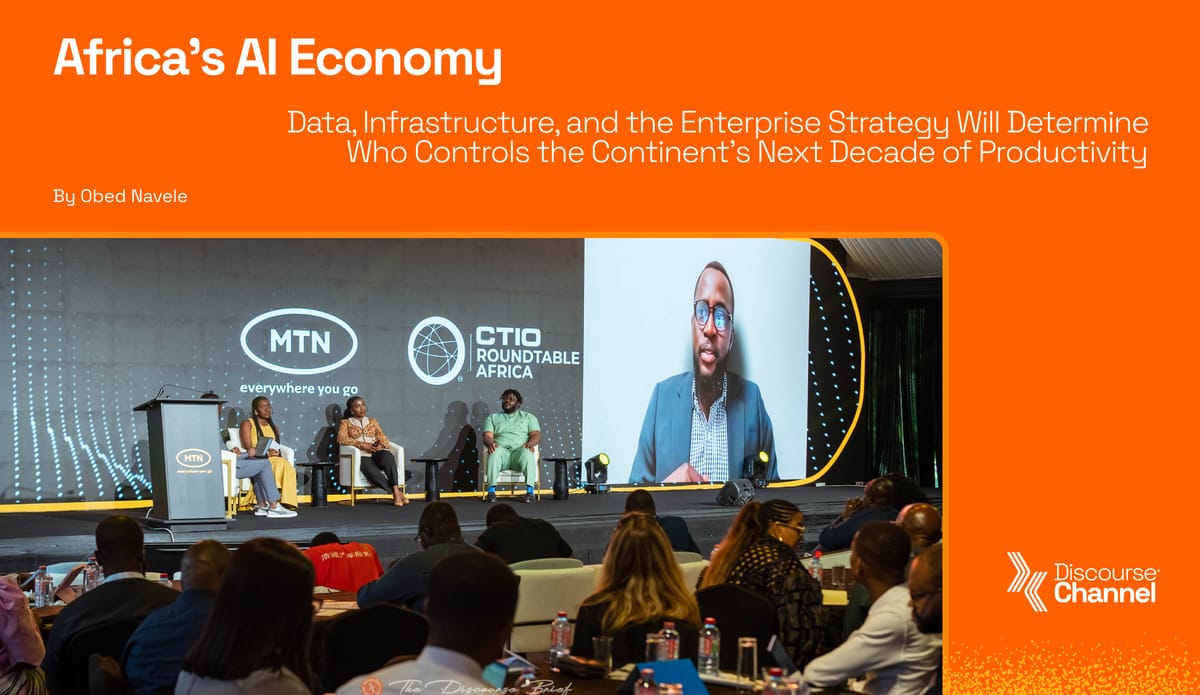
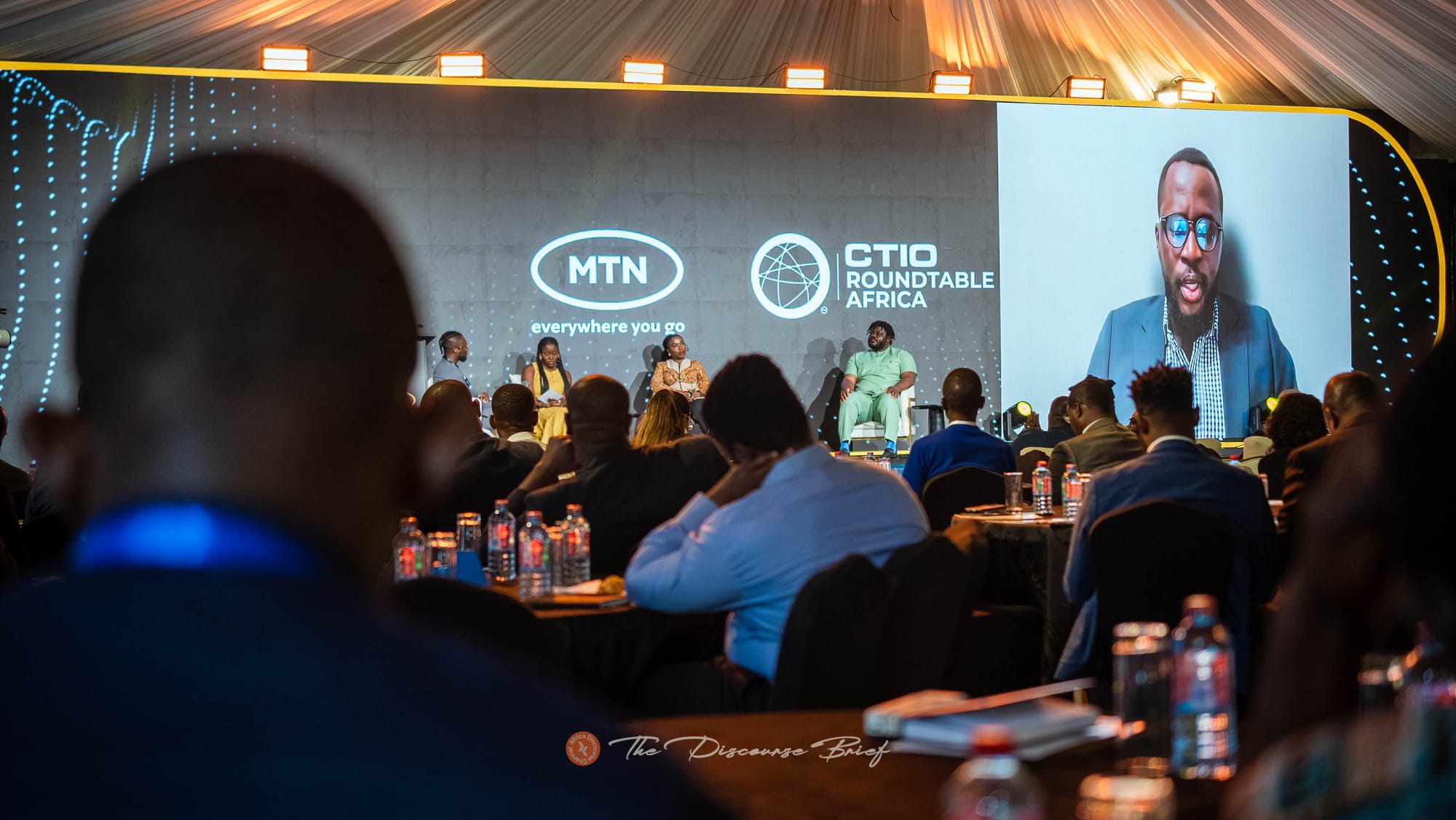
Afia Gyamera, Co-Founder and CEO of 40 Analytics, put it plainly at the MTN Business CTIO Roundtable Africa 2026 in Accra: organisations across the continent are still recording customer information inconsistently, operating across disconnected spreadsheets, and in many cases maintaining records on paper. The consequence is not just inefficiency, it is that AI platforms have no meaningful signal to learn from. You cannot build a credit-scoring model on unstructured anecdotes. You cannot train a demand forecasting system on inventory estimates written in a ledger. The data exists; the organisation of it does not.
"Africa does not have a data scarcity problem. We have a problem organising our data. Many businesses still use pen and paper, record customer information inconsistently, and fail to structure their data leaving AI platforms with nothing meaningful to feed on." - AFIA GYAMERA

This distinction matters enormously for how capital gets allocated. An investor who frames African AI as an infrastructure story will fund data centres and connectivity. An investor who understands it as an organisational readiness story will fund the data professionals, the CRM implementations, the governance frameworks, and the change management processes that make infrastructure useful. Both are necessary. But the second has been systematically underfunded and it is where the gap between AI pilot and AI production consistently opens.
The World Bank estimates that fewer than 30% of African SMEs maintain digital financial records. The AfDB's Digital Infrastructure for Africa strategy has committed $25 billion through 2030 to address connectivity and compute gaps. Neither figure captures what is actually missing at the level of the enterprise: the internal discipline to treat data as a strategic asset rather than an administrative by-product.
From Pilot to Production: Why the Enterprise Adoption Gap Is an Architecture Problem, Not a Technology One
Across financial services, healthcare, and agriculture the three sectors where African AI deployment is most advanced, the pattern repeats with frustrating consistency. An organisation runs a proof-of-concept. The results are promising. The pilot ends. The system never graduates to enterprise-wide deployment. Six months later, the conversation restarts with a different vendor and the same structural obstacles.
Stanbic Bank's approach, outlined by their representative Estelle at the CTIO Roundtable, offers a useful diagnostic. The bank operates a deliberate hybrid model: buying base platforms, Microsoft Azure, in their case for built-in security and compliance architecture; building proprietary use cases on top using institutional knowledge specific to their operating context; and partnering with specialists like minoHealth AI Labs to accelerate deployment in domains requiring deep expertise. Critically, they never bolt AI directly onto core systems. Every implementation sits behind middleware and APIs, so that if a model behaves unexpectedly, it can be detached without systemic disruption.
This architecture-first thinking is not common. Most African enterprises approaching AI do so tool-first — selecting a platform before defining the business decision the platform is meant to inform. Gyamera's advice for a mid-sized organisation with a limited budget and a three-month horizon is instructive in its simplicity: define the specific problem first, invest the smallest viable portion in a tool to analyse historical customer data, and direct the majority of available capital into an AI-powered CRM that centralises communications and surfaces profitability intelligence in real time. The point is not the tool. The point is the decision the tool is meant to make better.
For enterprise leaders, the implication is clear: AI adoption that begins with the technology rather than the business question will produce pilots, not production. The organisations that will achieve compounding returns from AI are those that have done the harder, less visible work of building data cultures where leadership uses data to justify decisions and creates structural incentives for their teams to do the same.
Healthcare and Finance as the Proving Ground: What Production-Grade African AI Actually Looks Like
The gap between AI aspiration and AI deployment is real. But it is not universal. In two sectors, healthcare diagnostics and financial services. African enterprises have begun to cross the production threshold, and the cases are instructive precisely because they did not replicate models built elsewhere. They were built for African constraints, from the ground up.
Darlington Akogo, Founder and CEO of minoHealth AI Labs, has spent a decade building what is now deployed across clinical facilities in Koforidua and Takoradi, AI systems that assist doctors and radiographers in interpreting X-rays, mammograms, and ultrasounds, support nurses in retrieving patient records, and help manage pharmacy inventory. The deployment challenge in rural Ghana is not primarily a technology one: nationwide telecom coverage is high enough to support clinical data transmission, and World Bank-funded fibre optic infrastructure is being extended to hundreds of rural health facilities. The more difficult engineering problem has been working with telecom providers to whitelist clinical AI traffic, ensuring that diagnostic data receives bandwidth priority over general internet usage when network capacity is constrained.
In financial services, the lever is credit. Stanbic Bank's deployment connects non-traditional data — mobile money behaviour, transaction velocity, merchant payment patterns with conventional bank data to produce credit scores that reflect actual financial behaviour rather than the narrow formal record that has historically excluded the majority of African adults from bank products. The consequence is not just commercial for the bank; it is structural for the borrower. A person who has managed a mobile money account responsibly for three years now has a financial identity that converts into access.
These are not pilots. They are production systems, operating at scale, generating the kind of domain-specific outcomes that generic Western AI tools trained on data from different economic contexts cannot replicate. That specificity is the argument for why African AI must be built in Africa: not out of protectionism, but because the problems are different, the data is different, and the solutions that work will necessarily look different.
The Capital Asymmetry: Why African AI Founders Are Playing by Rules Designed Against Them
The most structurally unfair element of the African AI ecosystem is not the infrastructure deficit or the talent gap. It is the capital conditions under which African founders are expected to build. Akogo's framing at the CTIO Roundtable was precise: African founders are required to demonstrate heavy revenue traction before accessing meaningful investment, while their counterparts in San Francisco or London routinely raise millions at the idea stage. The risk premium applied to African AI ventures is not proportional to actual risk. It is a function of unfamiliarity, distance, and the absence of institutional capital specifically mandated to back local solutions.
The consequence is a systematic underinvestment in exactly the layer of the AI stack that produces the highest African-specific returns: applied research, domain-specific model development, and the patient capital required to move from clinical trial to clinical deployment, or from credit pilot to bank-wide rollout. minoHealth AI Labs spent ten years in development before achieving the deployment scale it operates at today. That timeline is not unusual for deep-tech healthcare AI anywhere in the world. But it is almost impossible to sustain in an environment where African founders face investor expectations calibrated to consumer fintech growth curves.
The structural response requires two parallel tracks. The first is dedicated national AI investment vehicles — sovereign-backed funds with mandates to back pre-revenue AI ventures in priority sectors, insulated from the short-term return pressures that make institutional investors cautious about deep-tech timelines. Rwanda's investment in KIFC as a continental capital facilitation platform is the closest existing model. The second is the internationalisation of African AI revenue-building products that serve not just African markets but the broader Global South, where the same constraints around language diversity, informal economic structures, and infrastructure variability make African AI solutions directly applicable. An AI system that works for a rural Ghanaian health worker can, with calibration, work for a rural Indonesian one.
Landlords, Not Renters: The Ecosystem Architecture Required for African AI Leadership
Mobile money succeeded in Africa not because it was a better version of what existed elsewhere, but because it was designed specifically for a constraint that existed here: the absence of physical banking infrastructure. M-Pesa did not try to replicate a US checking account on a feature phone. It built something new for a different operating reality. The lesson for African AI is identical and it is the lens through which Foster Akugri, Managing Director of APEX Advisory, framed the strategic imperative at the CTIO Roundtable.
Africa must shift from being a renter of foreign AI architecture to a landlord of its own. That transition requires a specific ecosystem configuration, one that no single actor can produce alone. Startups provide velocity: the speed of iteration, the willingness to solve problems that large institutions consider too small or too risky, the cultural proximity to the markets they serve. Corporations provide scale: the distribution networks, the regulatory relationships, the balance sheets required to take a validated AI product from one hospital to a hundred, or from one bank branch to a national rollout. Academia provides the applied research layer that converts students' theses and institutional knowledge into market-ready intellectual property, a layer that is consistently underdeveloped across African universities, where research outputs are archived rather than commercialised.
The government sits at the centre of this configuration, not as an operator but as an architect. The policy decisions being made now on data sovereignty, AI governance frameworks, compute investment incentives, and spectrum allocation will determine whether the infrastructure being built over the next decade serves African economic priorities or becomes another layer of foreign-owned digital infrastructure that extracts value from African users while housing its returns elsewhere. The AU's Data Policy Framework and AfCFTA's digital trade protocols are the instruments available. The countries operationalising them fastest are creating asymmetric first-mover advantages in attracting the AI-first enterprise and patient capital the continent needs.
The question is not whether Africa will have an AI economy. It revolves around whether the data centres are African-owned, the models are African-trained, the governance is African-designed, and the talent is African-retained. And if we do not have the honest answers to any of those yet, then the follow-up question is, who is building the answer, and whether the capital, policy, and institutional support they need is reaching them before the architectural decisions are made elsewhere.