Africa's $250 Billion China Problem: How 54 Nations Are Losing a Trade War They Haven't Started
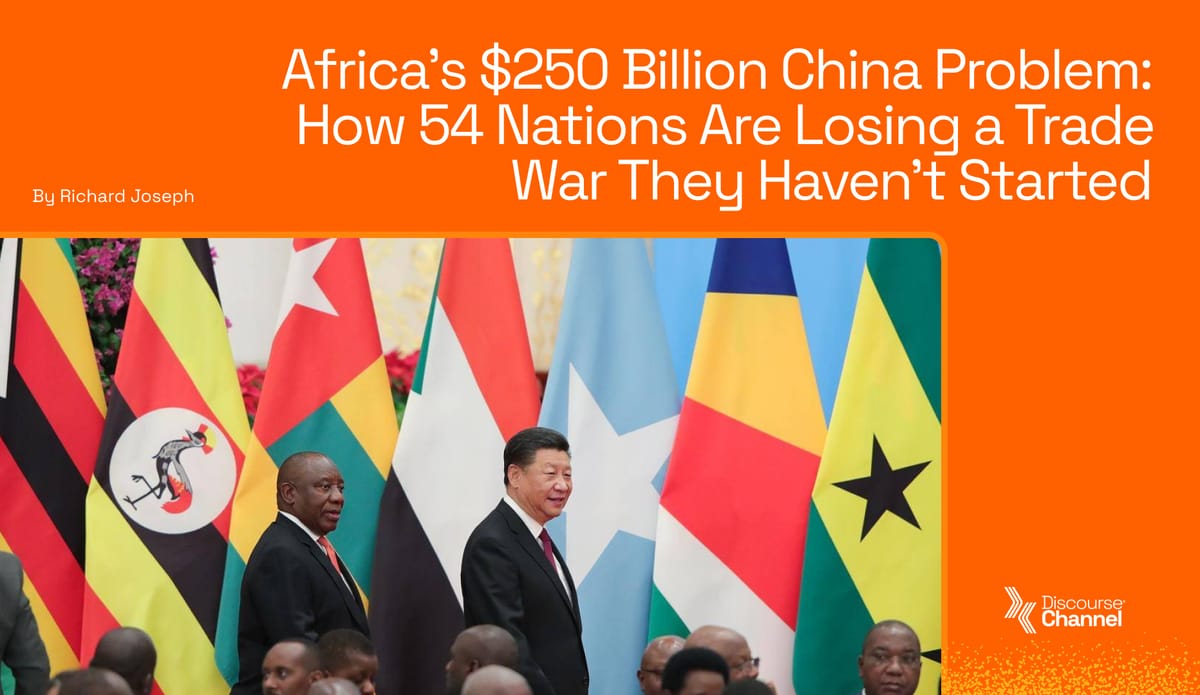
As a landmark zero-tariff deadline approaches, African states are negotiating individually against the world's largest market. Without a unified continental strategy, the most lucrative trade opportunity of this generation risks becoming another triumph of rhetoric over results.

By Africa Discourse Channel Trade & Economics Correspondent | Analysis | February 2026
Estimated reading time: 12 minutes
THE GROUND TRUTH: What We Know
By May 2026, several African nations face the expiry of an Early Harvest Agreement with China — a stepping-stone arrangement meant to foreshadow a comprehensive, five-year zero-tariff trade framework. Analysts and trade negotiators place the potential value of the Africa-China trade corridor at over $250 billion, making it one of the most consequential commercial relationships on the continent's horizon.
Yet the architecture of how African states are approaching this moment is generating alarm among trade strategists. Despite repeated calls for bloc-level negotiation under the African Continental Free Trade Area (AfCFTA), multiple countries have reverted to pursuing individual bilateral agreements with Beijing.
"African ministers had a conversation in terms of negotiating as bloc, but then, we've realised countries are having individual negotiations... that's my first disappointment because we have gone back to the traditional thing of behaving individually instead of as a collective." - DOD
The scale asymmetry described in current trade dialogues is not new information. Chinese tier-one cities like Chongqing and Shanghai each house populations of 28 to 32 million people — larger than the total population of most individual African negotiating partners. Many African states are, in purely economic terms, smaller than a single Chinese tier-three province, let alone a major metropolitan hub.

On the trade composition side, Africa's export profile to China remains heavily skewed toward raw commodities: crude oil, copper, cocoa beans, and unprocessed agricultural products. Value-added manufacturing — the wealth-creating layer of any industrial economy — remains a marginal share of what Africa actually ships east.
China, meanwhile, has a meticulously documented and long-executed "Africa Plan" — a coordinated state-backed strategy spanning infrastructure financing, diplomatic engagement, trade policy, and consumer market development. No equivalent continental-level "China Plan" exists on the African side.
THE ADC PERSPECTIVE
Our View: Three Structural Failures Africa Must Confront
1. The Negotiation Architecture Is Broken
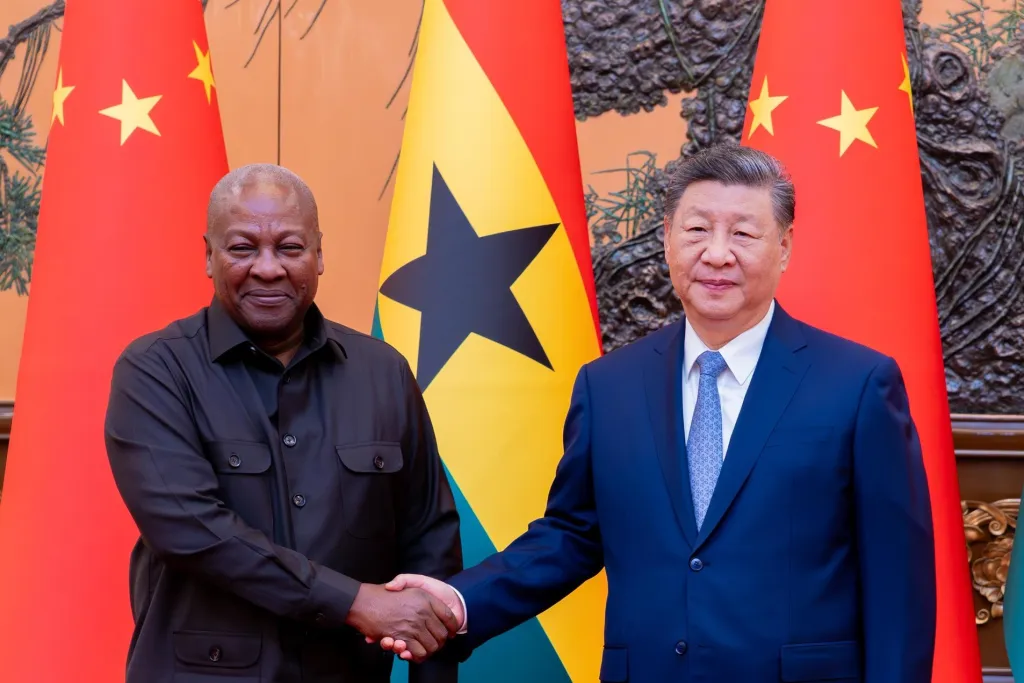
The decision by individual African states to negotiate bilaterally with China is not just a diplomatic inconvenience — it is a structural guarantee of unfavourable terms. When Malawi, Togo, or even Ghana enters a negotiating room in Beijing as a standalone actor, they are not meeting a peer. They are meeting a state whose single municipalities outmass them economically.
The AfCFTA's Rules of Origin framework offers a potential solution, but only if African states harmonise their tariff positions before approaching Beijing — not after. A bloc with a combined GDP approaching $3 trillion and a consumer base of 1.4 billion people commands a very different conversation than 54 sovereign states filing separately for market access.
What we find troubling is that the awareness of this problem exists at the highest levels. Ministers have spoken openly about the need for collective negotiation. The reversion to bilateral dealings is not ignorance — it is a failure of political will and coordination infrastructure.
2. The Quality Narrative Has Been Self-Sabotaged
For decades, a significant share of African import demand was concentrated on the lowest-cost tier of Chinese manufacturing. This preference — understandable given income constraints — has had an unintended consequence: it trained Chinese suppliers, distributors, and eventually consumers to associate African commercial relationships with cheapness, not quality.

As China's middle class has expanded and become health-conscious and quality-driven, African exporters now face a perception problem they helped create. Ghanaian shea butter, Ethiopian specialty coffee, and Tanzanian cocoa possess genuine premium attributes. But without internationally recognised quality certification and harmonised standards, these products enter the Chinese market as anonymous commodities, not premium brands.
The Ghana Standards Authority and equivalent bodies across the continent have the institutional capacity to change this — but certification processes must be aligned with China's specific "green line" import requirements, not just domestic standards. This is as much a branding strategy as a regulatory one.
3. The Logistics Imagination Is Stuck at the Coast
The default mental model for Africa-China trade involves a container, a coastal port, and a 40-day sea journey. For perishable, high-value goods — specifically coffees, artisanal chocolates, premium dried fruits — this model is economically destructive. It erodes freshness, extends cash flow cycles, and makes African exporters uncompetitive against Southeast Asian suppliers with faster logistics chains.
The inland Chinese market — particularly the Southwest cluster encompassing Chengdu, Chongqing, and Changsha — represents over 120 million consumers with strong purchasing power and, crucially, lower saturation from African product competition than the eastern seaboard. Direct flight corridors linking Addis Ababa, Nairobi, and Accra to these inland hubs exist. The Hainan Free Trade Port, which launched in December 2025 with zero-tariff policies and visa-free access provisions, offers a staging and distribution entry point that most African exporters have not yet mapped into their market strategy.
The logistical imagination needs to catch up with the commercial opportunity.
"The rise of Asia is an irreversible geopolitical reality. It was achieved by people who were determined to make their future different from their past." - Yaw Nsarkoh
THE COUNTER-CURRENT
Counterpoints Worth Taking Seriously
On bloc negotiation: Critics of the "negotiate as Africa" position point out, not unreasonably, that AfCFTA itself remains an aspirational framework with significant implementation gaps. Asking states with vastly different trade profiles — an oil-exporting Gulf of Guinea economy versus a landlocked agricultural exporter versus a services-oriented East African hub — to present a unified tariff position may be strategically coherent in theory but diplomatically unworkable in practice. States with greater bilateral leverage may genuinely lose value by binding themselves to a lowest-common-denominator collective position.
On quality standards: Some trade practitioners argue that the emphasis on certification and branding, while valid, risks becoming an excuse for delayed market entry. Imperfect products in the market generate revenue and data; perfect products, still waiting for certification, generate neither. The certification-first approach has historically served as a bureaucratic barrier as much as a quality guarantee.
On China's intent: A more sceptical reading of Chinese trade strategy holds that Beijing's interest in African markets is not primarily about African industrialisation. The infrastructure financing, the special economic zones, the trade frameworks — these serve Chinese geopolitical and resource-security objectives. If that is correct, the leverage African states believe they possess may be more limited than the $250 billion headline figure suggests.
These counterpoints do not invalidate the case for strategic seriousness, but they do argue against assuming that structural reform alone will unlock the opportunity. Political economy, geopolitical interests, and implementation capacity all shape outcomes as powerfully as strategy does.
WHAT ELSE MATTERS
Context, Precedent & What to Watch
The EAC Model as Proof of Concept
The East African Community's Mombasa-to-Kigali corridor did not emerge from diplomatic communiqués alone. It was built through sustained, granular political commitment — including, in Rwanda's case, leadership personally engaged in resolving port-level logistics bottlenecks. It represents what "taking trade seriously" looks like when governance moves from rhetoric to implementation. It is the closest Africa has to a replicable model for the kind of coordination that China-facing trade strategy demands.
The Hainan Wildcard
The Hainan Free Trade Port is a genuinely novel entry point that most African trade strategy has not yet incorporated. Operating under autonomous tariff rules separate from mainland China, with 30-to-90-day visa-free access provisions for many nationalities, it functions as a testing ground and distribution staging area. For African agro-processors willing to partner with local Chinese distributors, Hainan offers a lower-friction path to consumer market validation than a direct mainland entry strategy.
The Technology Transfer Precedent
When Western multinationals — Procter & Gamble, Unilever, General Motors — entered China, the Chinese state mandated joint ventures with local partners and state entities, ensuring technology and knowledge transfer as a condition of market access. With AfCFTA theoretically offering a unified market of 1.4 billion consumers as bargaining leverage, African states have a structural argument for demanding similar terms from foreign manufacturers seeking African market access. The 40% local content rule embedded in AfCFTA's framework is the mechanism — but it requires enforcement capacity and political will to activate.
The Cultural Variable No Trade Deal Covers
Business relationships in China operate through Guanxi — a web of personal connections, mutual obligation, and earned trust that functions as the informal infrastructure of commerce. Trade agreements eliminate tariffs; they do not build Guanxi. African businesses that invest in Mandarin-language capacity, social relationship-building, and sustained in-market presence will access partnership opportunities that remain structurally unavailable to those who appear only for signing ceremonies.
SOVEREIGN SOLUTIONS IN ACTION
What African Innovators Are Already Building
The picture is not uniformly bleak. Several initiatives across the continent point toward what a serious Africa-China strategy could look like when operationalised.
Ghana Standards Authority's China Export Programme: Working in collaboration with Chinese food safety regulators, the GSA has begun aligning certification protocols with Chinese green-line import requirements for shea and cocoa products. Early results show measurable improvements in customs clearance rates for compliant exporters.
Ethiopia's Air Freight Corridor: Ethiopian Airlines has developed dedicated cargo routes linking Addis Ababa to Chengdu and Chongqing — turning what was a geographic disadvantage (landlocked, distance from coastal ports) into a logistics advantage for time-sensitive agricultural exports. Fresh-cut flowers and specifically coffee have seen measurable export growth through this corridor.
Rwanda's Special Economic Zone Model: Kigali's SEZ framework has attracted Chinese manufacturing investment on terms that include mandatory skills transfer to Rwandan workers and graduated local content requirements. It is an imperfect but functioning example of the tripartite model — foreign capital, local partner, state terms — applied to African industrialisation.
Hainan Pilot Entry: A small number of West African agro-processing firms have begun using the Hainan Free Trade Port as a distribution staging point, testing product-market fit with Chinese consumers before committing to full mainland market entry infrastructure. The model reduces upfront market-entry risk significantly.
What these examples share is specificity, implementation focus, and a willingness to operate within — rather than complain about — the structural realities of Chinese commercial culture and regulatory architecture. They are not transformative at scale yet. But they are the prototypes of what transformation looks like.
REFLECTIONS
The Question That Remains
The May deadline is a test, not a treaty. It will reveal whether the language of African economic integration translates into the coordination infrastructure that integration actually requires. The $250+ billion figure is not a projection of current trajectory — it is a projection of what becomes possible if African states choose to act with the strategic discipline the opportunity demands.
"AfCFTA has made a lot of difference to people's air miles... but the people who have no drinking water in the rural areas, how has it changed anything? That is our challenge." - YN
The people who need trade policy to work are not in the negotiating rooms. They are in the agricultural cooperatives, the small processing workshops, the informal markets where raw commodities get priced before they leave the continent. For them, the question of whether Africa negotiates as a bloc or a collection of competing individuals is not an abstraction — it is the difference between capturing value and ceding it.
Africa has attended enough summits. The question is whether it is ready to run a strategy.
ADC Editorial Note
This analysis uses the ADC Beacon Format, which separates verified facts from editorial analysis, preserves space for legitimate disagreement, and closes with documented examples of African-led solutions. Sources include direct statements from trade negotiators, publicly available AfCFTA documentation, and Chinese trade port policy announcements. Corrections and community expert responses are welcomed via discoursechannel.com.
Insights from Africa Business Conversation.
© 2026 Africa Discourse Channel. Context Sovereign Journalism.