Africa Sustainable Agricultural Mechanization Meeting in Tanzania
Leaders, policymakers, and innovators recently gathered in Tanzania for the Africa Sustainable Agricultural Mechanization Meeting aiming to tackle ways to increasing agricultural productivity while ensuring environmental sustainability.
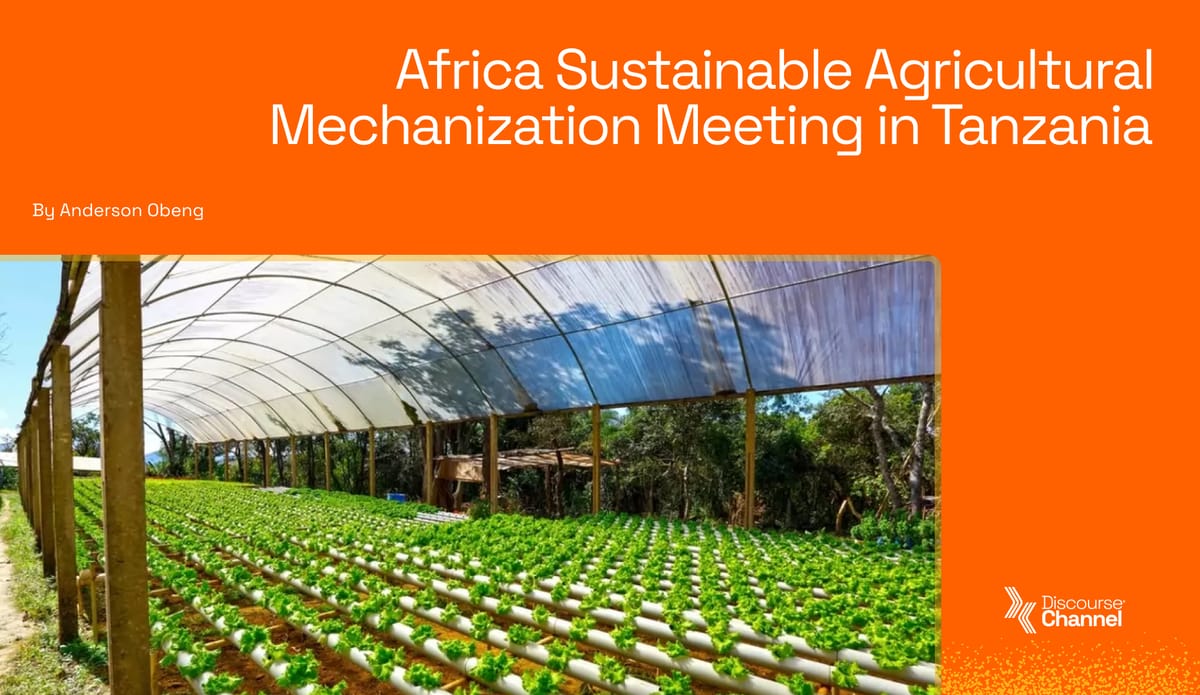
Leaders, policymakers, and innovators recently gathered in Tanzania for the Africa Sustainable Agricultural Mechanization Meeting, aiming to tackle one of the continent’s most pressing challenges: increasing agricultural productivity while ensuring environmental sustainability. The event focused on modernizing farming practices, adopting mechanization technologies, and supporting farmers to produce more efficiently without degrading the land.
Mechanization is no longer just about tractors and ploughs. It’s about integrating smart tools, precision agriculture, and digital platforms to support decision-making on planting, irrigation, and harvesting. For African economies, improving agricultural efficiency directly impacts food security, employment, and industrial growth. A mechanized and tech-enabled agriculture sector can help link farms to markets, reduce post-harvest losses, and provide a pathway for youth and startups to enter the sector.
What we are watching:
- Young entrepreneurs in Ghana are developing solutions like AI-driven soil monitoring, mobile apps for market access, and small-scale mechanization tools. These innovations are reshaping how farming is approached, demonstrating that Africa’s next generation is central to modernizing agriculture.
- Agriculture featured prominently in the recent Africa Prosperity Dialogues, where trade and industrial policy were tied to farming. Delegates explored how increased mechanization can boost productivity, strengthen supply chains, and improve exports. Discussions emphasized that a productive agricultural sector is essential not just for feeding populations, but also for powering regional trade and industrial growth.
Mechanization, youth innovation, and trade integration are converging to create a new agricultural landscape in Africa. For governments, investors, and development partners, the message is clear: supporting modern farming techniques and linking them to markets is essential for sustainable growth. The Tanzania meeting highlighted that progress in African agriculture is no longer just about increasing output but it’s about smart, sustainable, and inclusive growth that can drive food security, employment, and economic transformation.