Africa Is Failing Its Own People; Migration, Borders, and the Collapse of the Pan-African Promise
In recent times, the map of African migration has significantly changed and people moving abroad is no longer just about buying a ticket to London, or New York. These traditional routes are practically restricted, young Africans are now moving along new paths to other powerhouse African countries.
For decades, whenever we talked about Africans travelling abroad, the picture in everyone’s mind was exactly the same. It was a picture of young, desperate people trying to cross the Mediterranean Sea on risky rubber boats, or families standing in long, frustrating queues outside European, American, or Canadian embassies. But When our people finally reach those big Western countries, the reality is often far from the dream.
While global migration discourses often conflate all movement with illegality, research from organizations like the United Nations High Commissioner for Refugees (UNHCR) reveals that the majority of African migration actually occurs legally through visas or intra-continental travel. However, a significant portion of off-continent travelers are forced onto irregular, illegal pathways primarily because they are economically challenged and priced out of prohibitive legal routes. Driven by a desperate search for survival and financial stability, these individuals bypass official channels only to enter a secondary crisis upon arrival. Because they are breaking migration laws, they are forced to live in constant fear of detection and deportation, severely restricting their mobility and cutting off access to proper employment, healthcare, or legal protection. Trapped on the margins of society, they routinely fall through the cracks of the system becoming highly vulnerable to harsh treatments, systemic abuse, severe underpayment, and human trafficking by employers who exploit their undocumented status with impunity.
But here is the highly uncomfortable truth we usually don't talk about; while we are busy pointing fingers at how the West treats African migrants, we are turning around and doing the exact same things, sometimes even worse to fellow African blood, right here on our continent.
In recent times, the map of African migration has significantly changed and people moving abroad is no longer just about buying a ticket to London, Paris, or New York. These traditional routes are practically restricted, young Africans are now moving along entirely new paths. They are migrating to other powerhouse African countries.
And in 2026, a lingering problem has become too significant to ignore anymore. Two things are happening at the same time that, when you put them together, it tells a very important story about where Africa is headed.
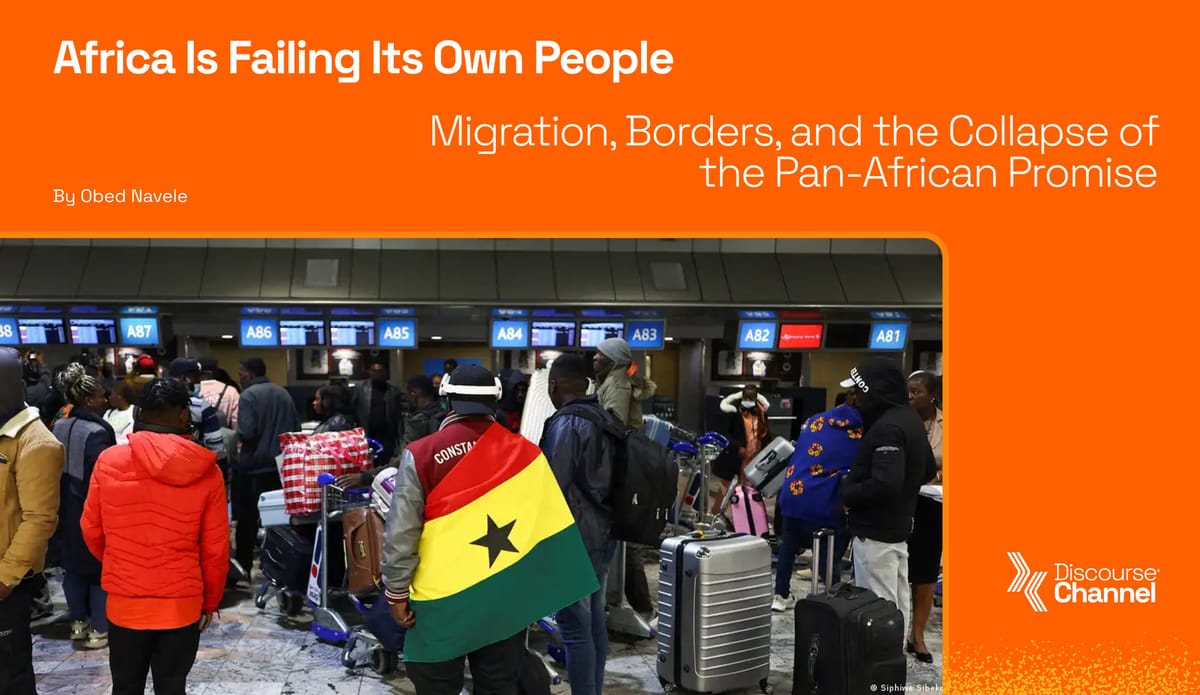
The first is happening in South Africa. In mid-2026, hundreds of Ghanaians and other African nationals packed up and came home, not because they wanted to, but because the people in South Africa became too hostile for them to stay. This is not South Africans versus non-Africans here. These are Africans, Ghanaians, Zimbabweans, Nigerians, Mozambicans being made to feel unwanted, unsafe, and unwelcome in another African country. Some faced direct threats, assaults and violence while others simply could not take the daily tension anymore, and so decided to move back to their home countries.
The second is happening far away from Africa in places like Cambodia, Myanmar, and the Philippines in Southeast Asia. Young Africans, Ghanaians, Kenyans, Cameroonians, Ugandans all have been traveling there after being promised good jobs in technology, digital marketing, and finance. However, what many of them found instead were criminal organizations that trapped them and forced them to work in cyber-scam operations. These are educated young people, with degrees and valuable skills but unfortunately, have ended up there because they could not find decent work at home, and someone offered them what looked like a legitimate opportunity.
These two situations might seem unconnected. But they are actually pointing to the same deep problem.
Why are Africans Leaving and Refusing to Come Back?
We must ask the fundamental question: Why are young, brilliant Africans leaving their homelands in droves, with many promising themselves they will never return?
The answer is simple, and it isn’t because they do not love their countries. It is because many young Africans feel like their homelands have preemptively given up on them. When you spend years studying hard, and you graduate from a top university, you expect to build a life. But instead, hundreds of thousands of graduates sit at home for three, four, or five years without a single job interview. When you couple that total lack of employment with inflation, where the cost of food, electricity, and rent doubles every few months, desperation sets in. Our political systems often feel heavily rigged, favoring the wealthy and well-connected while the youth are left to scramble for crumbs.
For a young person, staying at home starts to feel like watching your life slip away. Then migration becomes an urgent, survivalist necessity. They travel because they need to rescue themselves from poverty. Because the struggle at home is so deeply traumatizing, many choose to endure whatever harsh conditions they find abroad rather than come back to face the daily humiliation of being broke and helpless in their own countries.
The Cost to Africa’s Economy and the Local Micro Economies
When these migration crashes happen , the negative economic impact travels fast, hitting ordinary people who have never even stepped inside an airport.
First, consider the Remittance Squeeze. The money that Africans abroad send back home every single week, keeps millions of households alive In 2024, total remittance inflows to Africa reached a historic high of approximately $95 billion to $100 billion. . This figure represents a significant portion of the continent's GDP and serves as a critical lifeline for household consumption, healthcare, and education. It could be used to pay for meals, medical bills , school fees, practically their source of income. In fact, these small, regular transfers of money do far more to support the average African lives, than most foreign aid combined.
Second, this rising border hostility is quietly choking Informal Cross-Border Trade (ICBT). Across Africa, millions of courageous market women and small-scale entrepreneurs make a living by travelling to neighboring countries to buy fabrics, grains, cosmetic products, spare parts to trade. These traders supply to the local retail markets. However, because governments are tightening immigration controls out of fear and protection, crossing borders has become a risk many are not willing to take . A business trip that used to take two smooth days now takes a week of dealing with immigration officials, arbitrary fines, and xenophobic threats. When it becomes too difficult or dangerous for these traders to move, the supply chains break. Trickling the effects downstream to the consumer, the prices of goods shoot up, with the consumer paying the ultimate price for these political failures.
The Digital Trap: The Dangerous New Frontier in Southeast Asia
Because getting into Europe has become almost impossible and traditional African destinations are turning hostile, desperate African youth are looking for any alternative route out. This extreme desperation has opened up a dangerous, highly sophisticated trap in Southeast Asian countries, most notably the Kingdom of Cambodia.
International criminal syndicates, often run by global mafia networks, have realized that Africa has an abundance of smart, highly educated, computer-literate youth who speak excellent English but are desperate for work. These syndicates advertise polished, fake job ads on social media, promising lucrative customer service, digital marketing, or IT support jobs in glamorous, high-paying offices overseas.
When these young graduates get to their destinations, a dream of escaping poverty becomes a living nightmare. Their passports and phone are immediately confiscated, and they are held inside heavily fortified, isolated concrete compounds, heavily guarded by armed men. Under the constant threat of physical violence, starvation, and torture, these young Africans are forced to work 18-hour shifts doing one thing: running online scam accounts to trick unsuspecting victims around the world out of millions of dollars. If they refuse to scam, they are beaten or sold to other compounds, which can evidently be described as modern day slaves.
This is perhaps the greatest tragedy of the modern African migration crisis. The very intellectual capital, tech-enabled, and youthful energy that should be building Africa’s digital banking, agriculture, and infrastructure are being locked up and forced into cybercrime in another continent, simply because their home governments failed to provide an environment where they could earn a honest living.
Moving Forward: Bridging the Gap Between Words and Reality
In efforts to improve the economic standing of Africa, African leaders made a trade agreement plan, the African Continental Free Trade Area — AfCFTA. The main objective is to turn Africa into one big market where goods and services can move freely between countries, abundant job opportunities, growing economies, and to make Africa a formidable trade hub. This is an excellent idea, many smart people worked hard on it and their efforts are evident in the policies and proposed infrastructures in the plan. But there is a contradiction in their trade policies versus their actions, that sits right in the middle of this vision: How do you build a single African market if you will not let African people move freely within Africa? It is simply impossible.
A trade area that allows goods to move but restricts people is just a shipping arrangement. Real economic integration requires people, professionals, entrepreneurs, innovators, traders to be able to move across borders, set up businesses, offer services, and build connections. But right now, across many parts of Africa, the movement of African people is becoming difficult. With more restrictions, more xenophobia, and more bureaucracy.
African leaders are talking about free trade agreements with one hand and building walls against their own people with the other. And the African is caught in the middle of that contradiction.
Our governments must urgently wake up to the reality that migration management cannot be solved permanently by emergency evacuation flights or angry diplomatic letters, these are temporary solutions. The only real, lasting way to protect Africans from being exploited is to fix our own house. We must build local economies that work for everyone, not just the elite.
Until we create an Africa where young graduates have access to an abundance of job opportunities, affordable standards of living, and a clear, bright future for their families, our finest minds will keep running towards danger and the painful cycle of broken diaspora dreams will continue to persist and worsen.