Africa Advances Forest-Positive Agriculture Agenda
Over 60 participants from government ministries, civil society, and the private sector representing more than ten African nations have adopted a Priority Action Roadmap for forest-positive agriculture at a regional dialogue.
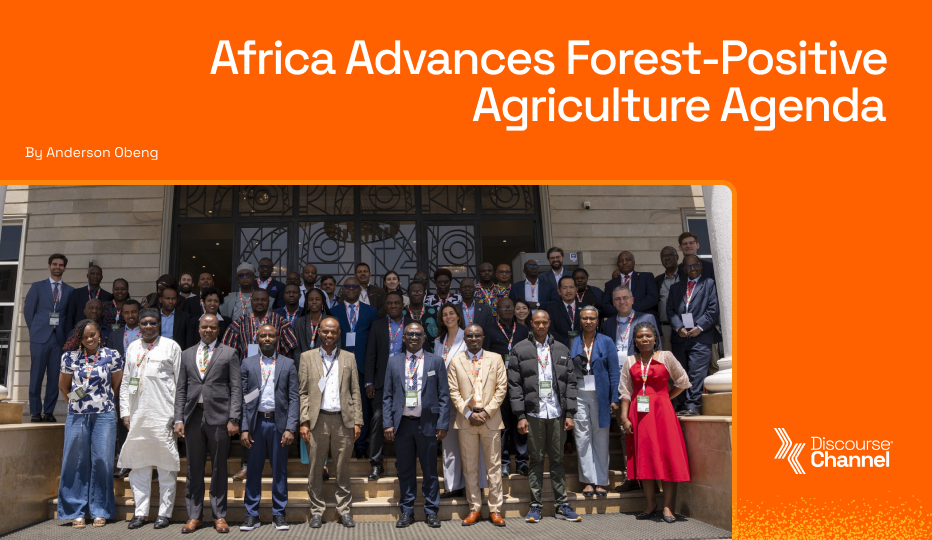
Over 60 participants from government ministries, civil society, and the private sector representing more than ten African nations have adopted a Priority Action Roadmap for forest-positive agriculture at a regional dialogue co-organized by the Food and Agriculture Organization and the Africa Sustainable Commodities Initiative.
The meeting focused on a central challenge facing the continent: how to decouple agricultural production from deforestation while boosting productivity. As demand for food continues to rise, African countries are increasingly being pushed to expand agricultural output without further degrading forests and ecosystems that are critical to long-term sustainability.
The roadmap reflects a growing consensus that agricultural growth and environmental protection must be pursued together rather than treated as competing priorities. By promoting forest-positive production systems, policymakers and stakeholders aim to align farming practices with conservation goals, ensuring that land use decisions support both food security and ecological resilience.
What we are watching:
- At the March dialogue, Kenya’s Principal Secretary for Forestry, Mugambi Gitonga, emphasized that the discussions come at a critical moment. He noted that Africa must increase food production while safeguarding forests and biodiversity, calling for practical, locally driven solutions that can deliver both outcomes for future generations.
- Mitiku Ayele highlighted that decoupling agriculture from deforestation should not be seen as limiting development, but rather as an opportunity to create synergies between agricultural expansion and environmental protection.
Africa’s push toward forest-positive agriculture reflects a broader shift in how development challenges are being framed. Rather than choosing between food production and environmental protection, policymakers are increasingly focused on integrating the two.
Forests are not only ecological assets, they are also critical to agricultural systems, supporting soil health, water cycles, and climate stability. Without them, long-term productivity becomes increasingly difficult to sustain.
At the same time, population growth and food demand mean that agricultural expansion remains unavoidable. The challenge, therefore, is not whether to grow more food, but how to do so without undermining the natural systems that make production possible.
The adoption of a regional roadmap signals movement toward more coordinated, policy-driven solutions, where governments, development partners, and private sector actors align around shared goals. If implemented effectively, these approaches could help Africa build a more resilient agricultural future, one that supports both economic growth and environmental sustainability.