Affordable 4G Smartphones Push Targets Africa’s Digital Inclusion Gap
The GSMA has highlighted several African markets including Democratic Republic of the Congo, Ethiopia, Nigeria, Rwanda, Tanzania, and Uganda as priority markets in efforts to expand access to affordable 4G smartphones and reduce the continent’s digital usage gap.
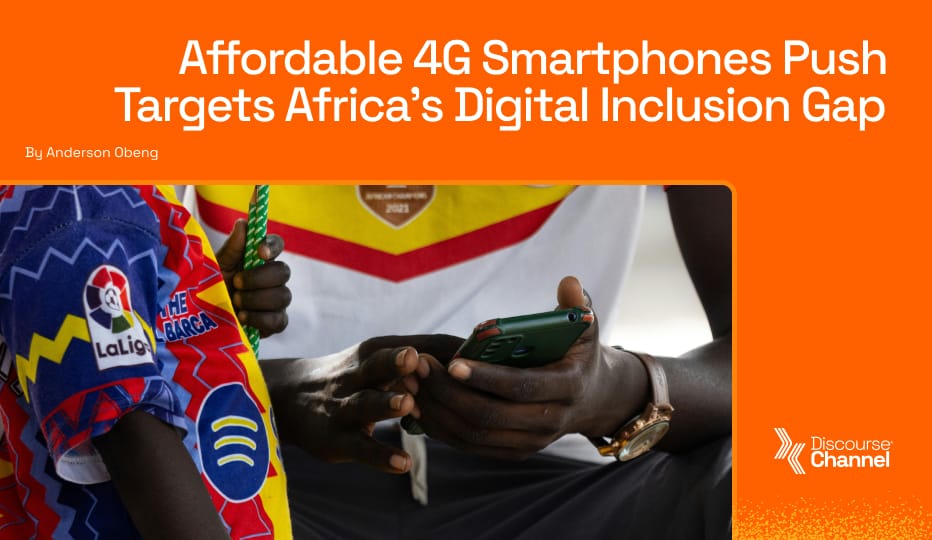
The GSMA has highlighted several African markets including Democratic Republic of the Congo, Ethiopia, Nigeria, Rwanda, Tanzania, and Uganda as priority markets in efforts to expand access to affordable 4G smartphones and reduce the continent’s digital usage gap.
Despite significant progress in mobile network coverage, a large share of the population across these countries remains offline, primarily due to the cost of internet-enabled devices rather than lack of connectivity. Industry research consistently identifies device affordability as one of the most critical barriers to mobile internet adoption in Africa.
To address this, mobile ecosystem players including operators, manufacturers, and development partners are increasingly exploring financing models, bundled data-device offers, and localized distribution strategies aimed at lowering the upfront cost of smartphones. The focus on 4G devices reflects the need to align affordability efforts with existing network infrastructure, ensuring that new users can fully participate in digital services once connected.
What we are watching:
- Kenya is advancing plans for a national artificial intelligence strategy, aimed at positioning the country as a leading hub for AI development on the continent. The initiative focuses on governance frameworks, skills development, and broader adoption across sectors, reflecting a shift toward higher-value digital capabilities.
- Across the continent, there is growing emphasis on locally developed AI systems, particularly those that reflect African languages and contexts. The emergence of Swahili-language AI models highlights ongoing efforts to make digital technologies more accessible and relevant to local populations, while reinforcing the role of African developers in shaping the continent’s digital future.
Africa’s digital transformation is increasingly defined by the intersection of access and capability.
Expanding access to affordable smartphones addresses the foundational challenge of bringing more people online, while investments in AI and digital innovation point to a future where African economies move beyond consumption toward creation and ownership of technology.
The connection between these trends is critical. Without affordable access, the benefits of advanced technologies remain limited to a small segment of the population. But with broader connectivity, countries can unlock more inclusive digital growth, enabling wider participation in education, financial services, and emerging digital industries.
As efforts to close the device affordability gap continue alongside investments in AI, the focus is shifting toward a central goal: ensuring that Africa’s digital economy is not only expanding, but broadly accessible and locally driven.