AFC Commits $100M to Strengthen Africa’s Tech Fund Managers
Global capital is increasingly shifting from simply entering Africa’s tech ecosystem to actively shaping its structure. The focus is no longer just “funding innovation,” but deciding which institutions control the flow, direction, and long-term deployment of that capital.
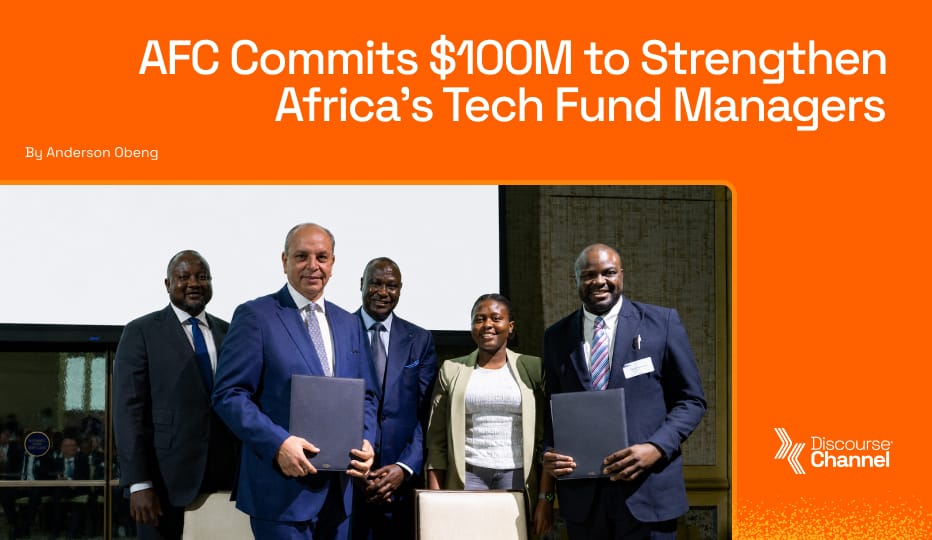
Global capital is increasingly shifting from simply entering Africa’s tech ecosystem to actively shaping its structure. The focus is no longer just “funding innovation,” but deciding which institutions control the flow, direction, and long-term deployment of that capital.
The Africa Finance Corporation (AFC) has approved a $100 million commitment to invest in Africa-focused technology fund managers, including firms such as Lightrock Africa and Future Africa.
Rather than deploying capital directly into startups as its primary channel, the facility is structured to support fund managers that already operate within Africa’s venture capital and growth equity landscape. These managers act as intermediaries, selecting, financing, and scaling startups across multiple sectors including fintech, logistics, climate tech, health tech, and digital infrastructure.
The decision signals a more layered approach to capital allocation in Africa’s innovation economy. By backing fund managers instead of individual companies alone, AFC is effectively strengthening the “capital layer” of the ecosystem, the institutions responsible for deciding which startups get funded, under what terms, and at what stage of growth.
This kind of fund-of-funds-style approach is often used in more mature venture markets to deepen liquidity, reduce risk concentration, and expand access to institutional capital. In Africa’s context, it also addresses a structural gap: the limited number of large, locally grounded funds with consistent access to long-term institutional financing.
Lightrock Africa and Future Africa represent different ends of the investment spectrum but share a similar mandate which is backing high-growth African startups with global scalability potential while remaining anchored in local market realities. AFC’s commitment effectively increases their capacity to deploy larger tickets, support follow-on rounds, and participate more meaningfully in later-stage financing.
The broader implication is that control over Africa’s innovation economy is increasingly shifting upstream. Instead of capital only chasing startups, more attention is now being placed on the managers and institutions that decide which startups survive early scaling phases and which ones reach regional or global expansion.
What we are watching:
- AfricInvest has led a growth investment round in BFREE, a company focused on distressed retail and SME loan portfolios across African markets.
- At recent meetings in Morocco, the United Nations Economic Commission for Africa (UN ECA) and multilateral finance institutions reiterated that Africa’s primary constraint is not the absence of capital or ideas, but inefficiencies in how capital is deployed across sectors.
Across these developments, a consistent shift is visible: Africa’s financial and innovation ecosystems are moving toward more structured capital systems, where not only startups but also fund managers and deployment mechanisms themselves are becoming strategic investment targets.