307 Million Undernourished: Africa’s Hunger Crisis Reverses Course
After a decade of uneven progress, hunger is rising again across Africa, with an estimated 307 million undernourished, more than 1 in 5 across the continent. The reversal reflects a combination of pressures, climate shocks, conflict, rising food costs, and structural gaps in rural infrastructure.
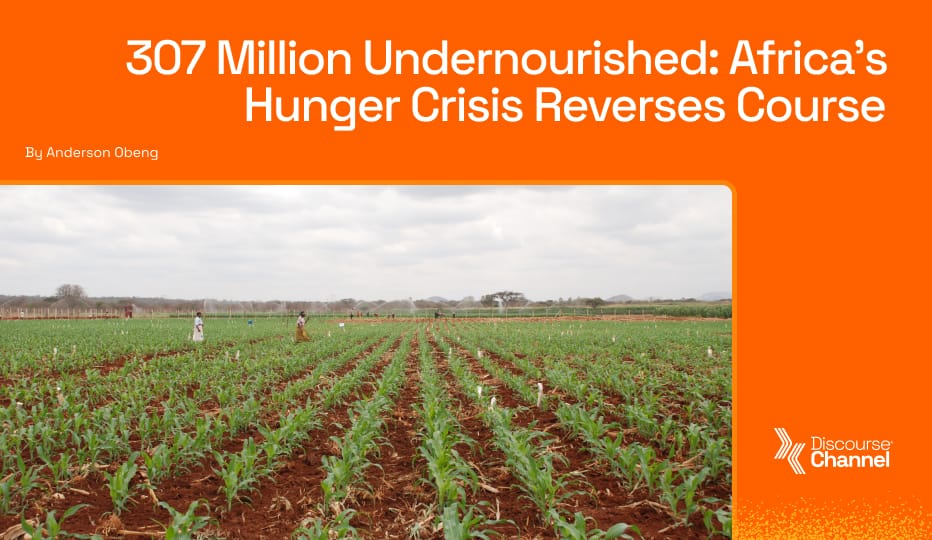
After a decade of uneven progress, hunger is rising again across Africa, with an estimated 307 million people undernourished, more than one in five across the continent. The reversal reflects a combination of pressures, including climate shocks, conflict, rising food costs, and persistent structural gaps in rural infrastructure. Together, these factors are undermining food security and limiting access to affordable, nutritious diets for millions.
Africa’s food security challenge is increasingly shaped by both environmental and economic pressures. Climate variability continues to disrupt agricultural production, with droughts and floods affecting yields in multiple regions. At the same time, conflict in several countries has displaced farming communities and disrupted supply chains, reducing both food availability and access. Rising global food and energy prices have further constrained household purchasing power, making it harder for many families to afford balanced diets.
Underlying these immediate pressures are long-standing structural constraints. Limited investment in rural infrastructure such as irrigation, storage, transportation, and agricultural financing has reduced the ability of farmers to adapt to shocks and scale production. As a result, even when food is available, access remains uneven, contributing to persistent undernourishment across the continent.
What we are watching:
- The Food and Agriculture Organization, in partnership with the International Atomic Energy Agency, is promoting the use of isotope-based techniques in agriculture.
- Crops such as finger millet, Bambara groundnut, and amaranth are receiving renewed interest from researchers and policymakers. These crops are generally more tolerant to drought and can provide important nutritional benefits.
The rise in hunger highlights the fragility of recent gains in food security across Africa. It underscores the need for sustained investment in resilient agricultural systems that can withstand climate variability, support farmers, and improve access to affordable nutrition.
Emerging approaches such as the use of scientific tools in farming and the reintroduction of climate-resilient traditional crops suggest that solutions exist. However, scaling these solutions will require coordinated policy support, investment, and stronger links between research and on-the-ground implementation. Strengthening these systems will be critical to reversing current trends and building more stable, inclusive food systems across the continent.