What happens when Law has to hold the Powerful accountable
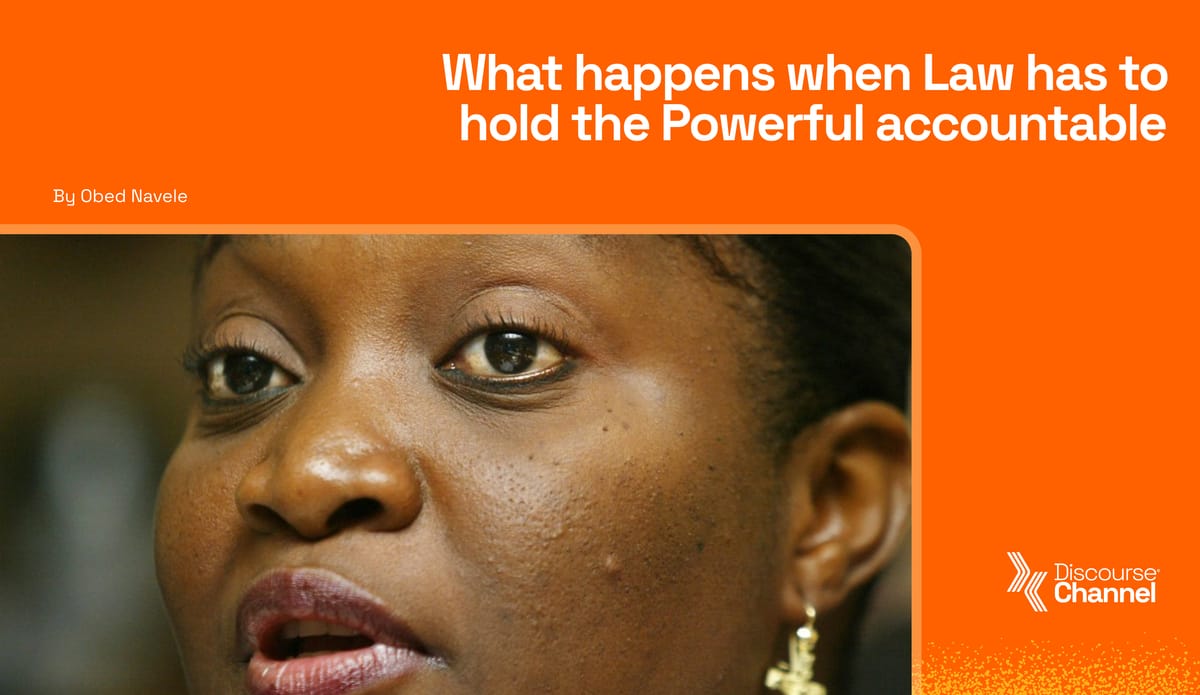
A striking example of this exact dilemma unfolded in Liberia. The detention of Liberia’s former Vice President, Jewel Howard-Taylor, at Roberts International Airport in Monrovia sent immediate shockwaves through the country's political landscape.
Across the African continent, constitutional frameworks and deep-seated political cultures have historically established a stark, troubling boundary between the ruler and the ruled. Executive immunities, broad discretionary privileges, and entrenched political protections have rendered senior public officials practically untouchable while in office and largely shielded once they no longer have power.
Yet, democratic consolidation demands a fundamental recalibration: should former presidents, vice presidents, and ministers enjoy implicit immunity from standard legal accountability? When high-ranking figures face criminal prosecution, optimistic observers cite it as institutional maturation, a long-awaited sign that justice is finally becoming blind to political rank.
However, the structural tension lies in whether these legal actions signify genuine accountability or merely reflect the shifting, retaliatory tides of political power. The question goes beyond the courtroom: when state machinery moves against elite political figures, how can citizens distinguish between legitimate justice and political warfare?
The Liberian Case Study: Accountability or Political Calculation?
A striking example of this exact dilemma unfolded in Liberia. The detention of Liberia’s former Vice President, Jewel Howard-Taylor, at Roberts International Airport in Monrovia sent immediate shockwaves through the country's political landscape. Howard-Taylor, who served under former President George Weah from 2018 to 2024, was intercepted while attempting to board an international flight. Charged in connection with a major transnational narcotics investigation involving a historical multi-million-dollar cocaine seizure, she faces severe counts including the illicit importation and trafficking of controlled substances, money laundering, and criminal conspiracy.
While the Liberian Ministry of Justice maintains that the action is strictly evidence-driven—insisting that no political office provides immunity—former President Weah and his political camp have openly questioned the probe's timing and procedural rigor. As Howard-Taylor remains legally presumed innocent, the case exposes the broader, lingering tension between legitimate criminal enforcement and executive-led intimidation.
Who Watches the Watchers? Procedural Integrity Under Scrutiny
An investigation into serious criminal allegations can be completely justified in substance while remaining highly suspect in execution. The ultimate test of institutional maturity is not simply who is prosecuted, but how the state conducts the prosecution. In high-profile indictments involving former state officials, constitutional due process must be rigorously maintained. Investigative bodies must operate with provable independence from executive influence, ensuring that evidence is independently gathered, verified, and subjected to judicial review before public reputation is destroyed.
Crucially, procedural handling matters:
- Prudent Interrogation & Public Arrest: Standard legal procedure typically requires issuing formal invitations for questioning or leveraging grand jury indictments before physical apprehension, especially when flight risk is low or contested.
- Pre-Trial Detention Standards: Intercepting a high-profile figure at an airport before formal court charges are fully read raises immediate legal questions regarding procedural necessity versus performative law enforcement.
- Evidence Thresholds: Charging prominent actors on unverified intelligence risks turning legitimate anti-crime initiatives into instruments of intimidation.
When state agencies bypass standard procedural courtesies or act precipitously without airtight evidentiary foundations, they invite charges of harassment.
In the court of public opinion, an acquittal years down the line rarely repairs the immediate reputational damage inflicted on a political figure or the diplomatic posture of the nation.
The Pattern of Selective Prosecution Across Africa
The controversy in Monrovia is not an isolated event. Across West Africa and the broader continent, every transition of power frequently brings a wave of investigations targeted predominantly at members of the outgoing administration.
Consider the case of Ghana, where electoral transitions routinely trigger high-profile corruption probes against former ministers and agency heads. While these prosecutions are framed as protection of the public purse, citizens often notice that similar allegations within sitting administrations are met with quiet administrative reviews or total silence.
A similar dynamic has played out in Sierra Leone, where special commissions of inquiry established after power shifts have aggressively pursued members of the former government, drawing accusations of selective justice. Meanwhile, in Cameroon, the long-running anti-corruption campaign ‘’ Opération Epervier ‘’ has seen numerous high-ranking ministers and state executives jailed. Yet, critics and legal scholars frequently point out that the machinery of the campaign moves most aggressively when figures fall out of political favor with the ruling executive.
This recurring pattern across the continent fuels deep public skepticism:
- Systemic Asymmetry: Incumbent officials accused of similar financial or administrative improprieties often enjoy political protection or delayed inquiries. Conversely, opposition figures face swift, televised arrests and aggressive prosecution.
- Disappearing Inquiries: Case Files on high-profile corruption or organized crime gather dust until the accused changes political affiliations or loses executive protection.
- Structural Dependency: Because prosecutorial authorities and investigative bureaus often report directly to the sitting executive, the line between state interest and regime survival becomes dangerously blurred.
When justice is applied asymmetrically, citizens cease to view the legal framework as an impartial arbiter. Instead, courtrooms are perceived as secondary arenas for political consolidation.
The Danger of Political Warfare in the Courtroom
The weaponizing of the judiciary creates a dangerous double-bind for democratic governance. On one side, if the public automatically dismisses every indictment of a politician as a partisan "witch hunt," authentic anti-corruption campaigns and law-enforcement crackdowns on transnational crime lose all traction. Actual criminals escape accountability by wrapping themselves in the cloak of political martyrdom.
On the other hand, if society uncritically accepts every politically sensitive prosecution without demanding procedural transparency, the judiciary effectively becomes a weapon for neutralizing political rivals. Protecting the rule of law requires maintaining rigorous scrutiny over state mechanisms without undermining the legitimate enforcement of criminal statutes.
Key Benchmarks for Institutional Credibility
To restore public trust in sensitive prosecutions, legal authorities must adhere to verifiable standards of independence. Prominent legal analysts emphasize several structural imperatives necessary to elevate state proceedings above political suspicion:
- Evidentiary Transparency: Prosecutions must be anchored by clear, admissible, and independently gathered evidence rather than ambiguous intelligence reports.
- Institutional Autonomy: Prosecutorial services and financial intelligence units must possess structural and budgetary independence from the executive branch.
- Strict Procedural Compliance: Investigating bodies must strictly respect constitutional rights, early access to counsel, and the presumption of innocence.
- Non-Partisan Application: State agencies must demonstrate equal vigor in investigating allegations within the ruling party as they do within opposition ranks.
- Protection Against Reputational Abuse: Procedures must guard against using premature detentions or leak-driven public commentary to inflict partisan reputational damage.
Why This Issue Matters
The integrity of judicial systems across Africa extends far beyond individual political fortunes. Unchecked executive overreach and selective prosecutions carry profound national consequences: Economic and Diplomatic Standing: Foreign direct investment and international security partnerships rely heavily on predictable, transparent legal environments. Nations perceived as using criminal courts for political retribution face heightened risk profiles. Institutional Legitimacy: When citizens believe courts serve the party in power rather than the constitution, respect for statutory law collapses across all levels of society. National Stability: Using the penal system to settle political grievances creates volatile cycles of retribution whenever power changes hands, threatening long-term democratic stability.
Can We Trust Our Legal Systems?
The central debate raised by high-profile prosecutions in Africa is not whether a specific official should be shielded or condemned. If credible, legally obtained evidence proves guilt, the law must take its full course regardless of status. If the evidence is flawed or politically manufactured, the legal system must act as an unyielding shield. The underlying challenge is building judicial institutions capable of delivering either outcome credibly. When a former leader or senior official is indicted anywhere on the continent, do citizens see an impartial legal system serving justice without fear or favor, or do they simply check which political party holds power? Until African justice systems reliably earn the former response, institutional trust will remain fragile.
The future of Education isn't in the Classroom