Africa’s Path to True Economic Sovereignty without Foreign Aid
Despite giving so much to the world, African nations have spent years relying on external financial aid, loans, and foreign development grants simply to fund domestic budgets. Over the decades, this relationship has evolved from post-colonial aid packages into a complex web of global dependency.
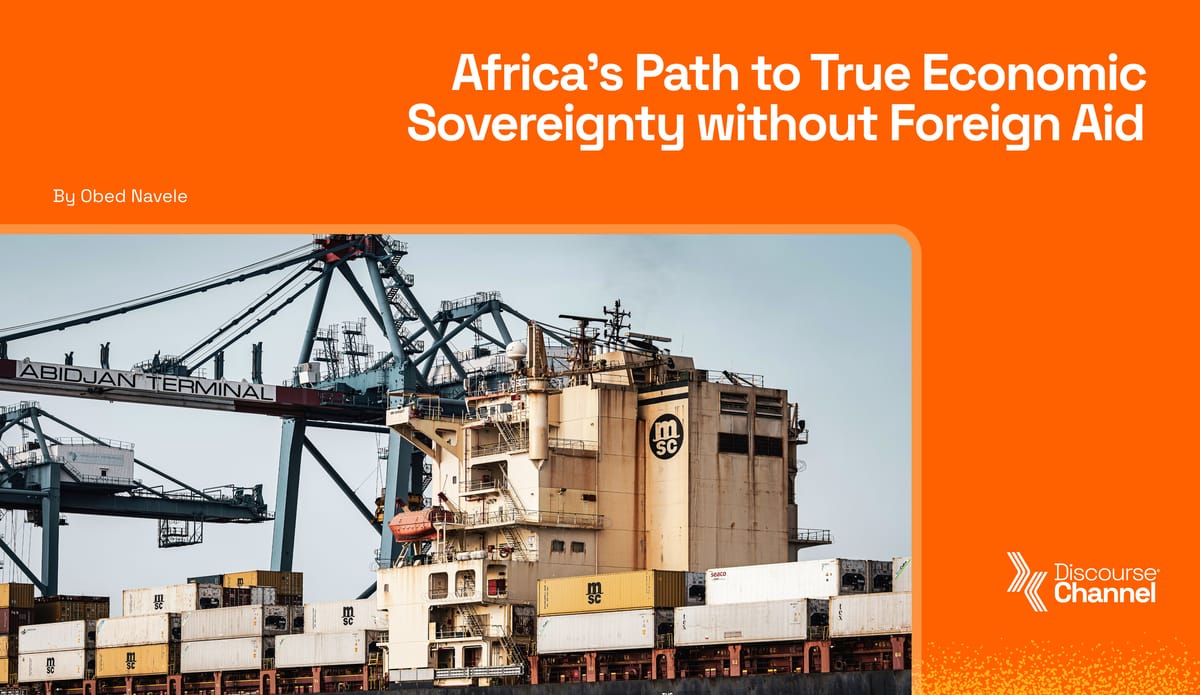
Africa has been a continent of extraordinary wealth. Rich in vast agricultural lands and dense forests, immense deposits of gold, diamonds, oil, and the critical minerals powering modern technology, the continent has continually fed global industries and enriched foreign economies. But despite giving so much to the world, African nations have spent decades relying on external financial assistance, loans, and foreign development grants simply to fund their domestic budgets. Over the decades, this relationship has evolved from post-colonial aid packages into a complex web of global dependency. Foreign assistance was originally framed as a short-term bridge to help developing nations build hospitals, roads, and schools. Instead, it slowly became a permanent feature of state planning.
Today, many African governments build their annual budgets expecting foreign dollars to cover essential services. This deep reliance has created a fragile dynamic where the continent’s economic stability is constantly exposed to political shifts in distant foreign capitals.
This article examines an urgent reality: what happens when foreign aid is no longer just a helping hand, but a tool used by powerful nations to influence African policy and foreign relations? Recent global events have brought this question into sharp focus. Major changes in U.S. foreign policy, including drastic cuts to bilateral development assistance and explicit warnings of severe economic consequences for countries maintaining commercial or diplomatic ties with targeted nations like Iran have highlighted the dangers of external reliance. When global powers issue mandates or restrict trade, African nations find themselves caught in the middle. The central concern is clear: how can Africa protect its economic sovereignty when its essential development remains linked to foreign support?
The Threshold of Influence: When Assistance Dictates Policy
Foreign aid rarely comes without expectations. In earlier decades, foreign support was tied to strict economic structural adjustments. Today, that influence has shifted directly into sovereign foreign policy and international diplomacy. When a country relies on external partners to fund its public health programs, military logistics, or infrastructure projects, its freedom to make independent choices becomes restricted. If breaking ranks with a foreign partner carries the risk of losing millions in development grants or facing trade restrictions, national decision-making is naturally constrained. At that point, foreign aid stops being a simple partnership and starts acting as strategic leverage over a nation's choices.
Caught in the Geopolitical Crossfire
The risk of foreign dependency becomes acute when major world powers clash. When powerful nations enforce strict unilateral sanctions and demand that third-party countries fall in line, non-aligned nations face immediate economic pressure.
African countries maintain independent trade partnerships and diplomatic ties based on their own national needs. However, when foreign powers threaten retaliation against any state doing business with their geopolitical adversaries, African economies absorb unexpected shocks:
- Secondary Sanctions and Trade Barriers: Local businesses, shipping firms, and banks that engage with restricted markets face the threat of being cut off from international financial networks.
- Import Vulnerability and Price Hikes: Disputes involving key energy-producing regions destabilize global supply lines, leading to immediate increases in local fuel, shipping, and food costs.
- Diplomatic Pressure: Maintaining a neutral, non-aligned posture in international forums becomes difficult when vital bilateral aid is linked to political alignment.
When a disagreement between foreign governments forces an African nation to alter its trade routes or walk away from valid economic agreements, national sovereignty is tested by financial reliance.
Overdependence on Imports and External Capital
The primary reason external political shifts hit African economies so hard is structural overdependence. The core vulnerability is not just accepting aid, but how African nations structure their trade and internal production.
When a country primarily exports raw, unprocessed minerals or agricultural goods while importing basic commodities, refined petroleum, packaged food, and medicines, it leaves itself open to external shocks.
This creates a clear economic pattern:
- Exporting Raw Wealth: Sending unprocessed resources abroad yields minimal value addition and leaves national revenue vulnerable to global market price crashes.
- Importing Basic Necessities: Relying on foreign suppliers for finished goods means any breakdown in global supply chains or shipping lanes immediately triggers domestic inflation.
- Budgetary Deficits: Relying on foreign grants or external loans to cover government shortfalls gives outside institutions significant influence over domestic policy.
True independence requires more than national symbols; it requires the internal capacity to produce goods, process resources, and finance national priorities without relying on foreign approval.
Building Economic Shock Absorbers
The solution for African states is not to retreat into isolation or reject international cooperation. Global trade remains essential. Instead, the focus must shift from passive aid reliance to building real economic shock absorbers.
Achieving true self-reliance involves key practical steps:
Expanding Intra-African Trade: Fully implementing the African Continental Free Trade Area (AfCFTA) allows African nations to trade directly with one another, keeping value within the continent and reducing exposure to distant political conflicts.
Improving Revenue Collection and Internal Funding: Modernizing tax systems and stopping illegal capital flight allows governments to fund public services using their own revenues rather than foreign grants.
Industrialization and Local Processing: Processing raw minerals, agricultural products, and oil locally before exporting creates jobs and builds domestic industrial strength. Manufacturing basic necessities internally such as pharmaceuticals protects public health systems from foreign budget cuts.
Diversifying Global Partners: Rather than depending heavily on a single country or geopolitical bloc, African states benefit from building balanced commercial ties across multiple global markets.
The Path Forward
Foreign aid can address immediate emergencies, but when it becomes a permanent budget strategy, it creates structural weakness. When global powers shift their policies or issue economic threats, nations without strong domestic foundations bear the heaviest burden.
Economic sovereignty does not mean cutting ties with the world; it means building an economy strong enough to withstand global politics. By turning local resources into domestic manufacturing, deepening regional trade, and funding its own development, Africa can engage global partners from a position of strength accepting cooperation without giving up its independence.